
A path we shared still needs a new agreement
Some places stay lit after we have moved away. It is easy to feel that, as long as the light remains, the path can continue as it always did.
My attention has shifted elsewhere, while ta still wants what we left together to keep moving forward. I understand the reluctance to let it rest. The time we shared, the trust that slowly formed, and possibilities we have not yet unfolded all make “leave it for a while” difficult to say.
But this time I have begun asking seriously: who will add the next bit of fuel to keep it alight?
At first, I more readily noticed what was already there. Continuing reveals how every response, every connection and every result that falls short still needs someone present. What we built before can open possibilities, but it will not do today's work for us.
If my attention has moved while ta keeps taking these things seriously, what we left together may now be maintained mainly by ta. We still use the old name for it, although the burden has changed.

The connection remains; it still needs support in the present. Photo: Dmytro Koplyk / Unsplash.
The difficulties that day were specific: a few moments of coordination did not connect, expectations were not understood, and things were still far from the shape we wanted. Each deserves attention. What concerns me more now is the accumulation onto which those difficulties fell.
If ta has already filled many gaps in succession, a new disappointment may no longer belong only to the present. It can bring back fatigue that has not been absorbed. Caring more about the result can make someone quicker to step in; stepping in repeatedly can also lead to an assumption that ta can keep doing so.
That is how I currently tend to understand what happened, but I still need to explore it with ta. Emotion shows me that endurance has reached a certain point; it cannot explain all of ta's feelings for me.
What particularly needs to become visible again is everything that was never deliberately assigned, yet ended up resting with ta.
Some burdens begin with “let me fill this gap first.” Someone really did need to do it then, and ta did. But if that intervention changes nothing about the next arrangement, what was temporarily caught can gradually become a default responsibility.
Later, the disappointing results remain, and so does the extra effort. Ta must keep reaching toward a personal standard while bearing the disappointment that the distance persists. If a question forms inside—“why am I still the one who has to fill the gaps?”—I hope I can first take it seriously and listen.
I also need to place myself within this process.
I sincerely want those possibilities to continue, yet I may not have offered time proportionate to that wish. How much I want to preserve something and how much I can now do for it need separate, clear answers.
When I express only the former, ta may be left to bear the latter. I retain a future, while ta must keep responding to what it demands today.
This gives me more concrete questions about “together.”
Do we still give it a similar place in our lives? Do we still have similar understandings of our pace and of how far things should go? Which parts will I take, where does ta need to be present, and how are we prepared to face gaps?
These questions do not require equal hours from both people. Different rhythms can travel together, provided the arrangement accommodates the actual difference. If one side has only scattered reserves while the other keeps putting an entire heart into it, we need to agree again on what we can jointly carry.
Having once taken something seriously together cannot automatically answer today's questions. Familiarity can sometimes make checking harder: I assume ta should know my original intention has not changed, and assume I already understand why ta wants to continue. Yet intention can remain while circumstances have changed.
I am beginning to think that focusing separately for a time, allowing something to settle, and then seeing whether we can gain pace together may be closer to what we can actually do now.
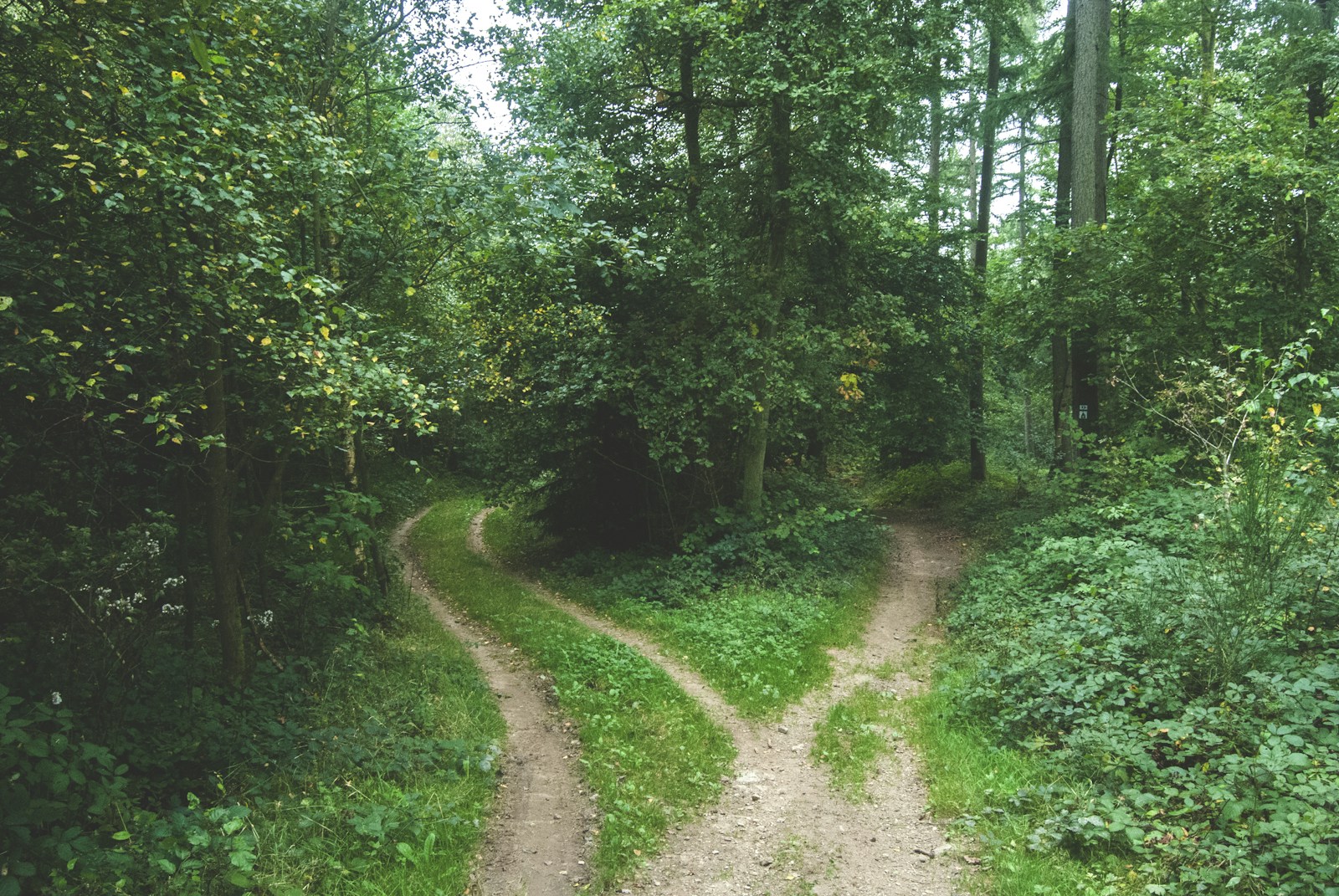
Leave room for different rhythms. Where they lead can still be considered slowly. Photo: Jens Lelie / Unsplash.
But I do not want to say “together again later” too lightly.
If waiting means ta must still watch over everything we left, while I merely retain the possibility of returning, the cost within that arrangement has not really diminished. Pausing also needs to be done together: what deserves preserving, what can be set down for now, and what still needs a careful landing?
Walking separately may make us more capable, or grow different directions. An uncertain later cannot make an overly heavy promise on behalf of today.
This experience also brought cost and updating closer together in my thinking.
If my understanding of us still says “we are moving forward together,” while our actual involvement has changed, ta, who is still acting, may keep paying for that understanding not being updated. At first it looks like a few missed connections. Later it becomes fatigue that is increasingly difficult to bear.
By the time pain makes everything clear, the cost is already high. I hope to check sooner what real, present involvement is contained in the “we” spoken this time.
What we accumulated deserves care. I want that care to accommodate where we actually stand today, without requiring someone to keep holding everything up to prove that the past still matters.
When we speak of that path again, I hope I can be more specific: which stretch will I walk now, what can I carry, and how am I prepared to share the cost of revision with ta if things do not turn out as hoped?
While the light is still there, we can also talk again about how to walk on.