
005 | Space Industry × Brain–Computer Interfaces Weekly | The next acceptance threshold
This week, look beyond the milestone: how a recovered spacecraft flies again, how orbital samples reach a laboratory on Earth, and how brain signals become a tool someone can keep using.
005 / WEEKLY / 2026.11.09—11.15
The space section follows an industry opportunity map: Earth–space transport; spacecraft and space infrastructure; space information and applications; orbital services and logistics; space manufacturing and resources; and long-duration habitation and deep-space operations. For each development, ask who needs it, what is delivered, where it is tested for acceptance, and who operates and maintains it.
From this issue onward, the second section is called “Brain–Computer Interfaces.” It focuses on neural recording and decoding, external-device control, communication restoration, and the conditions for long-term use. Earlier issues retain their original names. The two fields are assessed separately, without a combined maturity score.
The reporting window runs from November 9 at 00:00 to November 16 at 00:00, exclusive, in Beijing time. Sources were checked on November 16. Task outcomes, study registrations, version updates, and new explanations of older research are identified separately; publication dates are not assumed to be event dates.
I / SPACE INDUSTRY
Space industry
01 / Earth–space transport · Recovery and refurbishment / Postflight outcome
Starship recovered its upper stage; flying it again comes next
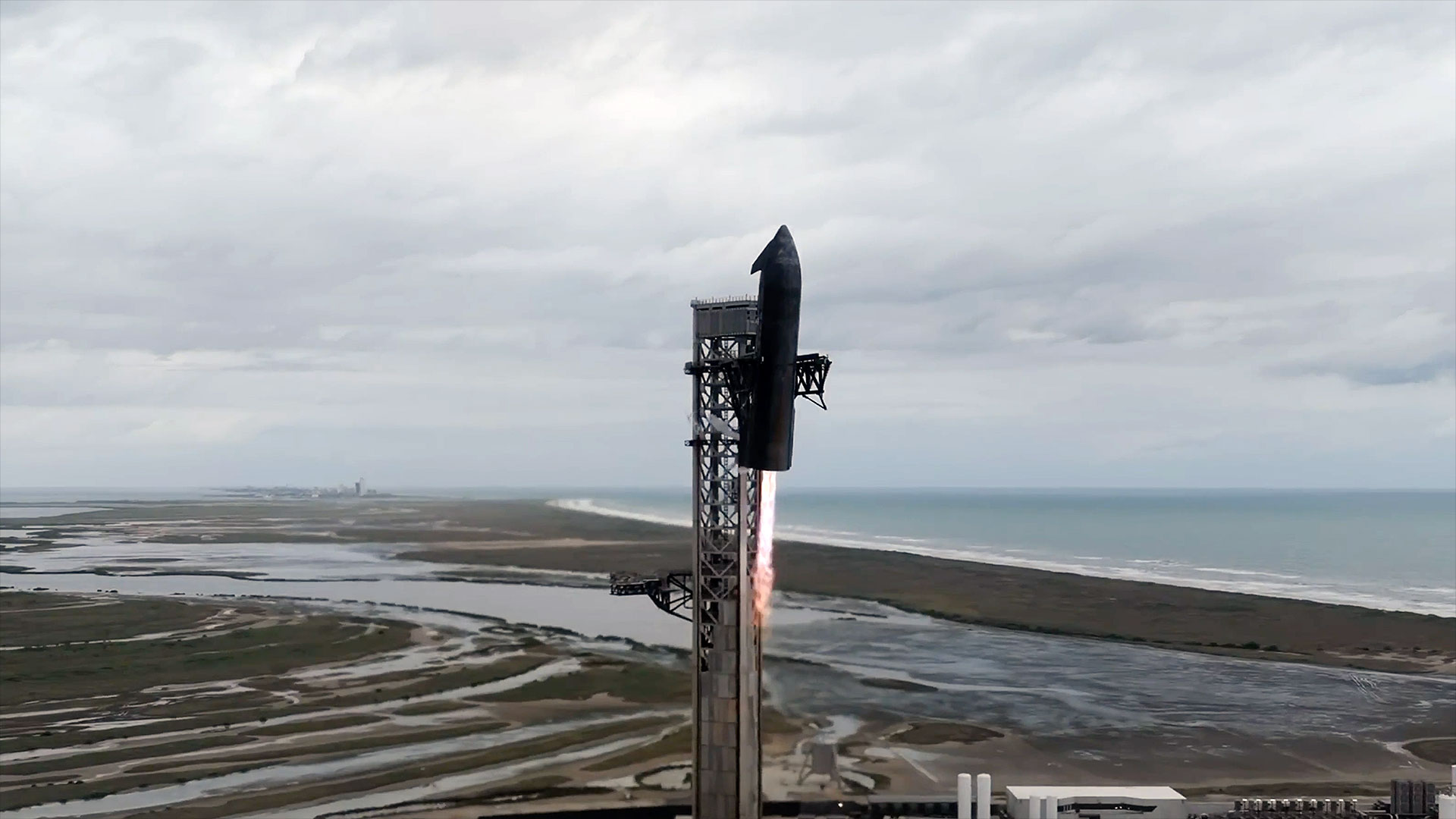
The Flight 15 upper-stage catch on November 14, U.S. local time. Image: SpaceX, reproduced in the mission live report. This is the recovery of the ship, rather than the booster.
SpaceX’s postflight account confirms that Starship launched on November 13, U.S. local time, deployed 26 Starlink V3 satellites, and returned to Starbase roughly 22.5 hours later for the first tower catch of an upper stage.
On the same flight, Super Heavy ended its boostback burn early because of low fuel mass, then automatically aborted its return to the tower and diverted offshore. The company was still investigating the root cause. The approximate timeline on the mission page retains the advance plan; the postflight narrative establishes the outcome.
Commentary
For recovery and refurbishment, this adds an upper-stage return completed from orbit. The next valuable disclosures concern the same ship: what was inspected, how many components were replaced, and when it was cleared to fly again. Opportunities in refurbishment tools, nondestructive inspection, and life records depend on defect standards, data access, and acceptance responsibilities recognized by the vehicle operator. This flight does not establish turnaround costs or the recovery and reuse of both stages.
02 / Orbital logistics · Microgravity manufacturing / Return preparations
Samples are being loaded; space manufacturing still has a return journey
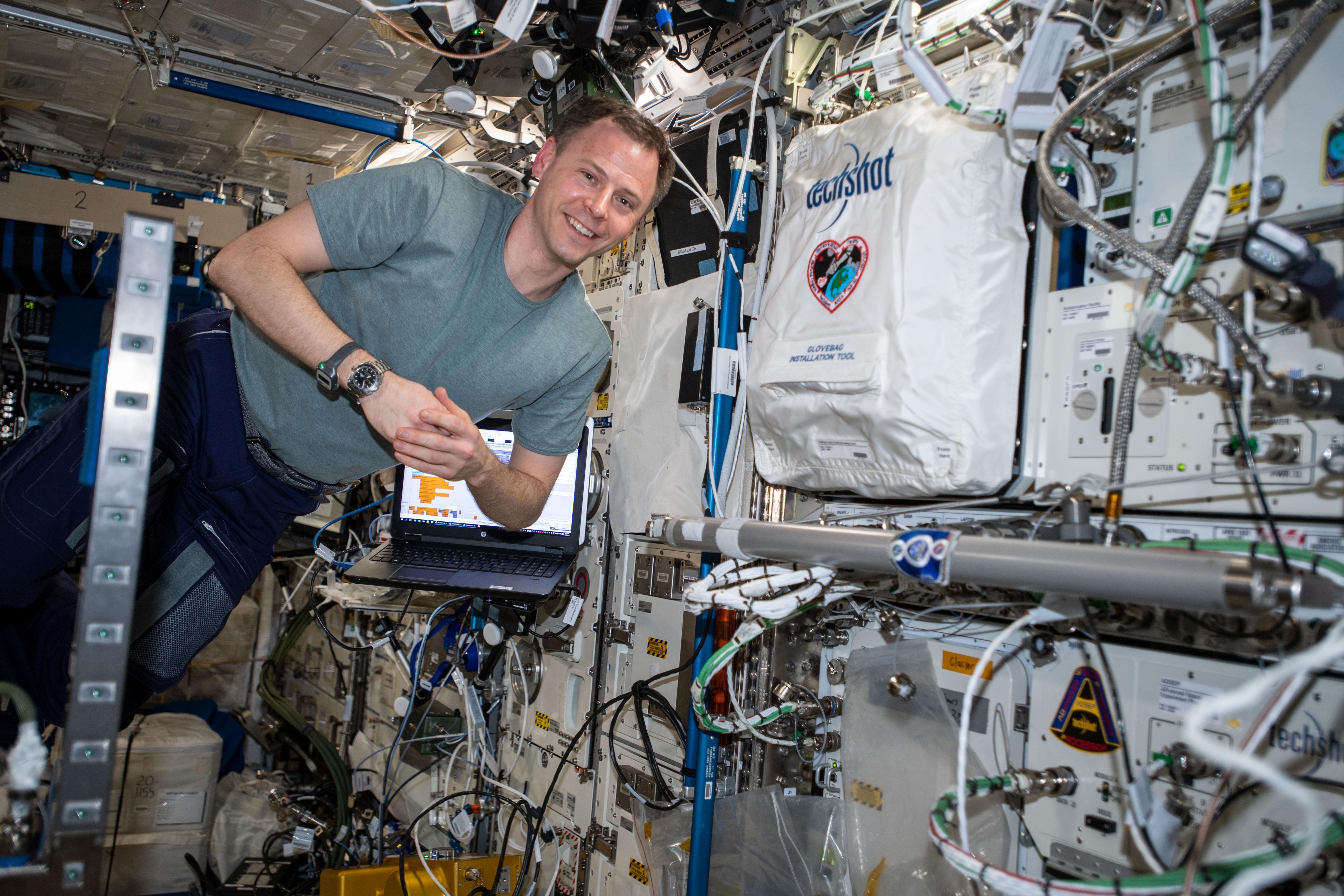
Nick Hague with the BioFabrication Facility (BFF), an Expedition 60 archive image. Image: NASA, ISS060E019633, from the facility page. This provides background on the relevant biomanufacturing facility; it does not show this issue’s loading work or returned samples.
NASA’s November 12 station log records the start of return-payload loading into Dragon. Materials being prepared for analysis on Earth include bacterial DNA, 3D-printed blood vessels, and lighting hardware tested for more than three years. Critical samples still needed to be transferred from portable freezers and incubators on the day before departure.
The crew also secured cargo and adjusted its mass distribution. This record establishes loading and return preparations. Departure, splashdown, sample handover, and laboratory analysis require subsequent evidence.
Commentary
Payload return, space logistics, and microgravity manufacturing form one chain here. After an experiment, temperature, storage, transport, and ground testing all affect the deliverable. For potential research or pharmaceutical customers in China, acceptance could begin with a complete sample record: processing times, preservation conditions, handovers, and matched ground tests. Between flying an experiment and delivering a qualified result lies a concrete service operation.
03 / Spacecraft systems · Long-duration habitation / Critical Design Review
AxEMU clears design review; qualification testing takes over

AxEMU training development at NASA’s Neutral Buoyancy Laboratory. Image: Axiom Space and NASA, from the CDR announcement. This is ground testing, not orbital or lunar operations.
On November 13, Axiom Space announced completion of NASA’s Critical Design Review, or CDR, for AxEMU. The company says the review covered engineering drawings, structural analyses, tested prototypes, whole-suit mass properties, and pressure-drop performance.
Next come manufacturing, performance tests, thermal-vacuum and vibration tests, and life-cycle tests. The company plans relevant pressure-garment and portable life-support assembly work by early 2027, followed by qualification and certification testing ahead of a space-station demonstration. Those remain future milestones.
Commentary
Life support, power, thermal control, and human operation must work together in one suit. CDR provides evidence of progress from design toward manufacturing and verification. Supply opportunities arise along that path: traceable components, test equipment, and test data. A component’s delivery capability depends on the system it enters, its operating conditions, and who accepts the integrated test results. Design-review completion does not establish flight certification.
04 / Satellite manufacturing · Space information services / Initial in-orbit testing
Eight satellites pass initial functional tests; service delivery still lies ahead
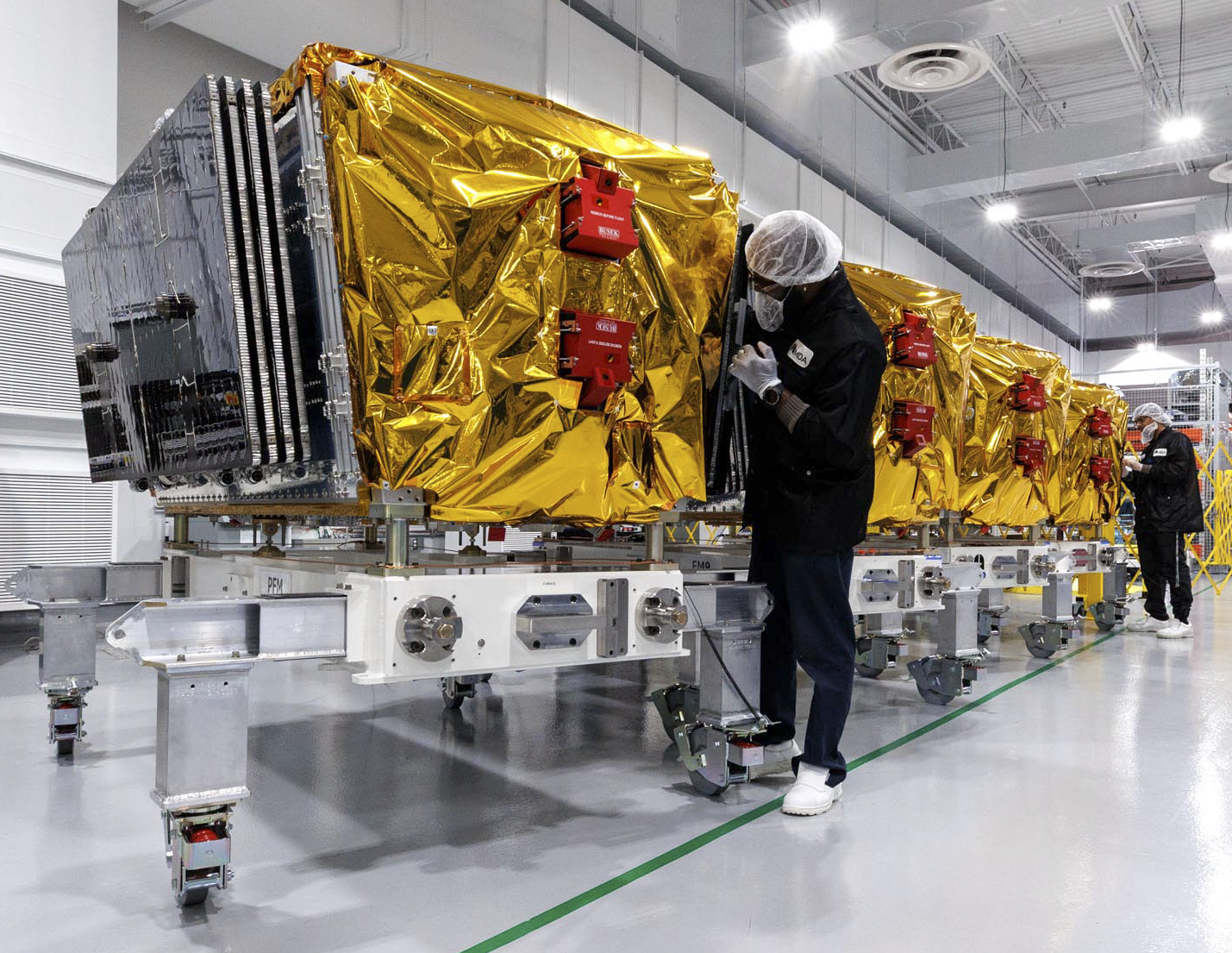
Globalstar 2-R manufacturing and integration archive image. Image: MDA Space, from its August 16 launch announcement. This is not a photograph of this week’s in-orbit tests.
MDA Space announced on November 10 that all eight Globalstar 2-R replenishment satellites launched on August 15 had completed initial functional tests. Two had begun electric orbit raising; payload health checks and further in-orbit testing were continuing.
The satellites belong to an order for seventeen. The remaining nine had recently completed their final integration stages. The first batch still needed to reach its last testing altitude, maneuver into final orbits, and join the existing constellation. Eight initial test passes do not mean that all seventeen satellites have been delivered into operation.
Commentary
Between satellite production and communications service lies joint acceptance of platforms, payloads, orbits, and ground systems. Specific work includes batch-consistency tests, commissioning tools, telemetry anomaly diagnosis, and delivery records shared by manufacturer and operator. For corresponding projects in China, first establish how the customer defines in-orbit delivery, then investigate equipment or service procurement. Launch counts alone do not establish added service capacity or revenue.
05 / Deep-space operations · Transport and navigation / Powered flybys completed
ESCAPADE spent a year waiting, turning a launch-window constraint into operations
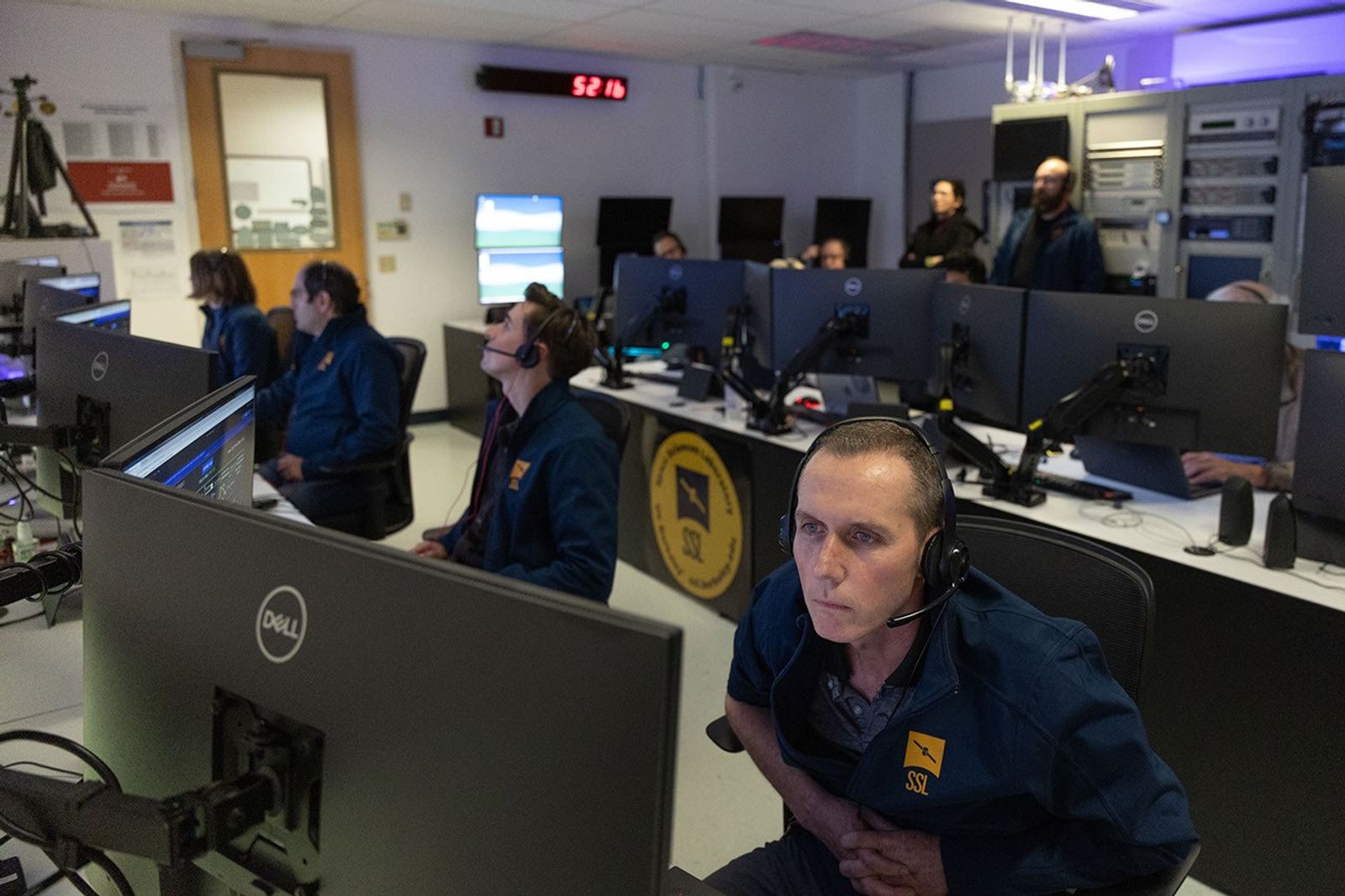
The team awaiting a signal after the first spacecraft’s maneuver on November 7; the second maneuver occurred on November 9. Photo: Alan Toth / UC Berkeley Space Sciences Laboratory, published in the NASA mission update.
NASA confirmed on November 9 that the two ESCAPADE spacecraft completed powered Earth flybys on November 7 and 9, Eastern time. Each combined Earth’s gravity with an engine burn of about nine minutes to enter its Mars-bound trajectory. The second maneuver falls within this issue’s window.
After launching in November 2025, the spacecraft spent a year on loiter orbits near Earth before returning for these maneuvers. The current plan calls for Mars arrival in September 2027 and science operations beginning in June 2028.
Commentary
This route offers more flexibility in launch timing while adding a year of operations, navigation, and health management. Deep-space communications, navigation, and autonomy can be investigated through specific deliverables: how the trajectory is verified, how ground teams track it, and how anomalies are corrected. The threshold crossed this week is the powered flyby. Mars capture and coordinated science operations remain ahead; one science mission does not establish a routine deep-space cargo service.
II / BRAIN–COMPUTER INTERFACES
Brain–computer interfaces
06 / Speech decoding / Preprint version update
Brain2voice 2.0 has a new version; closed-loop evaluation remains ahead
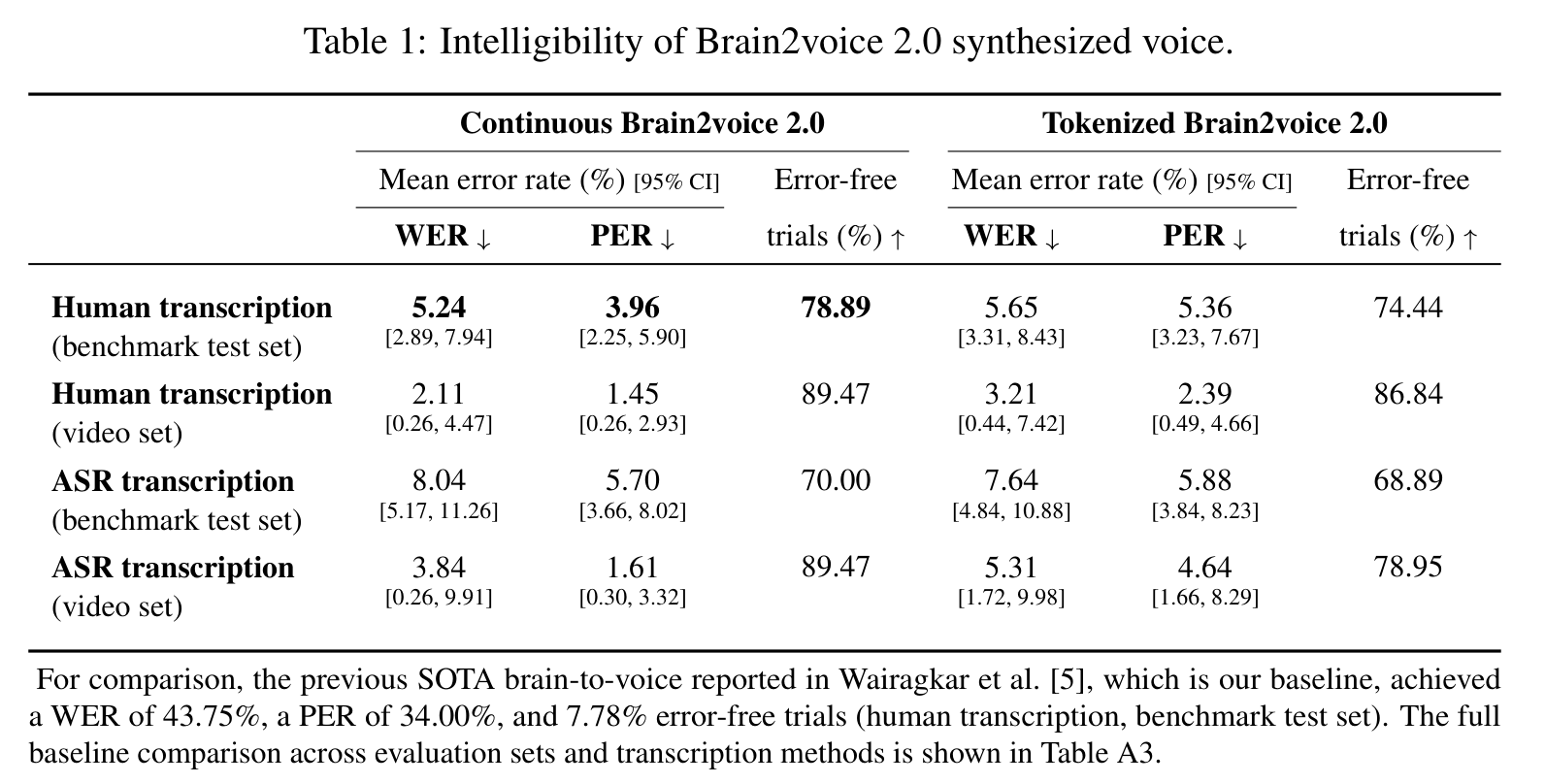
Wairagkar et al., Brain2voice 2.0 v2, original Table 1. The 5.24% value is in the first row: human transcription on the benchmark test set. ASR means automatic speech recognition, a different evaluation. Source: bioRxiv version and paper, CC BY-NC-ND 4.0. The entire table is extracted with its content unchanged.
The preprint was updated to v2 on November 13 and remains unreviewed. Using earlier intracortical recordings from one participant, the authors report a 5.24% word error rate when untrained listeners transcribed the synthesized voice, compared with 43.75% for the earlier method. Word error rate counts substitutions, deletions, and insertions in transcription; it does not capture every kind of everyday communication error.
The main results come from offline evaluation of existing data with simulated real-time inference. The 5.24% figure already appeared in the July v1 abstract. It cannot be presented as a new human experiment or a performance level first reached this week.
Commentary
This work brings decoding methods closer to intelligible voice output. Practical evaluation still requires users to hear live feedback and researchers to observe how that feedback changes neural activity, alongside spontaneous expression, calibration across days, and error correction. Offline results from one person performing prompted-sentence tasks support the next experiment. Long-term home communication across multiple users needs separate validation.
07 / Clinical research / Two new registrations
New studies specify their populations and safety endpoints
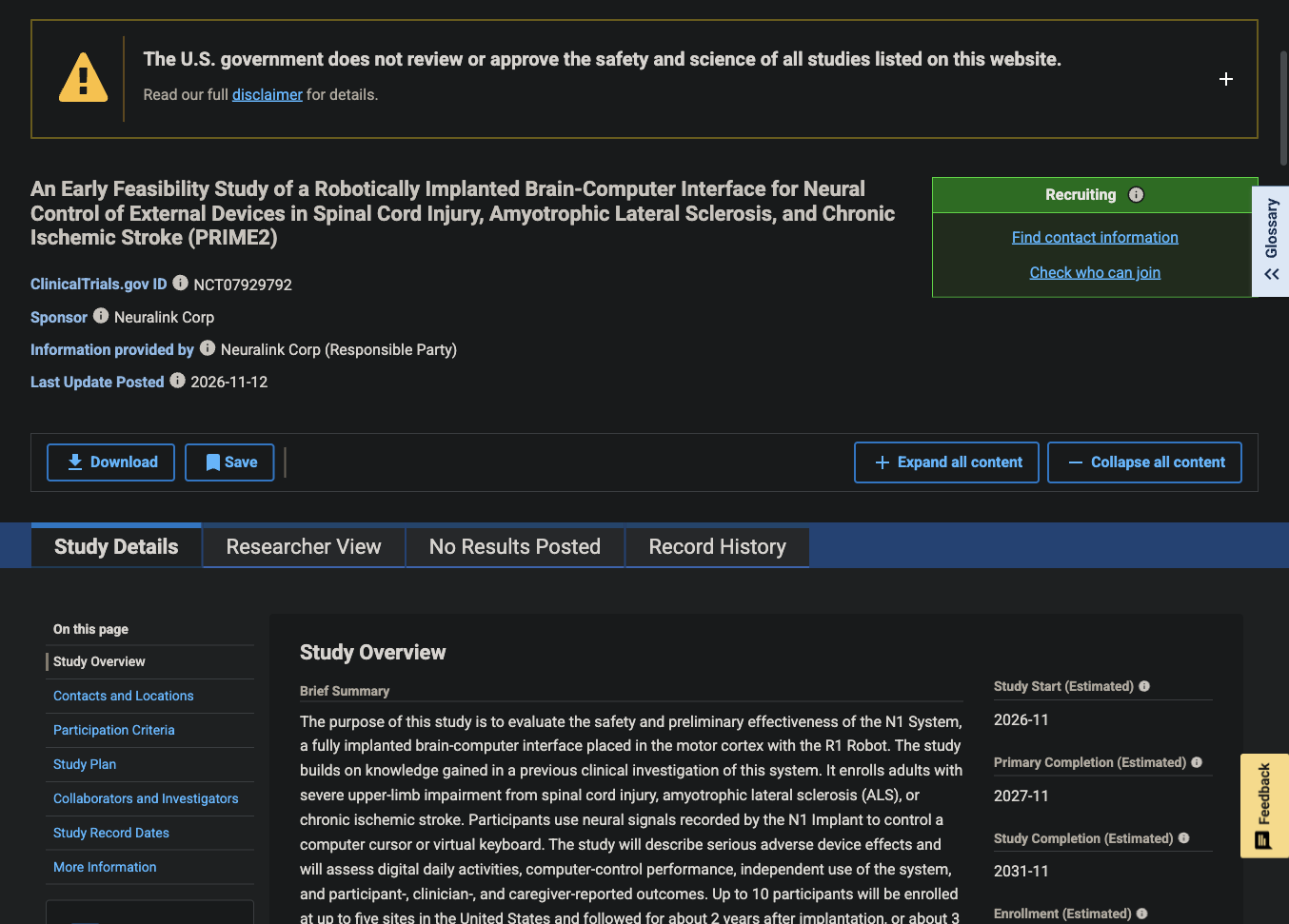
Screenshot of the public PRIME2 record, NCT07929792. Planned enrollment and recruitment status describe the study design; they are not completed implant counts or efficacy results.
PRIME2 was first posted on November 10 and updated on November 12. It plans to enroll 10 adults with severe upper-limb weakness due to spinal cord injury, ALS, or chronic ischemic stroke, using a robotically implanted BCI for neural control of external devices. It is a single-group, open-label early feasibility study. Its primary endpoint concerns serious adverse device effects through 90 days after implantation. The record was recruiting when checked; planned enrollment does not mean that 10 people have received implants.
RECLAIM, NCT07933549, also first posted this week, plans four participants to study communication and language restoration and was not yet recruiting when checked. Its primary endpoint concerns adverse events over one year, with word-error and other measures scheduled every three months during the first two years. These are different studies.
Commentary
Registration gives outsiders a trackable commitment: who will be studied, for how long, and how failures will be recorded. For chronic stroke, residual limb function, eye tracking, and other assistive devices also provide relevant comparisons for independent-use benefits. Actual enrollment, withdrawals, complications, and caregiver burden are worth following. This week adds publicly visible study designs, without outcome conclusions from either study.
08 / Long-term use · Participant rights / Recommendations published
After implantation, who remains responsible when the trial ends?
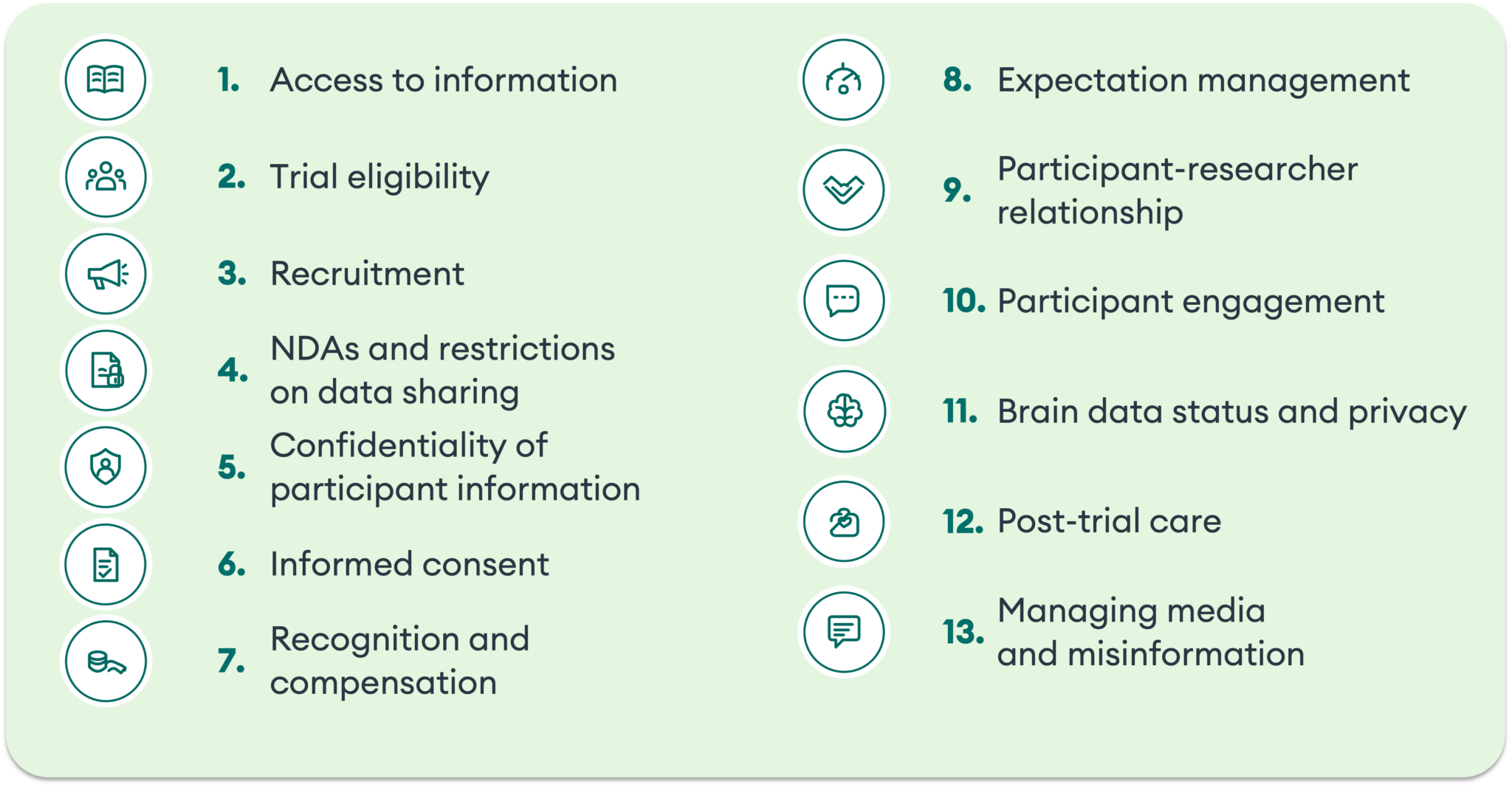
The thirteen recommendation categories in OUR BCI v1.0. Image: BCI Pioneers Coalition, from the full recommendations and infographic. These are participant recommendations, not enacted regulatory rules.
The BCI Pioneers Coalition, led by people who have participated in implanted-BCI trials, published OUR BCI v1.0 on November 10. It draws on discussions among six members between October 2025 and October 2026 and covers thirteen areas including consent, compensation, neural data, device control, and post-trial arrangements.
It recommends settling hardware, software, and decoder ownership and control before surgery, and planning for post-trial support, explantation funding, investigator departures, and early study termination. The recommendations are a living document. Adoption by research institutions and companies remains to be tracked.
Commentary
When a BCI becomes a daily communication tool, maintenance and exit arrangements affect whether its user can keep living with that capability. Software support, post-trial funding, and access to personal data belong in assessments of long-term usability. Participants propose concrete acceptance questions here: performance needs continuing responsibility alongside it. Publication of the recommendations is confirmed; an industry-wide support system is not established by that publication.
What to watch next
- After recovery: inspection, replacement, clearance, and another flight of the same Starship, plus formal findings on the booster anomaly.
- After delivery preparations: Dragon departure, return, sample handover, and ground testing; AxEMU qualification and flight certification.
- Before operational service: orbit raising, full in-orbit testing, and formal service delivery for the Globalstar replenishment satellites, distinguishing manufacturing completion, orbital deployment, and operations.
- After connection: live closed-loop and spontaneous-expression performance; actual enrollment, adverse events, calibration and caregiver time; and post-trial support terms.
These questions turn directions on a map into work: what inputs are needed, what results are delivered, who accepts them, and who is responsible for the next operation.
This issue’s space materials come mainly from North American institutions and companies. They do not establish procurement access, prices, or local qualification requirements in the corresponding Chinese supply chains. Lunar resources, in-situ production on Mars, orbital repair, and propellant replenishment did not yield enough new evidence within the window for standalone entries. Those are gaps in this issue’s coverage, not claims that the fields made no progress. No new maturity scores are published.

AI and space discussion group.
Sources
- SpaceX: Starship Flight 15 postflight account, events on November 13–14, U.S. local time.
- NASA: Crew Packs Dragon with Science and Cleans Spacesuits, November 12.
- Axiom Space: AxEMU Critical Design Review announcement, November 13.
- MDA Space: Globalstar 2-R initial in-orbit functional tests, November 10; launch announcement and manufacturing image, August 16.
- NASA: ESCAPADE completes powered Earth flybys, November 9, covering events on November 7 and 9.
- Wairagkar et al.: Brain2voice 2.0, v2, updated November 13; history and license.
- ClinicalTrials.gov: PRIME2, NCT07929792, first posted November 10 and updated November 12.
- ClinicalTrials.gov: RECLAIM, NCT07933549, first posted November 12.
- BCI Pioneers Coalition: OUR BCI v1.0, November 10; release announcement.
Facts refer to the linked sources and versions checked for this issue. “Commentary” is the issue’s analysis; opportunities and future thresholds do not describe capabilities already achieved.