
006 Weekly | Vulcan Failure, CRS-35, Varda W-9, CASC Bid, Voyager 1, Beinao-1, SfN, SCS-BCI
This week looks at cadence ramp-up and routine delivery: how a launch failure exposes fuel-feed interfaces, how reentry capsules move from single flights to repeat turnarounds, how commercial launch turns into open-bid service contracts, and how brain-computer interfaces move past one-off demos toward year-long durability and controlled clinical endpoints.
006 / WEEKLY / 2026.11.16—11.22
The space industry section follows the Space Industry Opportunity Map across six sectors: Earth-to-orbit transport, spacecraft and space infrastructure, space information and applications, on-orbit servicing and logistics, in-space manufacturing and resources, and long-duration habitation and deep-space operations. For each item, we continue to ask who the customer is, what gets delivered, under what environment it is accepted, and who carries operations and maintenance.
The second section covers Brain–Computer Interfaces (BCIs), tracking neural signal acquisition, decoding, external device control, communication restoration, and conditions for long-term use. Both sections evaluate evidence independently without combining them into a single maturity score.
The monitoring window runs from 00:00 on Nov 16 to 00:00 on Nov 23, 2026 (Beijing Time, exclusive of the endpoint), verified on Nov 23. Below we distinguish mission outcomes, preliminary investigation updates, conference briefings, trial registrations, and prior cumulative figures, avoiding treating publication dates as event dates.
I / SPACE INDUSTRY
Space Industry
01 / Earth-to-Orbit Transport · Liquid Propulsion & Delivery Reliability / Launch Failure & Preliminary Review
Vulcan Fails on First Amazon Leo Mission; Preliminary Data Point to Core Fuel Supply
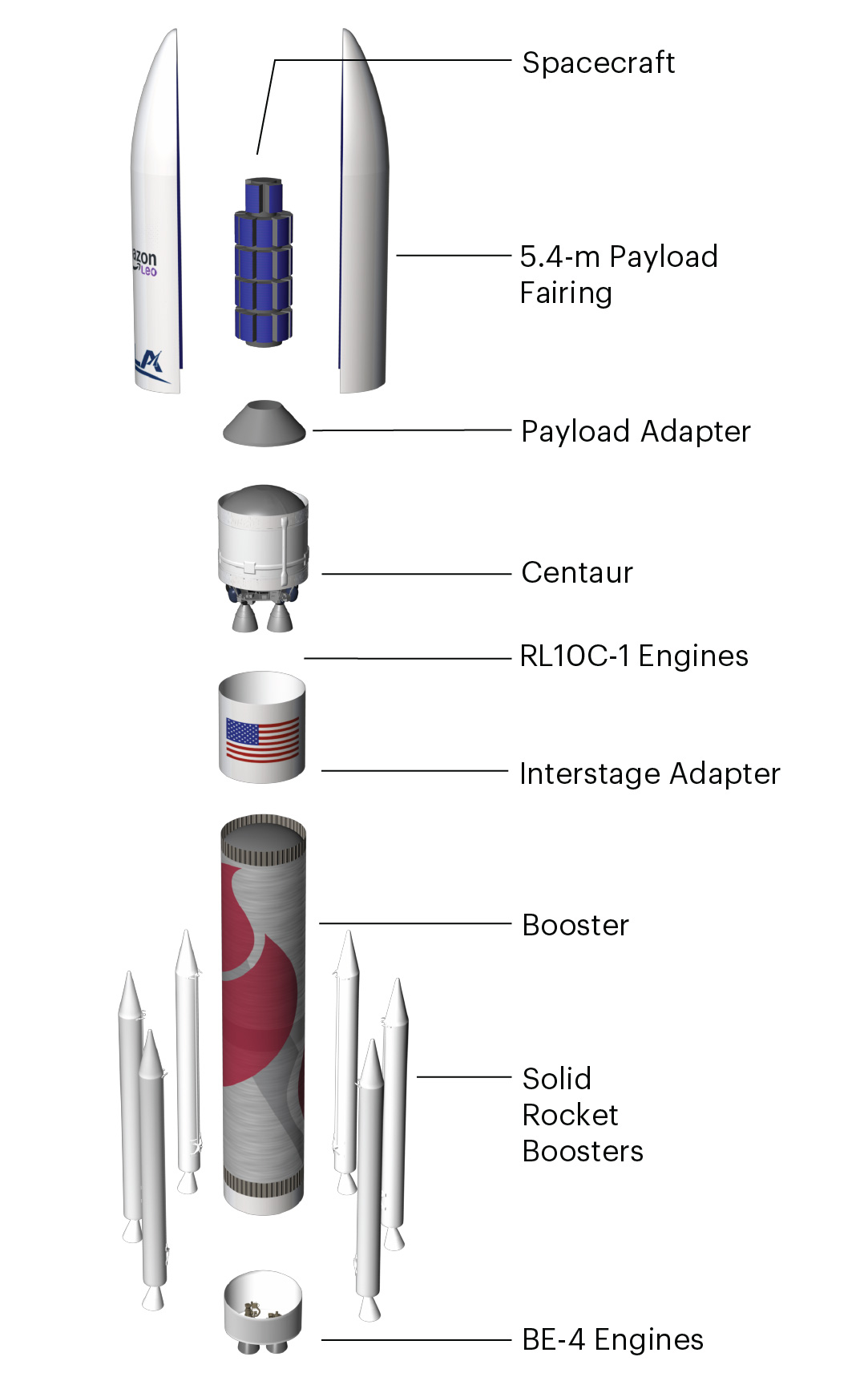
Vulcan Leo 1 vehicle expanded view (VC6L configuration). Credit: United Launch Alliance, from the mission page; pre-launch configuration diagram, not imagery of the flight anomaly.
United Launch Alliance's Vulcan VC6L lifted off from Cape Canaveral at 17:40 UTC on Nov 15 (01:40 Beijing Time on Nov 16) on its first mission for Amazon's Amazon Leo broadband constellation, carrying 40 satellites. Telemetry was lost roughly 10 minutes into flight, and the vehicle failed to reach orbit, resulting in a total loss of the mission and the 40 satellites.
In investigation updates posted on Nov 17 and 18 EST, ULA stated that the FAA is overseeing the ULA-led investigation. Preliminary flight data indicate that all six solid rocket boosters and the Centaur V second stage's RL10 engines operated nominally, while low booster thrust left stage separation too low and too slow to achieve orbit. Early indications point to inadequate fuel supply from the vehicle to the BE-4 engines rather than engine performance itself; root cause and corrective actions remain under investigation.
Commentary
Once constellation deployment depends on multiple launch vehicles fulfilling parallel contracts, a failure tests more than an engine on a test stand—it tests propellant feed lines, stage integration, final assembly inspection, and failure-review discipline. For liquid propulsion manufacturing, hot-fire testing, and payload delivery on the map, this event puts the spotlight on the vehicle-to-engine interface: even with qualified engines and upgraded solid booster nozzles, the integrated feed system can still become the bottleneck. Current statements are preliminary data indications, not a final root cause or return-to-flight schedule.
02 / On-Orbit Logistics · Microgravity Manufacturing / Splashdown Completed
CRS-35 Dragon Splashes Down off California, Completing Station Sample Return
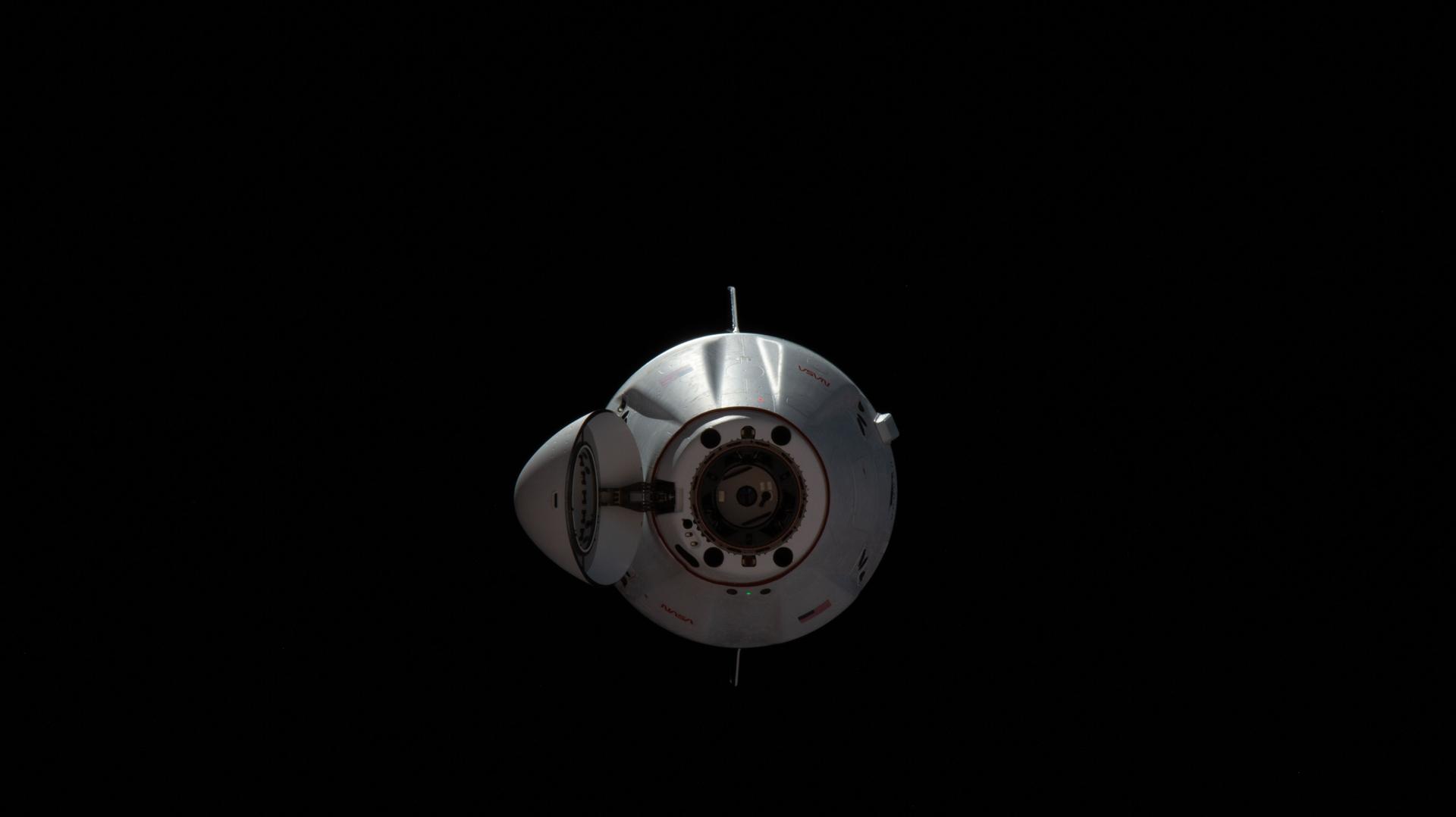
SpaceX Dragon approaching the International Space Station on Oct 15, 2026. Credit: NASA, image ID ISS075E0226573, published via the NASA return update; archival arrival photo, not splashdown recovery imagery.
Following last week's cargo-packing report, NASA confirmed on Nov 21 that SpaceX's CRS-35 unpiloted Dragon cargo spacecraft undocked from the International Space Station at 11:05 a.m. CST on Nov 20 and splashed down in the Pacific Ocean near Los Angeles at 2:03 p.m. PST on Nov 21 (06:03 Beijing Time on Nov 22).
Returning payloads include a 3D-bioprinted blood vessel construct for vascular aging and cardiovascular research, frozen cancer treatment samples, frozen microbial samples to study antibiotic-resistant bacteria, and station lighting hardware tested on orbit for more than three years. Splashdown confirms undocking and atmospheric return; cold-chain handoff, laboratory transfer, and ground analysis results still lie ahead.
Commentary
Moving from last week's loading preparation to this week's splashdown advances the payload-return and microgravity life-sciences chain by another step. For research and pharmaceutical customers, acceptance does not end at ocean recovery—it happens when thawed or unboxed samples meet viability and temperature records. Services around in-space bio-manufacturing depend as much on cold-chain packaging, rapid port-to-lab transport, and ground control assays as on the capsule itself.
03 / Earth-to-Orbit Transport · Payload Return / Back-to-Back Commercial Reentry
Varda W-9 Lands in South Australia, Completing Two Commercial Recoveries in 12 Days
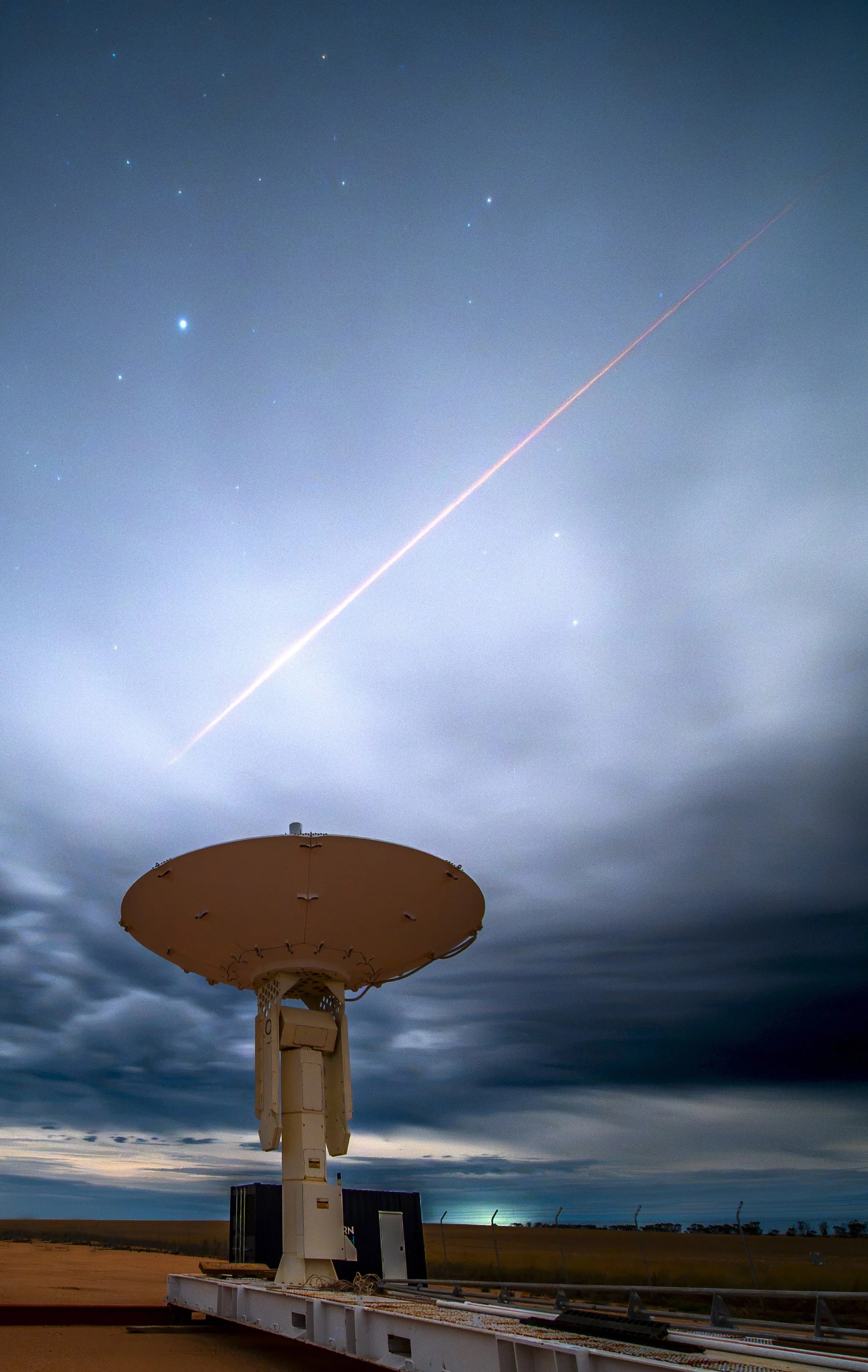
Varda W-9 reentering over the Koonibba Test Range, captured early Nov 18 local time (Nov 17 Pacific Time). Credit: Southern Launch / Will Godward, from the Southern Launch release.
Varda Space Industries and Australian range operator Southern Launch confirmed that the W-9 commercial reentry capsule touched down at the Koonibba Test Range at 12:06 a.m. ACDT on Nov 18 (21:36 Beijing Time on Nov 17) after 48 days in orbit. Its sibling capsule W-8 had landed at the same range on Nov 6 (Nov 5 PT); both launched together on a single Falcon 9 on Oct 1, marking the first time two commercial reentry vehicles flew on the same rocket and returned separately on schedule.
According to the PR Newswire announcement and Southern Launch update, W-9 carried a government-funded hypersonic navigation telemetry system and next-generation composite heat-shield samples embedded in its nose tile; W-7 is also slated to return in the coming weeks. The record proves two commercial capsule recoveries within 12 days; payload data evaluation and per-flight unit economics remain undisclosed.
Commentary
The harder part of commercial return is not coming back once, but turning airspace clearance, range operations, recovery logistics, and regulatory sign-off into a repeatable turnaround cadence. On the map, payload return, thermal-protection validation, and ground range services are forming a clear division of labor: rideshare rockets handle ascent, while dedicated capsules and commercial ranges handle scheduled return. The key question to watch is customer mix—when commercial pharmaceutical repeat orders can sustain cadence alongside government hypersonic test payloads.
04 / Earth-to-Orbit Transport · Commercial Launchpads & Procurement / Constellation Launch & Public Tender
Hainan Commercial Site Launches LEO Group 30; China's Commercial Launch Enters Open Bidding
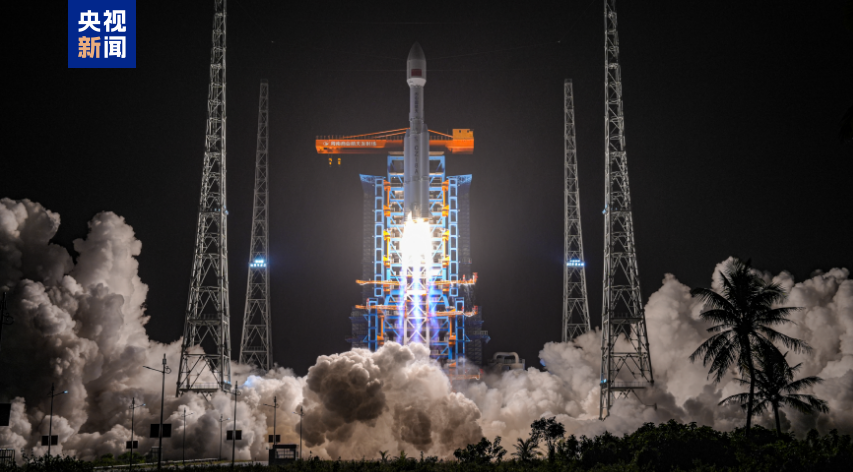
Long March 8A lifting off with Satellite Internet LEO Group 30 at 19:59 Beijing Time on Nov 20 from the Hainan Commercial Spacecraft Launch Site. Credit: CCTV News, via CCTV.com.
At 19:59 Beijing Time on Nov 20, China launched Satellite Internet LEO Group 30 from the Hainan Commercial Spacecraft Launch Site aboard a Long March 8A rocket, developed under CASC's China Commercial Rocket Co. (CASC Commercial Rocket) with CALT, marking the 679th flight of the Long March family.
Earlier in the week on Nov 18, China's Government Procurement Network published the award for the Aerospace Information Research Institute (CAS) "03-06 Satellite Launch Vehicle and Launch Site Service Project," as reported by Eastmoney: against a budget cap of RMB 322.4 million, CASC Commercial Rocket won the bundled bid at RMB 317.7 million, with the service period extending to 30 days after two successful launches. Neither the specific rocket model nor the exact satellite count was disclosed, and launch execution has not yet begun.
Commentary
Issue 005 noted a lack of in-window primary evidence on procurement openness and pricing in China's commercial launch sector. This week provides two concrete slices: high-cadence national LEO constellation launches from the Hainan commercial site on one side, and a research institute bundling rocket and launch-site services into a price-capped public tender with defined acceptance terms on the other. For multi-vehicle launchpads and ground support on the map, state-backed commercial arms and private launch providers are increasingly competing under standardized tender terms; a single award price, however, does not yet reveal industry-wide capacity balance or private-sector win rates.
05 / Deep-Space Operations · Deep-Space Comms & Operations / Distance Milestone
Voyager 1 Crosses One Light-Day, Pushing One-Way Comms to 24 Hours

NASA artist's concept for Voyager 1's one light-day milestone. Credit: NASA, from the NASA explainer page; visual illustration, not deep-space photography.
NASA confirmed on its official mission page that at 5:16:07 a.m. EST on Nov 18 (18:16:07 Beijing Time), Voyager 1—launched nearly 50 years ago—became the first human-made object to reach one light-day from Earth, roughly 25.9 billion kilometers (about 16 billion miles).
Crossing that mark means a radio command traveling at the speed of light takes a full 24 hours to reach the spacecraft, and roughly 48 hours for a round-trip confirmation. Voyager 2 is on a different trajectory and is projected to pass one light-day around 2035. This milestone reflects cumulative distance and communication latency rather than a new propulsion or instrument upgrade this week.
Commentary
At a two-day round-trip delay, real-time ground teleoperation is physically impossible. For deep-space communications, navigation, autonomy, space power, and long-life electronics on the map, Voyager 1 serves as a nearly half-century extreme reference: under tiny power margins, faint signals, and 48-hour latency, Deep Space Network scheduling, fault isolation, and onboard autonomous protection determine whether a mission stays operable. It is not a proxy for near-term commercial deep-space cargo, but it sharply defines the physical constraints of deep-space operations.
II / BRAIN–COMPUTER INTERFACES
Brain–Computer Interfaces
06 / Semi-Invasive Clinical · Pre-Registration Milestone / Conference Disclosure
Beinao-1 Completes Pivotal Trial Enrollment, Topping 170,000 Cumulative Safe Hours
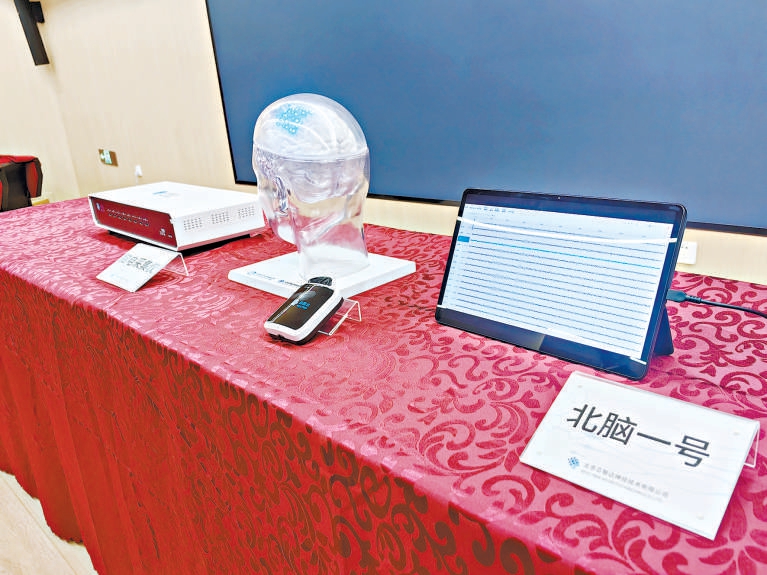
Archival display photo of the Beinao-1 system. Credit: Beijing Municipal Government portal, from an August 2026 report; prior system display photo, not from the November conference floor.
At the 2026 Brain-Computer Interface Conference held Nov 19–22 in Changping, Beijing, organizers released 15 flagship achievements. According to a People's Daily Online report on Nov 22, the semi-invasive Beinao-1 system developed by Beijing NeuCyber—using micron-thin flexible cortical electrodes for a 128-channel wireless fully implanted setup—has accumulated over 40 human implants and more than 170,000 hours of safe human operation, completed full enrollment for its pivotal clinical trial, and plans to file for Class III medical device registration in 2027.
Date boundaries matter here: per the Beijing municipal portal's August 2026 report, Beinao-1 had already reached roughly 40+ human implants by August 2026, so that figure should not be read as newly implanted this week. The new disclosures this week are completion of pivotal trial enrollment and surpassing 170,000 cumulative safe operating hours; completing enrollment does not mean follow-up is finished or regulatory approval has been granted.
Commentary
China's semi-invasive BCI path is shifting from early first-in-human demonstrations to multi-center registration trials. Across 40+ recipients and 170,000+ hours, the system is accumulating multi-month in-vivo operating data that speak far more directly to electrode impedance drift, wireless thermal management, and surgical complications than any single demo. The next true acceptance gate will be full follow-up endpoints, adverse-event breakdowns, and NMPA Class III review—formal clinical reports are still pending.
07 / Clinical Communication Decoding · Durability & Portability / Annual Conference Briefings
SfN 2026 Highlights Year-Long Locked-In Use and iPhone-Class Portable BCI Decoding
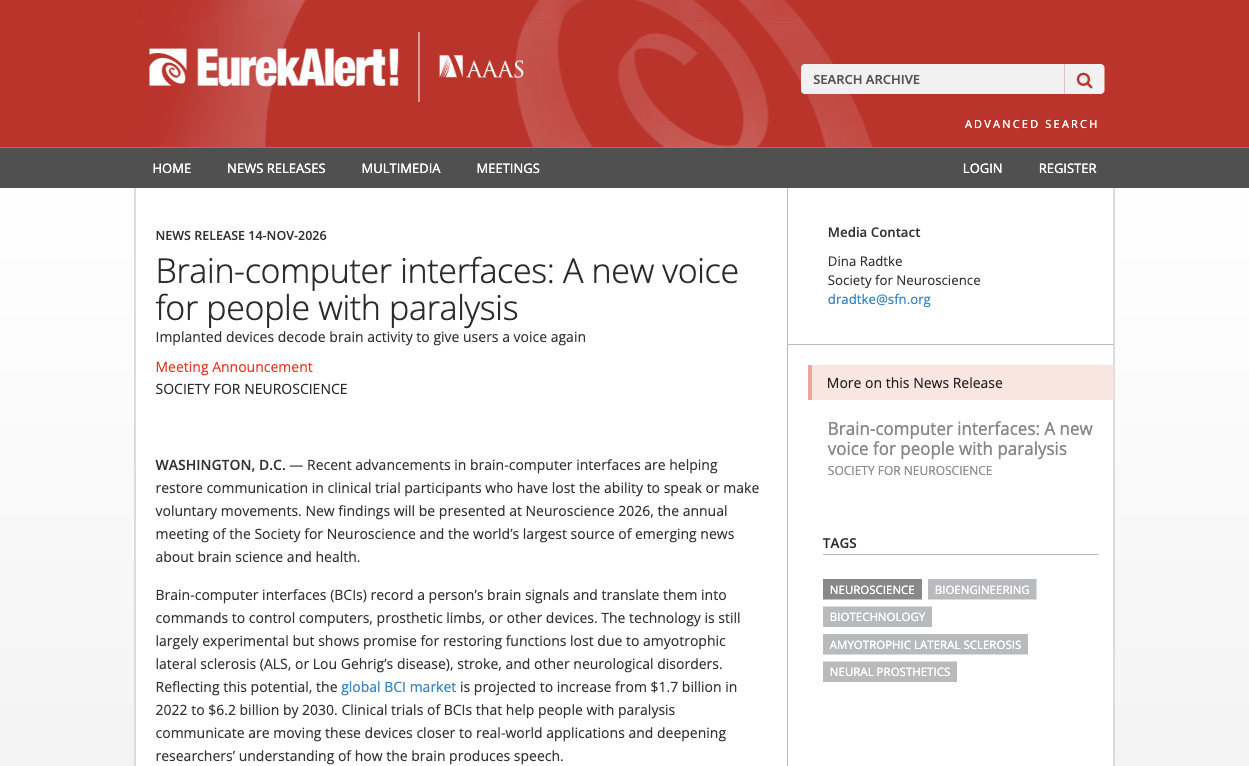
Original EurekAlert press release page from the Society for Neuroscience for Neuroscience 2026. Source: EurekAlert 1149828, posted Nov 14 for the Nov 17 (11:30 a.m. EST) press briefing.
At the Society for Neuroscience annual meeting (Neuroscience 2026) in Washington, D.C., clinical teams including BrainGate presented three communication-BCI advances at a Nov 17 EST (Nov 18 Beijing Time) press briefing. Daniel Rubin (Massachusetts General Hospital) reported that a clinical trial participant in a completely locked-in state communicated independently for more than a year using a BCI decoding intended movement.
In the same briefing, Chethan Pandarinath (Georgia Tech / Emory) presented a portable brain-to-text BCI capable of accurate, efficient decoding even on an iPhone, while Maitreyee Wairagkar (UC Davis) presented a pitch-variable synthetic voice BCI that improved listener comprehension and enabled a participant to sing. All three items are conference presentations and media briefings; full peer-reviewed papers and detailed control metrics were not yet published alongside the release.
Commentary
Together, these three briefings map directly onto the three hard gates for moving communication BCIs outside the lab: whether completely locked-in users can sustain independent use beyond a year, whether decoding can move off bulky racks onto consumer handheld hardware, and whether synthesized speech can restore prosody and expression. Year-long use in a completely locked-in individual is especially significant for durability. Still, conference briefings summarize headline findings; cohort size, daily recalibration time, error distributions, and caregiver burden must be verified once peer-reviewed papers appear.
08 / Clinical Registry · Multimodal Rehabilitation / New Registration vs. Public Demo
Spinal Cord Stimulation + BCI Stroke Rehab Trial Posts Controlled ON/OFF Design
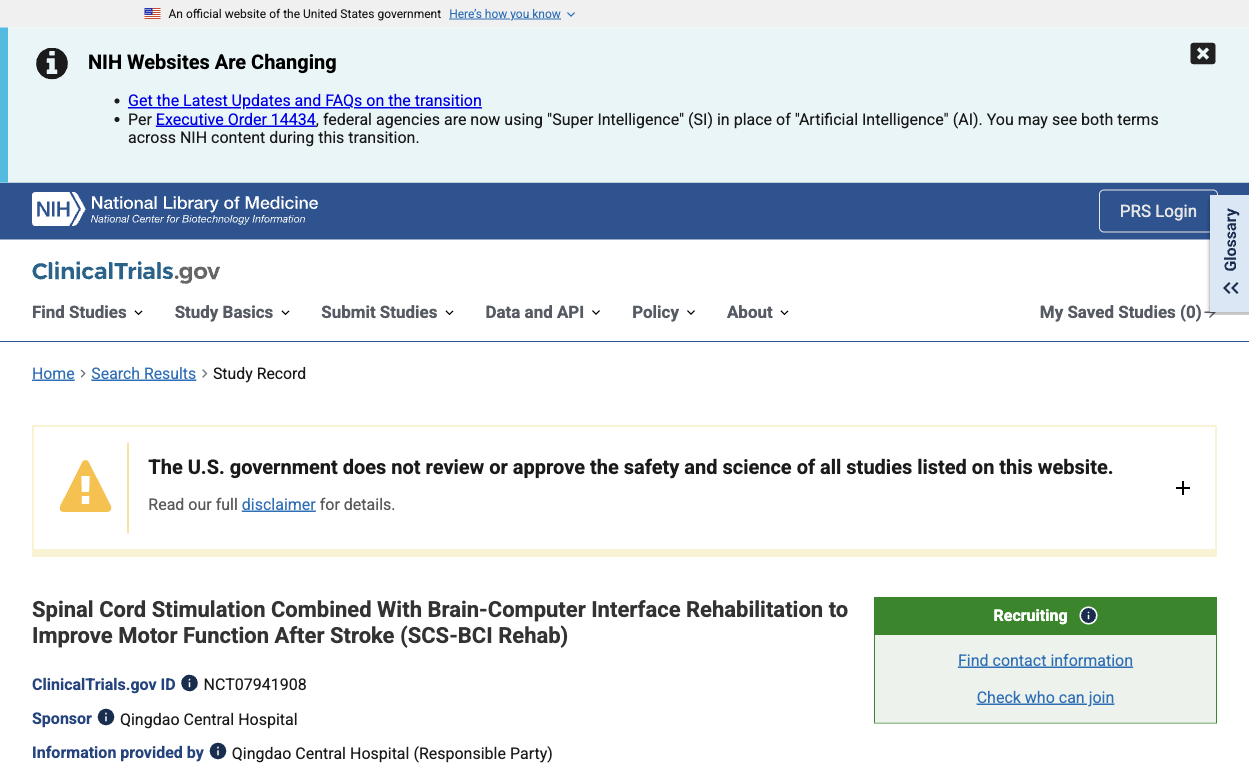
Public ClinicalTrials.gov record for SCS-BCI Rehab, ID NCT07941908. Recruitment status and estimated enrollment reflect trial design, not completed enrollment or clinical efficacy.
First posted on ClinicalTrials.gov on Nov 17, NCT07941908 (sponsored by Qingdao Central Hospital) is a prospective single-group cohort study planning to enroll 40 patients with post-stroke hemiplegia (listed as recruiting at verification). The protocol combines epidural spinal cord stimulation (SCS) with an EEG-driven upper- and lower-limb robotic BCI closed-loop training regimen for four weeks (3–5 sessions/week), incorporating weekly standardized SCS ON versus OFF comparisons under identical BCI and robotic settings. Primary outcomes track immediate ON/OFF motor task differences, Fugl-Meyer score changes, and correlations across multisource neurophysiological signals (EEG, fNIRS, EMG).
On the commercial side the same week, Neuralink posted a Nov 20 video showing a clinical trial participant playing Grand Theft Auto VI hands-free with its N1 implant (covered by PCMag). The two items sit on different evidence tiers: the video illustrates consumer-grade interaction potential, but N1 remains an investigational device without FDA market approval and a demo clip is not a clinical endpoint report; a registry entry carries no efficacy data yet, but commits parameters, ON/OFF controls, and outcome scales to a public ledger in advance.
Commentary
Post-stroke motor rehabilitation faces a persistent attribution challenge: how much gain comes from spontaneous recovery, passive robotics, electrical stimulation, or the BCI closed loop itself? Writing standardized SCS ON/OFF comparisons and multisource physiological correlates into the primary outcomes of NCT07941908 is a structured attempt to separate those contributions, though as a single-group observational cohort it still lacks a randomized control arm. No matter how fluid a commercial demo looks, long-term judgment still returns to registered sample sizes, controls, and follow-up data.
What to Watch Next
- Failure review: Final ULA and FAA root-cause findings, corrective actions, and return-to-flight clearance for Vulcan Leo 1, plus any schedule impact on Amazon Leo deployment.
- Return loop closure: Ground laboratory analysis of CRS-35 returned samples, and whether Varda's W-7 returns to Koonibba on schedule to sustain multi-capsule turnaround cadence.
- Chinese commercial launch execution: Contract execution details and vehicle disclosures for CASC Commercial Rocket's RMB 317.7M award, alongside upcoming multi-vehicle manifests at the Hainan commercial site.
- Clinical follow-up and peer review: Post-follow-up clinical data and regulatory filing for Beinao-1; full peer-reviewed papers for the three SfN 2026 BrainGate presentations; actual enrollment and ON/OFF comparison data from NCT07941908.
These checkpoints keep turning headline momentum back into concrete engineering work: what inputs are required, where interfaces fail, who verifies acceptance, and who owns ongoing operations after delivery.
While this issue adds concrete Chinese commercial launch and public tender slices, several map directions—including space power, thermal control, on-orbit servicing, propellant refilling, debris remediation, and lunar construction—did not yield sufficient in-window primary evidence to warrant standalone items; that reflects a coverage gap rather than an absence of activity. No new maturity scores are published in this issue.
AI & Space community group.
References
- ULA: Vulcan Leo 1 Mission Page and Vulcan Leo 1 Updates Blog, launch at 17:40 UTC Nov 15 (01:40 Beijing Time Nov 16), investigation updates Nov 17–18.
- NASA: Dragon Returns to Earth Packed With Science and Cargo, Nov 21.
- Southern Launch: W-9 Koonibba Recovery Release, Nov 18; PR Newswire: Varda W-9 Release, Nov 17.
- CCTV.com: Satellite Internet LEO Group 30 Launch, Nov 20 launch; Eastmoney: CASC Commercial Rocket RMB 317.7M Bid Award, citing the Nov 18 China Government Procurement Network notice.
- NASA: Voyager 1: What Is a Light-Day, Nov 18 milestone explainer.
- People's Daily Online: 2026 BCI Conference 15 Flagship Achievements & Beinao-1, Nov 22; prior implant count cross-checked via Beijing Municipal Government portal, Aug 2026.
- EurekAlert / Society for Neuroscience: Brain-computer interfaces: A new voice for people with paralysis, posted Nov 14 for the Nov 17 Neuroscience 2026 briefing.
- ClinicalTrials.gov: NCT07941908 (SCS-BCI Rehab), first posted Nov 17; commercial demo contrast via PCMag: Neuralink Lets Man Play GTA 6 With His Mind, Nov 20.
Facts follow the linked primary sources as verified for this issue; Commentary sections represent this issue's analysis, and neither industrial opportunities nor next-stage gates represent already achieved capabilities.