
004 | Space Industry × Cyborg Systems Weekly | The next threshold: sustained operation
After a single success, can the system keep working reliably? Both technology paths in this issue face that question.
004 / WEEKLY / 2026.11.02—11.08
Space industry needs to connect electricity, cargo and operational capability into sustainable services. Cyborg systems need to bring sensing, control and replacement devices into a person's daily life.
Space industry comes first, followed by cyborg systems. The latter has two paths: mechanizing the body while retaining the biological brain, and the more distant prospect of transferring a person fully to another substrate. Their evidence is assessed separately.
The reporting window runs from November 2 at 00:00 to November 9 at 00:00, Beijing time. Earlier events first disclosed this week have their event dates stated separately. Research was completed on November 9.
I / SPACE INDUSTRY
Space industry
01 / Low Earth orbit · Power / In-orbit result
Space station: installing the power upgrade in orbit
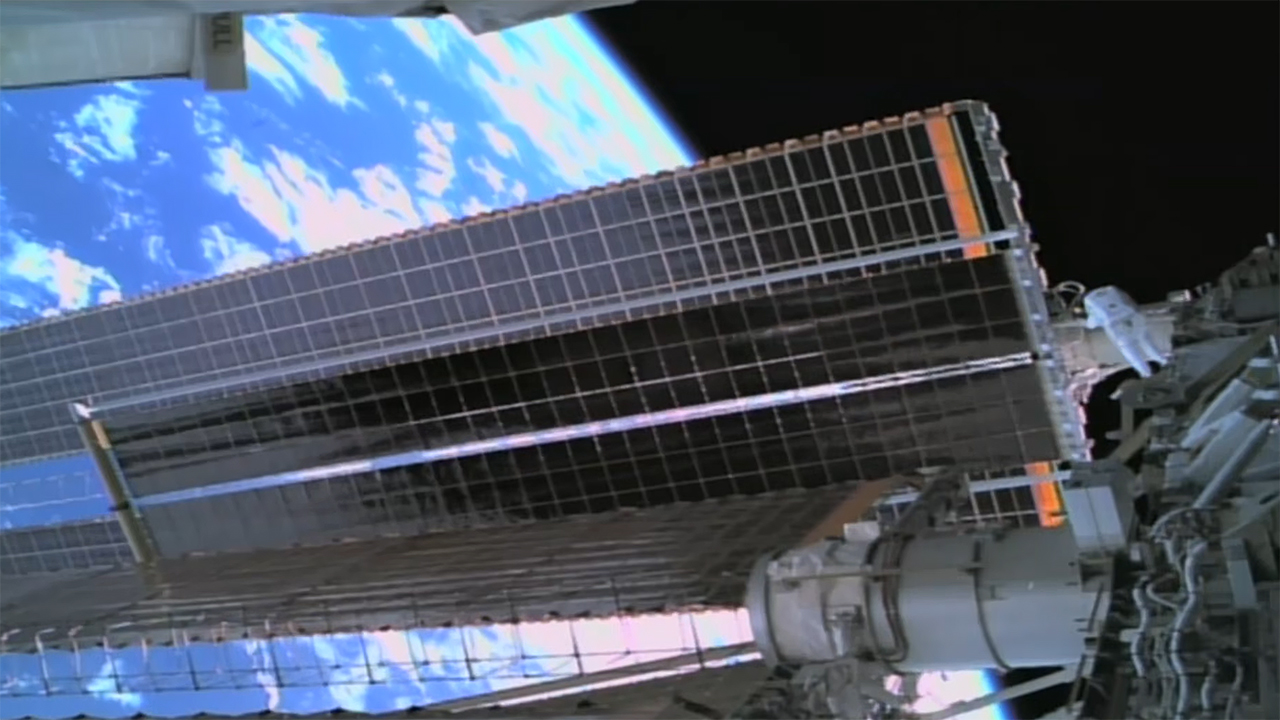
The eighth roll-out solar array after installation and deployment. Image: NASA+, source [01].
On November 5, U.S. Eastern time, NASA announced that the eighth and final roll-out solar array had been installed and deployed. The spacewalk lasted 6 hours 59 minutes and connected the array to the International Space Station's 3B power channel.
NASA describes the complete upgrade as increasing the station's power-generation capability from 160 kilowatts to approximately 215 kilowatts. Work began in 2021 and involved 18 preparation and installation spacewalks.
Commentary
This evidence crosses the threshold of hardware being installed and deployed in its target environment. It also shows that adding equipment requires transport, human maintenance and cooperation with existing systems. Sustained power delivery, faults and maintenance records remain to be examined. Rated generation capability cannot be treated directly as power available to a factory or additional commercial revenue.
Primary source [01]
02 / Moon · Logistics / Demand / Institutions · Contracts and plans
Moon base: procuring transport and power separately
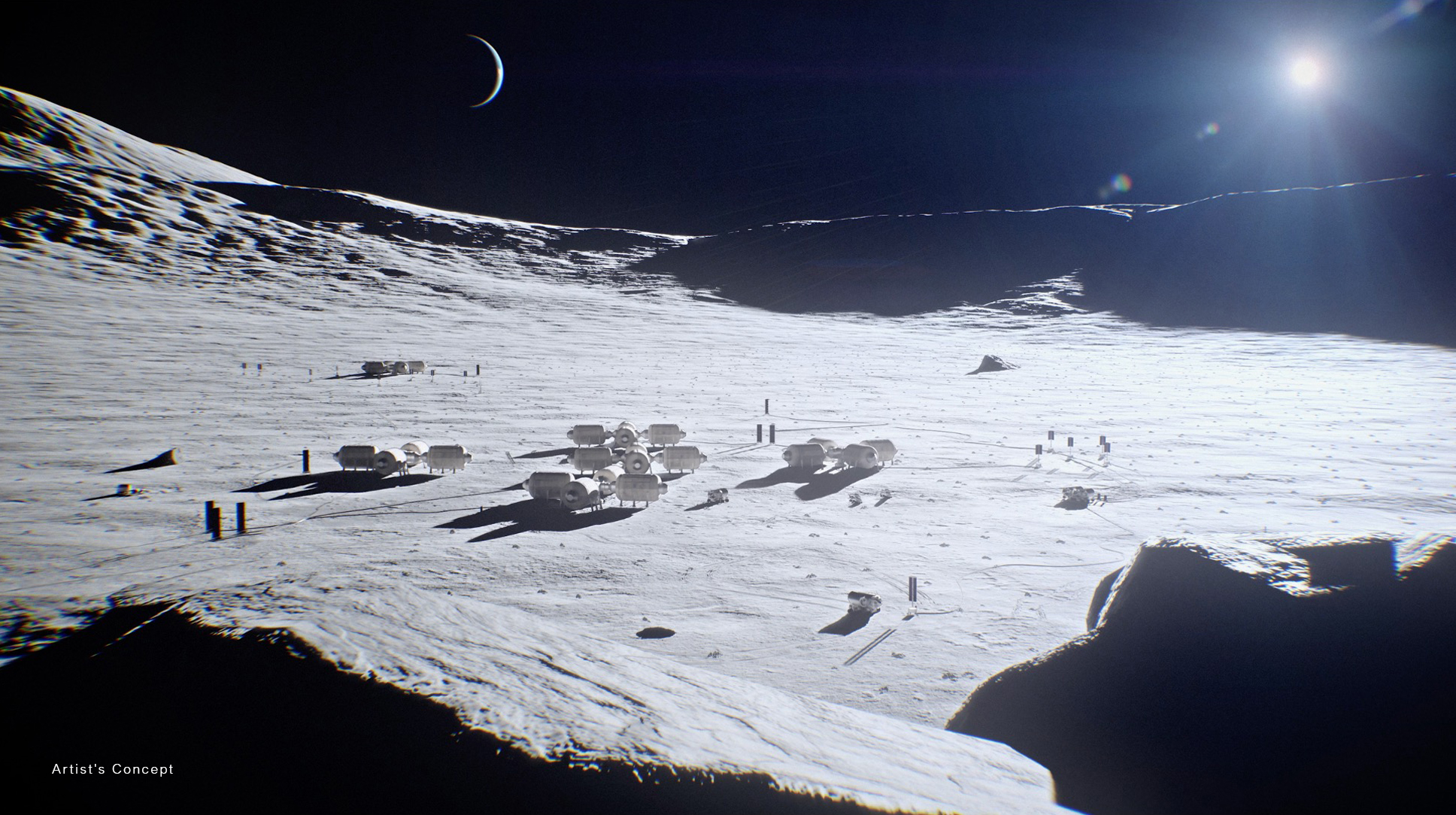
Artist's concept of a Moon base: a future proposal, not an already-built facility. Image: NASA, source [02].
On November 7, NASA announced a group of Moon-base projects. Eight companies entered the CLPS 2 supplier framework to compete for future lunar-delivery tasks. miniCAST advances energy-storage, power-generation and wireless-power-transfer components separately. Initial work focuses on components, with assembly and testing to follow.
The financial figure is especially easy to misread. CLPS 2 is a ten-year, multiple-award indefinite-delivery/indefinite-quantity framework with a combined ceiling of $10 billion. That ceiling is not an amount already ordered or paid, and it is not company revenue.
The same announcement proposed the PROMISE lunar south-pole rover, targeting launch in late 2028, an 18-month mission and investigation of resources approximately one meter below the surface.
Commentary
Procurement arrangements make potential demand more concrete. The next evidence should be task orders, payments and accepted deliveries. Operation through the lunar night and resource production still require future missions. The framework ceiling, energy-storage components and rover plan cross different thresholds and should be recorded separately.
Primary source [02]
03 / Moon / Mars · Autonomous operations / Ground test
Autonomous landing: this evidence comes from a drone on Earth
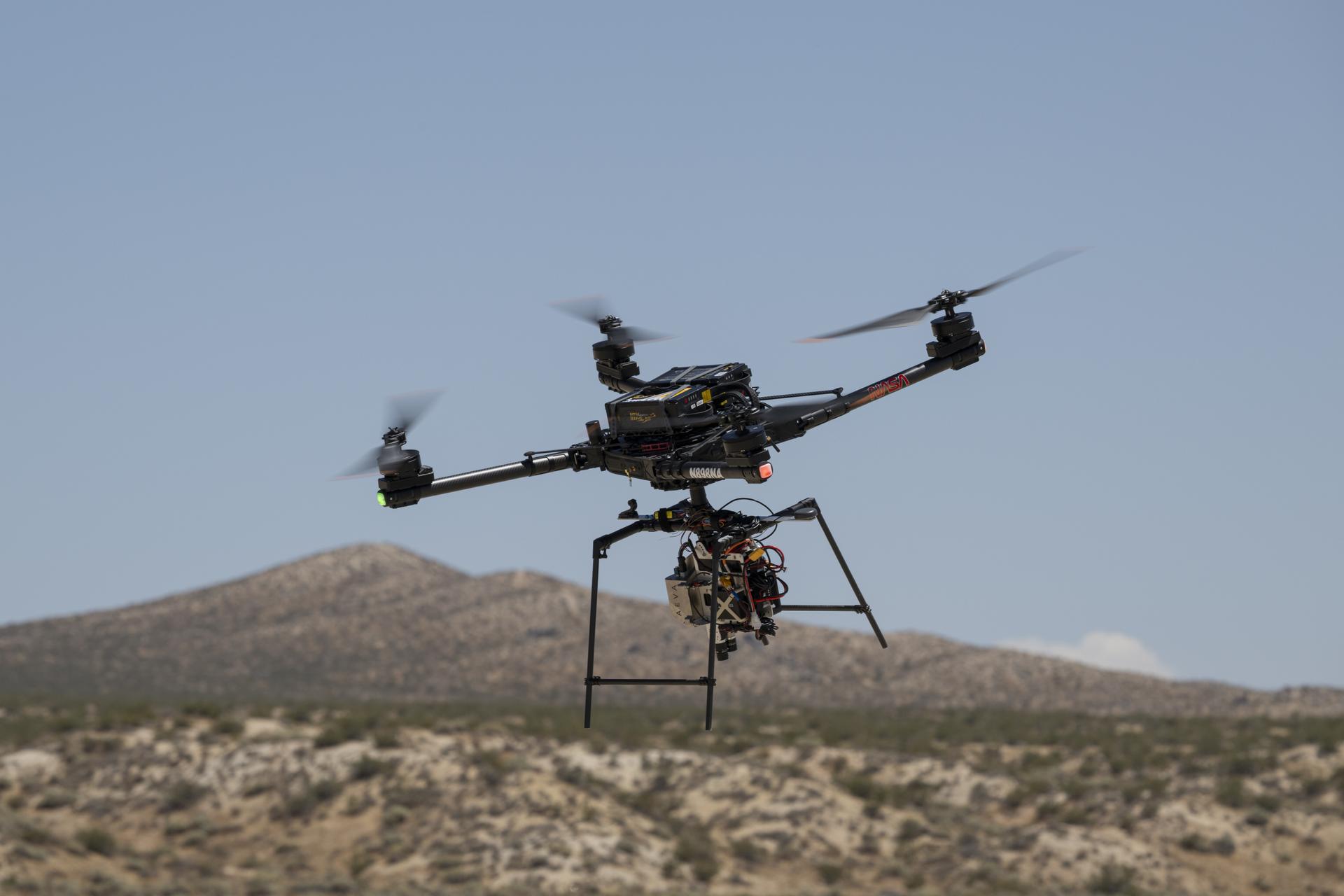
An Alta-X drone carrying the SPLICE payload during a ground flight on July 15, 2026; this is not a record of the August 27 test. Image: NASA/Ryan Kline, source [03].
On November 4, NASA disclosed that an Alta-X drone carrying the SPLICE navigation payload had completed simulated lunar-descent and landing maneuvers on August 27. The system evaluated landing sites using terrain data and redirected toward a safer location when it encountered an unsafe area.
Commentary
The test demonstrated cooperation between the navigation payload and its flight platform, relevant to reducing future landers' dependence on ground commands. It was a ground flight over a dry lakebed in California. Performance in lunar vacuum, dust and lighting, coupled to a complete lander, still requires verification in the target environment.
Primary source [03]
04 / Mars · Ground analogue of autonomous operation / Delayed disclosure
Mars simulation: a year of isolation ends; quantitative results await
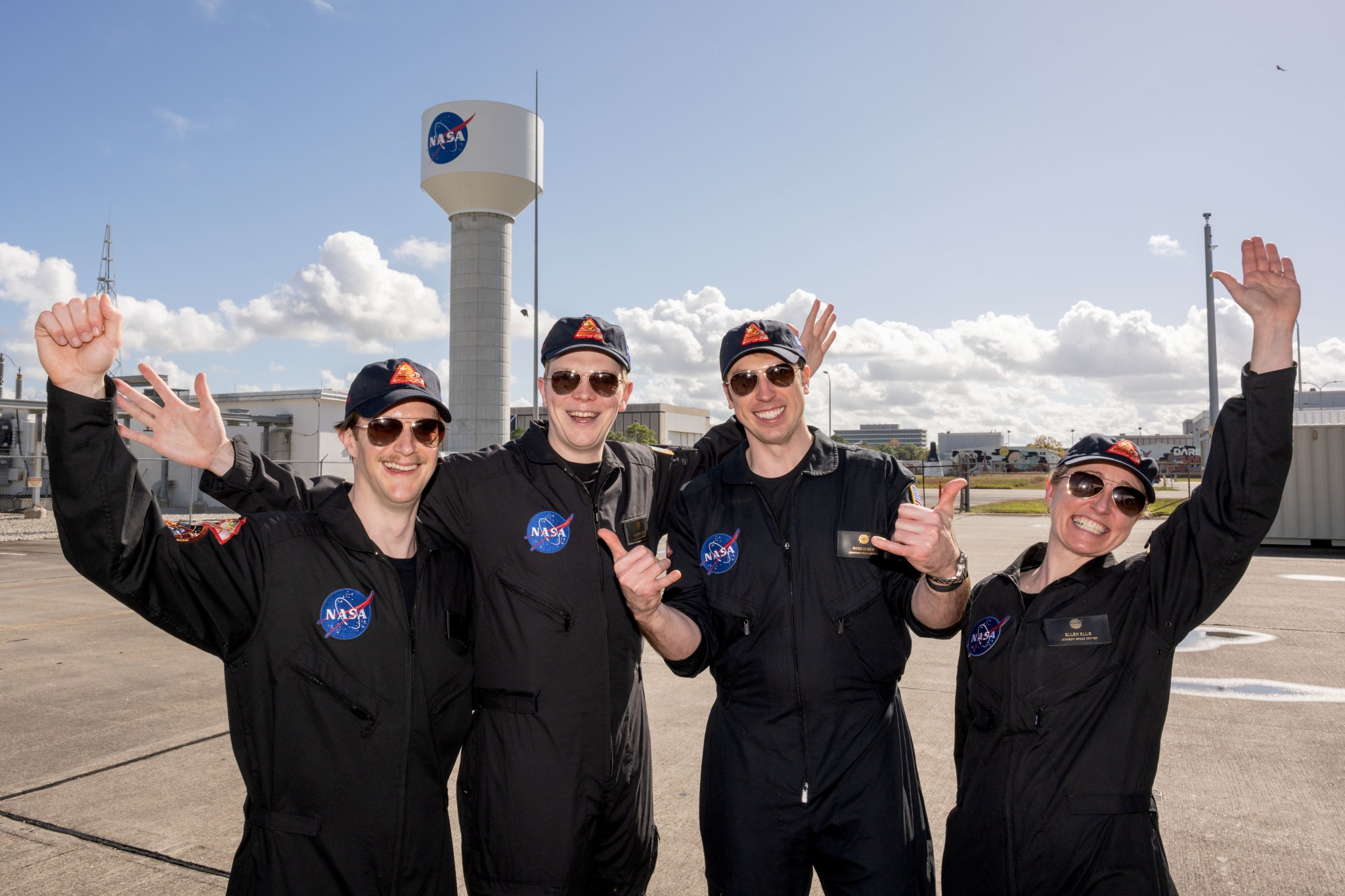
The four members of CHAPEA's second mission exiting after their ground simulation ended on October 31. Image: NASA/James Blair, source [04].
On November 2, NASA published a record of the second CHAPEA simulation crew's exit. The four participants had ended their simulated ground-based life on October 31. Activities included system tests, crop maintenance, limited-resource management and communication delays.
Commentary
Long isolation can expose issues in everyday operations, maintenance and teamwork. This exit announcement did not provide complete quantitative analyses of system reliability, health changes or resource balances. It marks a point from which to await further research; it does not validate operation under Martian gravity or radiation, or the ability to mine local resources.
Primary source [04]
05 / Mars · Logistics / Awaiting verification
ESCAPADE: confirm progress after the burn results
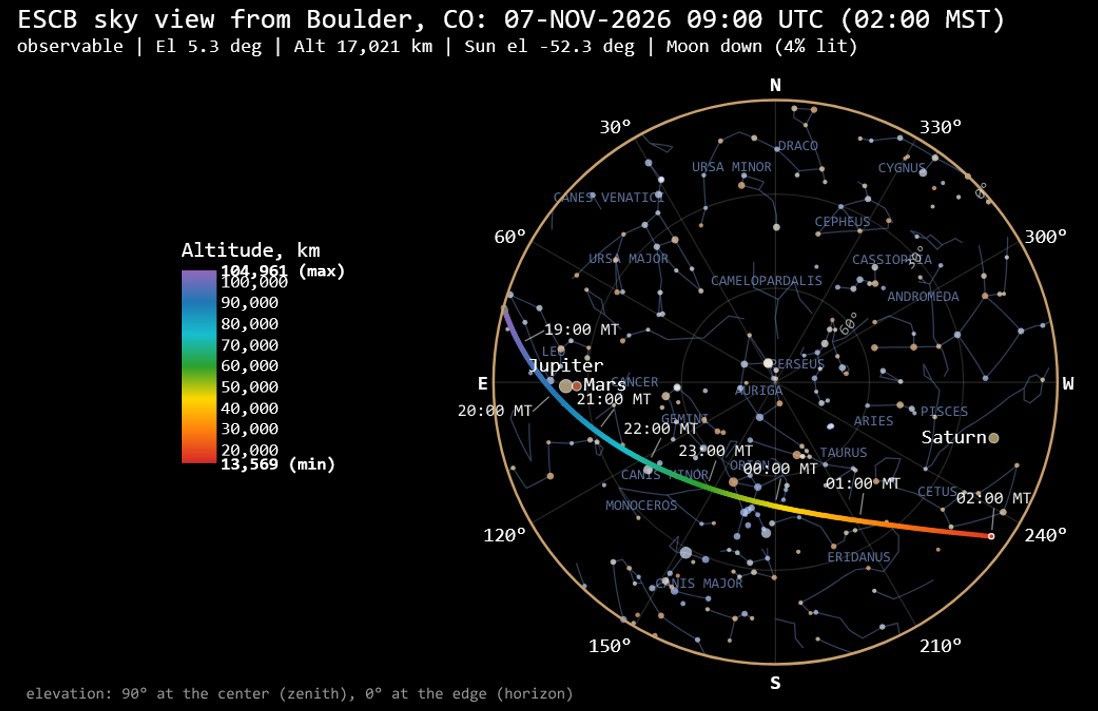
The original source's forecast star chart for observations from Boulder. Colored curves indicate planned observing tracks and elevations, not a successful burn. Image: Advanced Space, published through NASA's mission page and SVS, sources [09][12].
NASA's November 2 preview scheduled the two ESCAPADE spacecraft's close Earth passes and engine burns for November 7 at 05:00 and November 9 at 06:00, U.S. Eastern time. The second pass falls outside this issue's Beijing-time reporting window.
Commentary
The material obtained for this article is a planning announcement; post-burn mission confirmation had not been obtained. Engine-performance and trajectory results from the mission team are needed before judging whether this route toward Mars met expectations. A scheduled time is not evidence of success.
Primary source [09]
II / CYBORG SYSTEMS
Cyborg systems
06 / Body mechanization · Interface / Access · Recruitment announcement
Brain–computer interface: comparing three communication methods at home
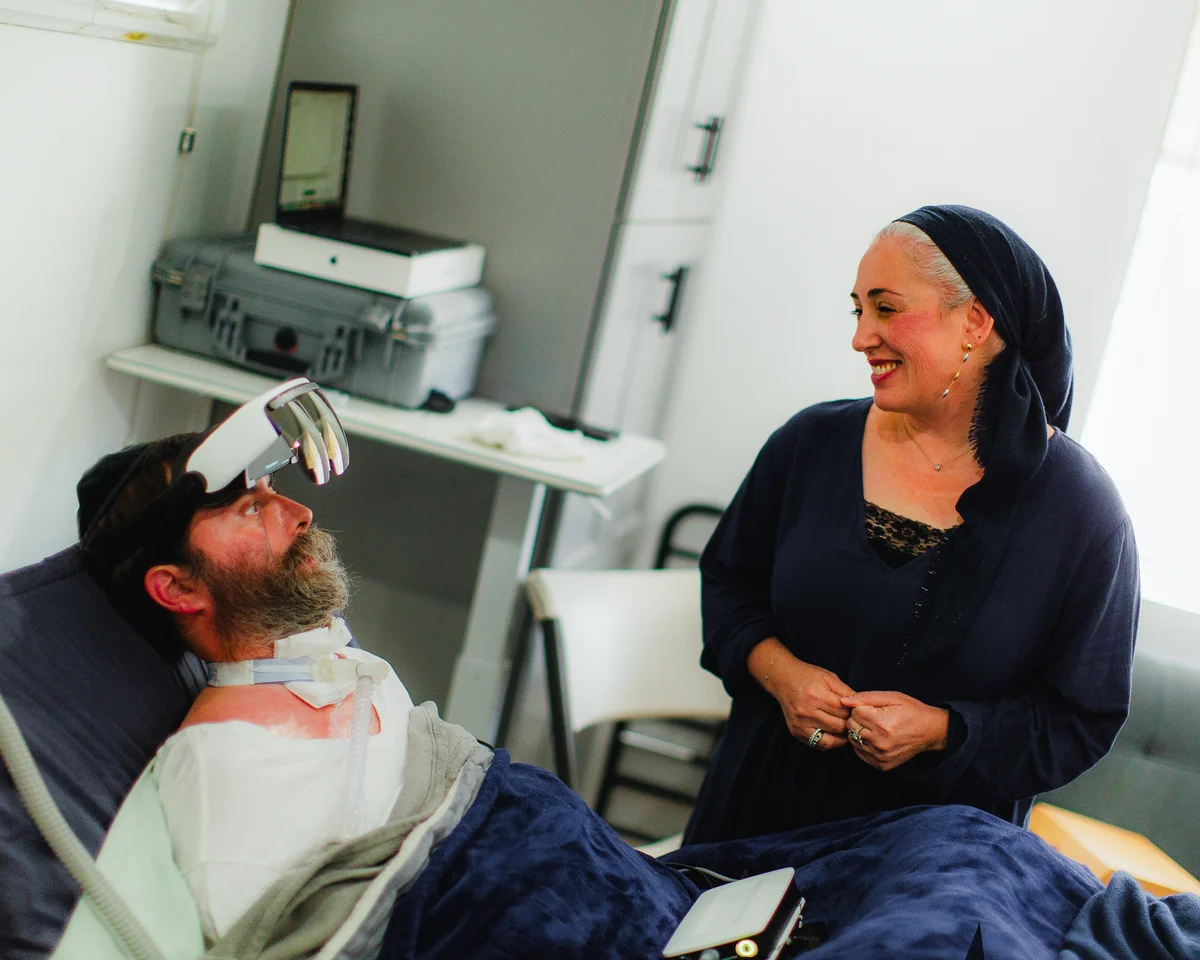
An ALS research-device use photo from Cognixion's official press kit; it does not demonstrate enrollment or efficacy in the current CHOICE study. Image: Cognixion, source [10].
On November 5, Cognixion announced the CHOICE study. It plans to recruit 30 adults with ALS, each comparing an existing eye-tracking communication device, a non-invasive brain–computer interface with a head-mounted display, and a screen-based version over 12 weeks.
The primary measure is the time participants voluntarily use each option. Speed, accuracy, usability and caregiver burden will also be assessed. The study puts task completion into the broader question of what people prefer to use at home.
Registry entry NCT07871071 was marked recruiting, with an estimated start date of November 15. Thirty people is the planned sample and 12 weeks is the study design; there are no results yet. The device remains investigational and has not received FDA approval or clearance for medical use.
Commentary
Observing choice, training support and caregiver burden can help test whether a system fits daily life. Actual enrollment, withdrawals and completed follow-up are the next evidence to examine. The company announcement and registry describe the same study and do not constitute two independent validations.
Primary sources [05, 06]
07 / Body mechanization · Measurement / Interface · Preprint
Prosthetic-hand control: correlation does not establish everyday usefulness
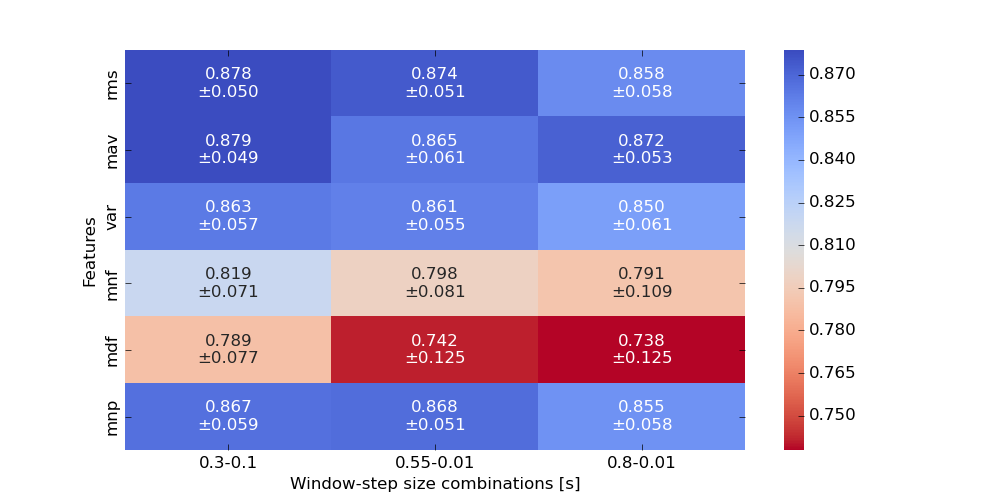
Original Figure 6(c): validation-set PCC for feature, window and step combinations. Rows are features and columns are window/step durations in seconds; higher values are bluer. The 0.779 reported in the text comes from final testing, a different evaluation. Image: de Jager et al., CC BY 4.0, sources [07][13].
A November 2 preprint compares methods for estimating finger-joint angles from surface electromyography, or electrical activity measured from muscles through the skin. This approach differs from an implant inside the brain.
The authors used public Ninapro DB2 data, varying sampling windows, step sizes and features. In final offline tests using data from 12 participants, two features with a 300-millisecond window and 100-millisecond step both achieved a mean Pearson correlation coefficient of approximately 0.779. This measures correlation between predicted and recorded angles; it cannot be read as “77.9% prosthetic-hand accuracy.”
Commentary
The work helps controller designers weigh computational cost against signal performance. The paper also states that parameters were optimized for particular data and tasks and must be retuned for other tasks. It does not establish amputees' operation-success rates at home, stability across days or long-term acceptance.
Primary source [07]
08 / Prerequisite research relevant to full substrate transfer · Measurement / Project launch
Digital brain: first ask what the model can predict
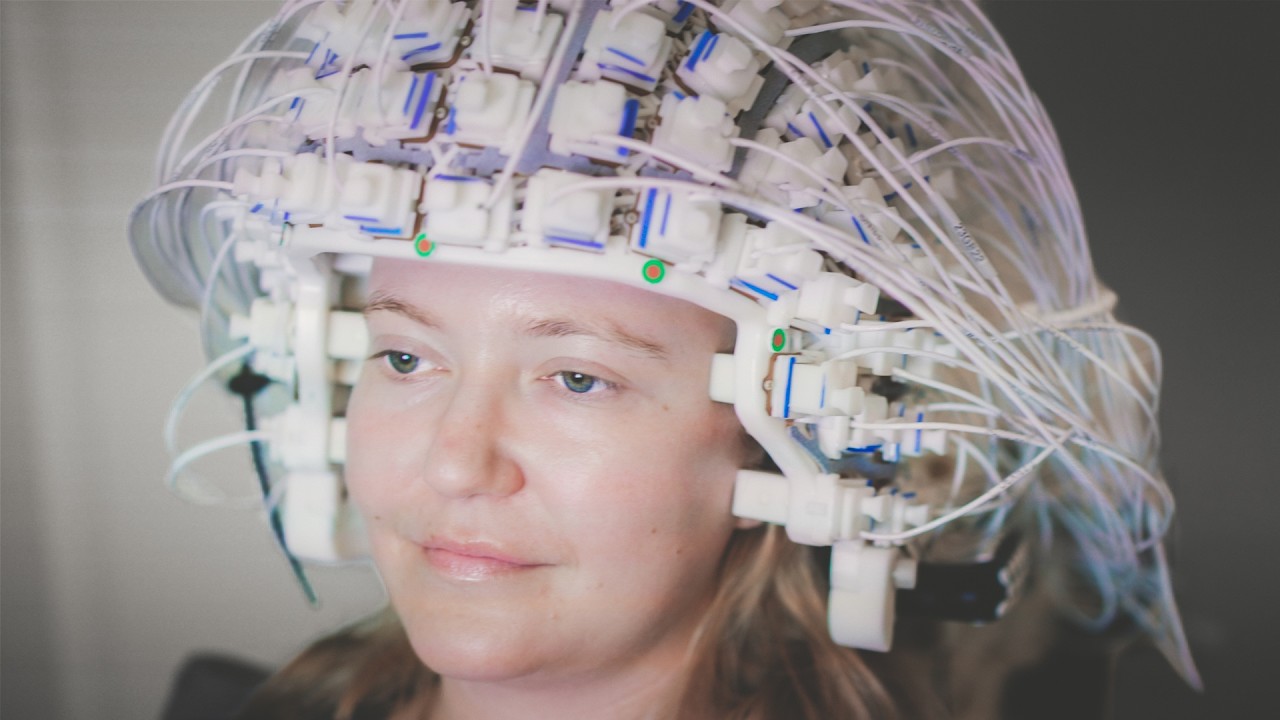
Cover of the project-introduction video embedded in Stanford's original article, showing brain-activity acquisition rather than full substrate transfer. Image and video: Kurt Hickman / Stanford, sources [08][11].
On November 2, Stanford announced the Digital Brain Project. It plans to combine 7-tesla MRI and wearable OPM-MEG data to train computational models that predict brain activity. The former provides spatial information; the latter focuses on rapidly changing activity.
The project description starts with systems involved in perception, memory and attention, then expands its scope. Datasets, prediction tasks, independent validation and individual differences deserve attention now; the name “digital brain” alone cannot determine progress.
Commentary
Further thresholds relevant to full substrate transfer include preserving a particular individual's memories and behavioral abilities, operating in a closed loop with a new substrate, and testing long-term continuity. This launch announcement provides none of those experimental results. Prediction accuracy for brain activity also cannot answer whether subjective selfhood continues.
Primary source [08]
What to watch next
Space industry: operating records after the station's power upgrade; actual task orders and deliveries under the lunar framework; SPLICE tests in target environments; and CHAPEA's formal quantitative analyses.
Cyborg systems: actual CHOICE enrollment, completed follow-up and withdrawals; prosthetic control with real users, across days and in complete devices; and whether the digital-brain project publishes reproducible data and predictive validation.
The judgment to take away this week is that sustained operation requires a chain of verifiable results. Power, control, care and maintenance each determine how far a technology can go.
Evidence boundaries for this issue
This issue selects seven developments and separately lists one mission awaiting verification. The ledger retains 18 space-industry and 12 cyborg monitoring series. Sources concentrate on NASA, research institutions and one clinical registry; this is not a comprehensive global scan. Actual procurement payments, long-term human follow-up and direct verification of full substrate transfer remain gaps.
Without an approved maturity snapshot from the previous issue, this issue assigns no official scores or rises and falls. Missing information is not recorded as zero or “no progress.” Facts come from original disclosures; threshold interpretation and selection are this issue's editorial judgments.

Scan to join the AI and aerospace discussion group; include a request to join.
References
[01] NASA | Final roll-out solar array installed
Page date: 2026-11-05; accessed 2026-11-09.
https://www.nasa.gov/blogs/spacestation/2026/11/05/spacewalkers-install-final-roll-out-solar-array/
[02] NASA | Moon-base transportation, technology and science awards
Page date: 2026-11-07; accessed 2026-11-09.
https://www.nasa.gov/news-release/nasa-awards-moon-base-transportation-technology-science-projects/
[03] NASA | SPLICE landing-navigation ground-flight test
Page date: 2026-11-04; accessed 2026-11-09.
https://www.nasa.gov/centers-and-facilities/armstrong/nasa-navigation-experiment-shows-promise-for-planetary-landings/
[04] NASA | Disclosure following the CHAPEA simulation crew's exit
Page date: 2026-11-02; accessed 2026-11-09.
https://www.nasa.gov/image-article/nasas-chapea-crew-returns-to-earth/
[05] Cognixion | CHOICE at-home communication study announcement
Page date: 2026-11-05; accessed 2026-11-09.
https://www.cognixion.com/blog/cognixion-choice-study-als
[06] ClinicalTrials.gov | NCT07871071 registry record
First publicly posted 2026-10-13; last updated 2026-10-16; accessed 2026-11-09.
https://clinicaltrials.gov/study/NCT07871071
[07] de Jager et al. | Surface EMG and finger-joint angle estimation, preprint v1
Page date: 2026-11-02; accessed 2026-11-09.
https://arxiv.org/html/2611.02736v1
[08] Stanford | Digital Brain Project launch announcement
Page date: 2026-11-02; accessed 2026-11-09.
https://news.stanford.edu/stories/2026/11/stanford-digital-brain-project
[09] NASA | Planned ESCAPADE Earth flybys; results awaiting confirmation
Page date: 2026-11-02; accessed 2026-11-09.
https://science.nasa.gov/blogs/escapade/2026/11/02/nasas-twin-escapade-spacecraft-to-slingshot-past-earth-on-way-to-mars/
[10] Cognixion | Official Axon-R press kit, including ALS research photos
No publication date stated; accessed 2026-11-09.
https://www.cognixion.com/cognixion-one-axon-r-press-kit
[11] Stanford | Project-introduction video embedded in the original article
No publication date stated; accessed 2026-11-09.
https://www.youtube.com/watch?v=XBEDxbEj6aQ
[12] NASA SVS | ESCAPADE observing forecast star chart, credited to Advanced Space
Page date: 2026-11-02; accessed 2026-11-09.
https://svs.gsfc.nasa.gov/15114/
[13] Creative Commons | CC BY 4.0 license for the paper's figures
No publication date stated; accessed 2026-11-09.
https://creativecommons.org/licenses/by/4.0/