
002|Space Weekly|Deep-Space Systems Move into Integrated Testing as Science Missions Enter a New Phase
From Individual Demonstrations to System Coordination
2026.10.19—10.25 Beijing time · Published: October 26, 2026
This issue follows 12 advances in research and engineering: in ground testing, Dragonfly completed a critical simulation sequence for its first landing, CASALS explored continuous 3D mapping through wavelength scanning, and Roman moved from in-orbit checks to science commissioning. Together, they pose a question: once individual capabilities can be demonstrated, how do we prove that the entire system can work in coordination? We also track nuclear power conversion, computational fault tolerance, inter-satellite scheduling, engine validation, and mission status, distinguishing new evidence, institutional plans, and editorial judgment. More complex spacecraft need more than stronger components: data, energy, control, and validation must also form a complete loop under the same set of conditions.
Reporting scope: The reporting window runs from 00:00 on October 19, 2026, to 00:00 on October 26, Beijing time, with the end time excluded. The publication date is October 26. Event dates and publication dates are listed separately; where the original page gives no time zone, dates retain their original precision. This issue does not retroactively treat developments after the editorial deadline as results within the reporting window.
At a Glance
This week's focus: Integrated testing for autonomous deep-space landing, continuous 3D mapping, and in-orbit science calibration.
Research and engineering: Nuclear power modules, model fault tolerance, navigation constellation scheduling, solar particle modeling, engine hot-fire tests, and structural validation.
Missions and industry: MMX moved from planning to the post-launch phase, commercial relay demonstrations began preparations for in-orbit testing, and Swift ended operations.
This Week's Focus
01|Dragonfly Completes a First-Landing Simulation with Flight-Like Avionics
Field: Autonomous deep-space flight
Validation stage: Ground-based real-time integrated simulation
Published: October 24, 02:44 Beijing time
Event timing: Testing completed recently; disclosed this week
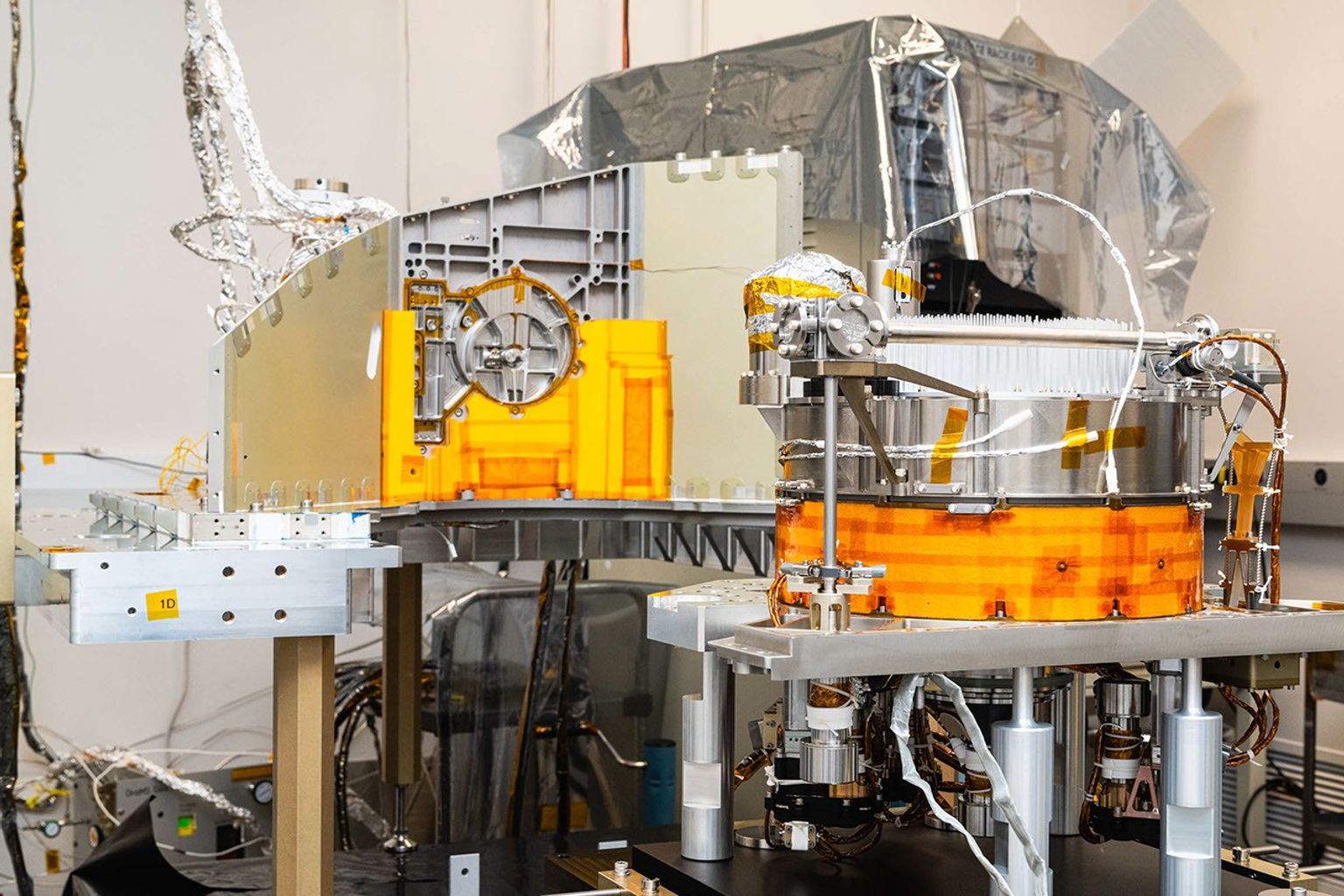
Dragonfly's sample transfer carousel (right) and DraMS mass spectrometer (left), photographed during integration preparations at Goddard in March 2026. This is a historical hardware background image, not a view of the latest first-flight simulation. Source: NASA; photo: Mike Guinto. Image reference or original

After reaching Titan, Dragonfly cannot wait for Earth to send back instructions for every operation. NASA disclosed this week that the team had run the complete critical sequence of its first flight in real time, using flight-like avionics on a computer testbed at the Johns Hopkins University Applied Physics Laboratory: flying over terrain after separating from the backshell, searching for a safe landing site, then turning, descending, and landing. The new evidence is that multiple subsystems are beginning to work together with realistic timing, beyond individual algorithms working separately.
The test connected flight software, avionics, and simulated sensor inputs, covering navigation cameras, the inertial measurement unit, and lidar. The camera simulator used a graphics processing unit to generate Titan scenes in real time, aligning image generation with the cameras' exposure intervals of approximately 20—70 milliseconds. For an autonomous system, correctly assessing terrain is not enough; information must also reach the next part of the chain in time.
Earlier tests progressed from spinning a single rotor to short repositioning maneuvers and partial reconnaissance flights. Adding lidar enabled a more complete sequence of terrain-height, slope, and obstacle assessments during the first flight. This was a ground simulation: it was neither a flight on Titan nor a free-flight test of the complete vehicle. Next, the team will rerun the sequence using the actual flight system and deliberately inject faults to examine autonomous responses to anomalies.
Under the plans made public this week, the mission will launch no earlier than 2028 and reach Titan in 2034. The schedule remains a plan; the current milestone is testing software and hardware interactions with timing close to flight conditions.
Observations and Analysis
What matters most next is not whether the simulated images look realistic, but whether perception-to-control latency, failure recognition, and safe landing capability still hold after introducing real avionics, faults, and different terrain.
See original source [01] at the end.
02|CASALS Uses Wavelength Scanning to Fill Gaps Between Laser-Mapping Strips
Field: Remote sensing and electro-optical payloads
Validation stage: Airborne prototype validation; not yet in orbit
Published: October 21 (date on original page)
Event timing: Airborne tests conducted in November 2024; results presented this week
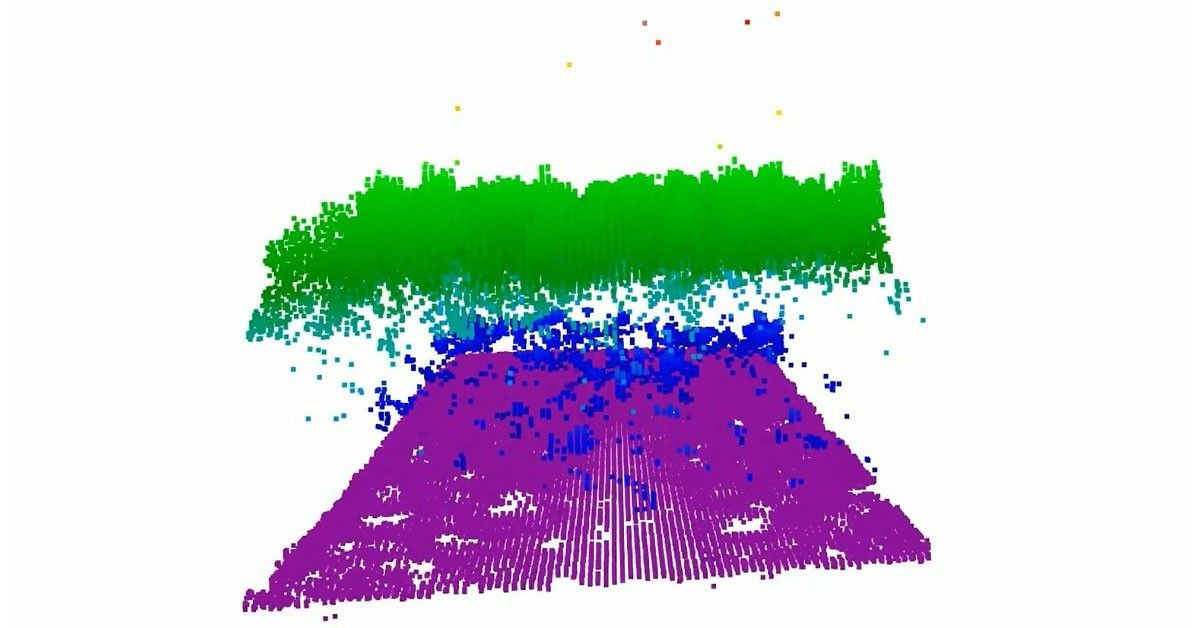
A 3D point cloud obtained by CASALS during airborne mapping of Great Cypress Swamp, Delaware, on November 12, 2024, shown in a still from an official NASA video. Green denotes the tree canopy, purple the ground, and blue near-ground vegetation. Source: NASA. Image reference or original
Conventional spaceborne lidar leaves discrete measurement profiles along its orbit, with large areas between tracks remaining unmeasured directly. This week, NASA introduced the CASALS prototype, which seeks to expand individual sampling lines into continuous 3D swaths, filling gaps in spatial coverage for forest-structure and terrain mapping. Its central change is to control scan direction through the wavelength of light, reducing reliance on mechanically rotating mirrors.
The system uses a tunable seed laser near 1040 nanometers to switch rapidly among 256 wavelengths. A grating deflects different wavelengths at different angles, distributing laser pulses across different positions transverse to the flight path. The reported detector quantum efficiency is 80%, meaning the efficiency of converting incident photons into electrical signals; this is not the measurement accuracy of the complete instrument, nor does it mean that all returning light is received.
The prototype flew aboard a B200 aircraft in November 2024. NASA says it achieved a horizontal resolution of 22 centimeters at a flight altitude of approximately 5 kilometers, sufficient to distinguish fine vegetation structures. These figures apply to airborne conditions and cannot be taken directly as a resolution promise for a future orbital altitude of several hundred kilometers. The system still needs a wider swath, onboard data processing, and a prototype suited to the space environment; the next airborne campaign is planned for summer 2027.
The significance of this advance lies in considering optical design, scanning coverage, and data processing together. Fewer moving parts may reduce mass, power consumption, and maintenance burdens, but those benefits still need to be demonstrated through engineering metrics and environmental validation of the complete payload.
Observations and Analysis
Further tracking should consider swath width, measurement time per unit area, and data-processing burden together. Resolution alone, without accounting for coverage and resources, is not enough to determine whether a remote-sensing instrument is suitable for a satellite.
See original source [02] at the end.
03|Roman Enters Science Commissioning, Moving from Taking Images to Making Them Comparable
Field: Space astronomy and calibration
Validation stage: In-orbit science commissioning
Published: October 23, 03:43 Beijing time
Event timing: Entry into a new commissioning phase announced this week
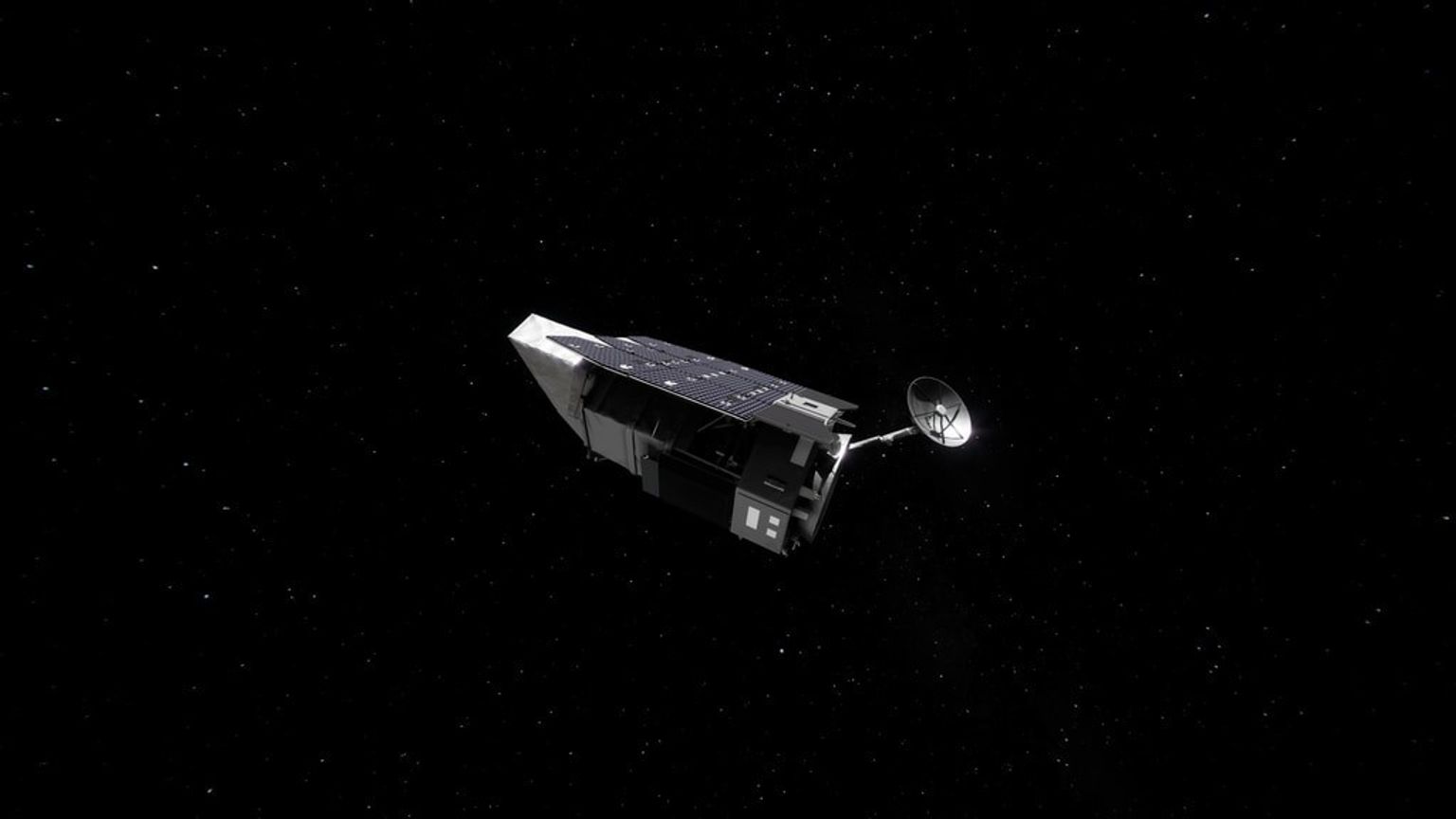
A mission concept illustration of the Roman Space Telescope, not an astronomical observation acquired during this commissioning phase. Source: NASA Goddard Space Flight Center / Conceptual Image Lab. Image reference or original

A telescope's ability to image a target does not mean that images from different times and positions are ready for precise scientific comparison. NASA announced this week that the Roman Space Telescope had entered science commissioning. Following integrated checks and performance adjustments of the observatory and its main instrument, attention is now turning to detailed calibration of image quality, instrument response, and observational consistency.
The team reports that the telescope can now point steadily, expose, slew, and transmit data. Its fine guidance system has also completed test observations in regions crowded with stars or heavily obscured by dust. This matters because the telescope relies on stars within its field of view to maintain pointing; crowded targets or complex backgrounds can make guide-star identification and stability a constraint.
Science commissioning must also separate instrumental effects from changes in celestial objects. If images differ in sharpness or brightness, researchers could mistake pointing jitter, defocus, or changes in detector response for real signals. Upcoming planned observations will therefore characterize performance and calibrate response before science operations begin. The public update consists mainly of the team's qualitative descriptions; this blog post does not provide a complete error budget or calibration residuals.
This issue records the development as progress in the operational phase, without prematurely claiming survey results or new celestial discoveries. As commissioning approaches completion, readers increasingly need to distinguish three levels: instruments functioning normally, data being calibrated, and scientific conclusions being reliable.
Observations and Analysis
Further tracking should focus on the start of formal science operations, calibration data and descriptions of errors, and consistency across repeated observations of large areas. The value of rapid imaging ultimately depends on whether the data can be compared consistently.
See original source [03] at the end.
Research and Engineering Advances
04|SR-1 Nuclear Power Module Advances the Division of Work on Its Conversion System
Field: Space power and propulsion
Validation stage: Development and contractual arrangements; not yet flown
Published: October 20 (date on original page)
Event timing: Contract and development arrangements announced this week
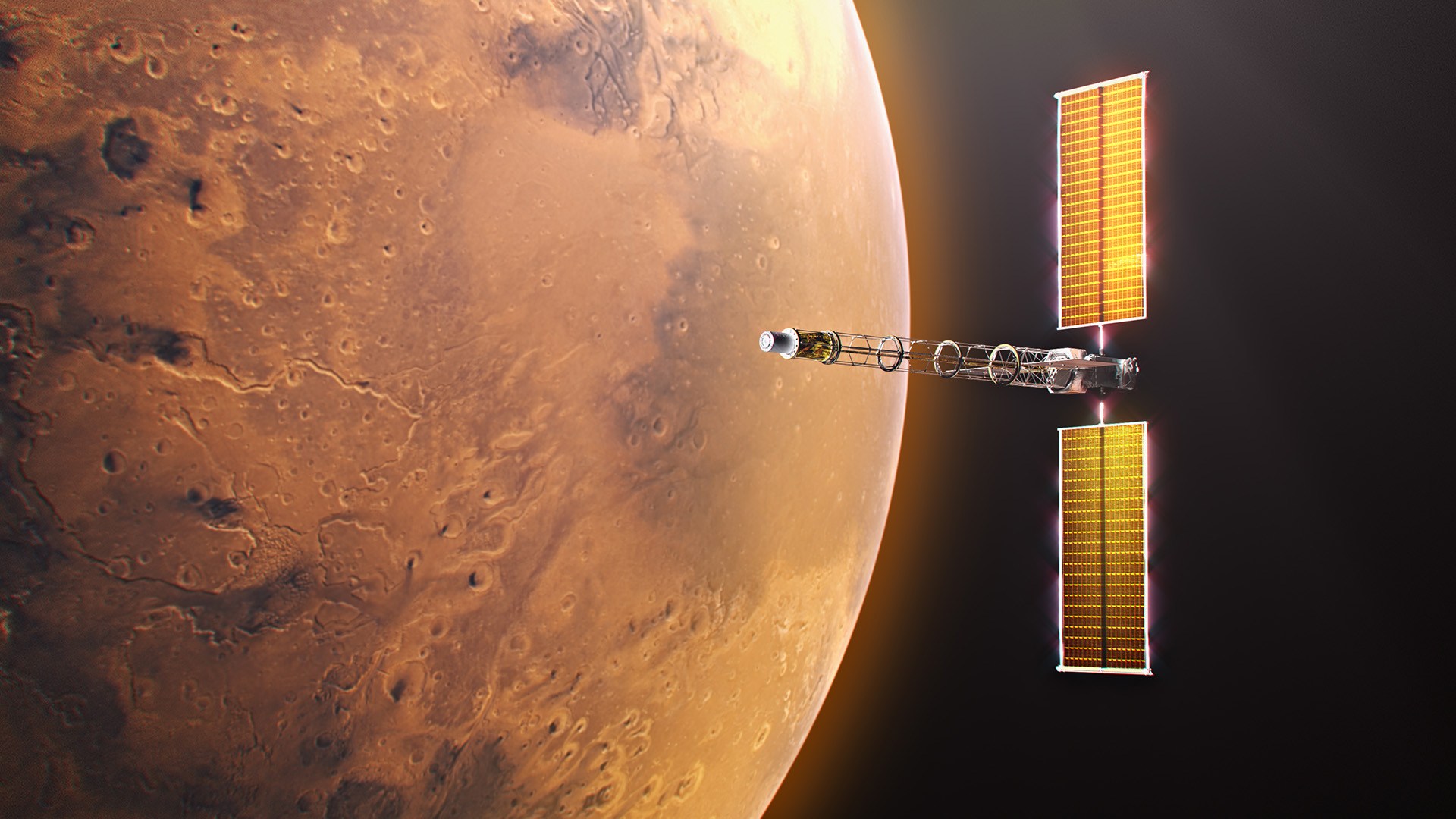
A concept illustration of the SR-1 Freedom nuclear electric propulsion spacecraft, not a flight photograph. Source: NASA; illustration: Alberto Bertolin. Image reference or original
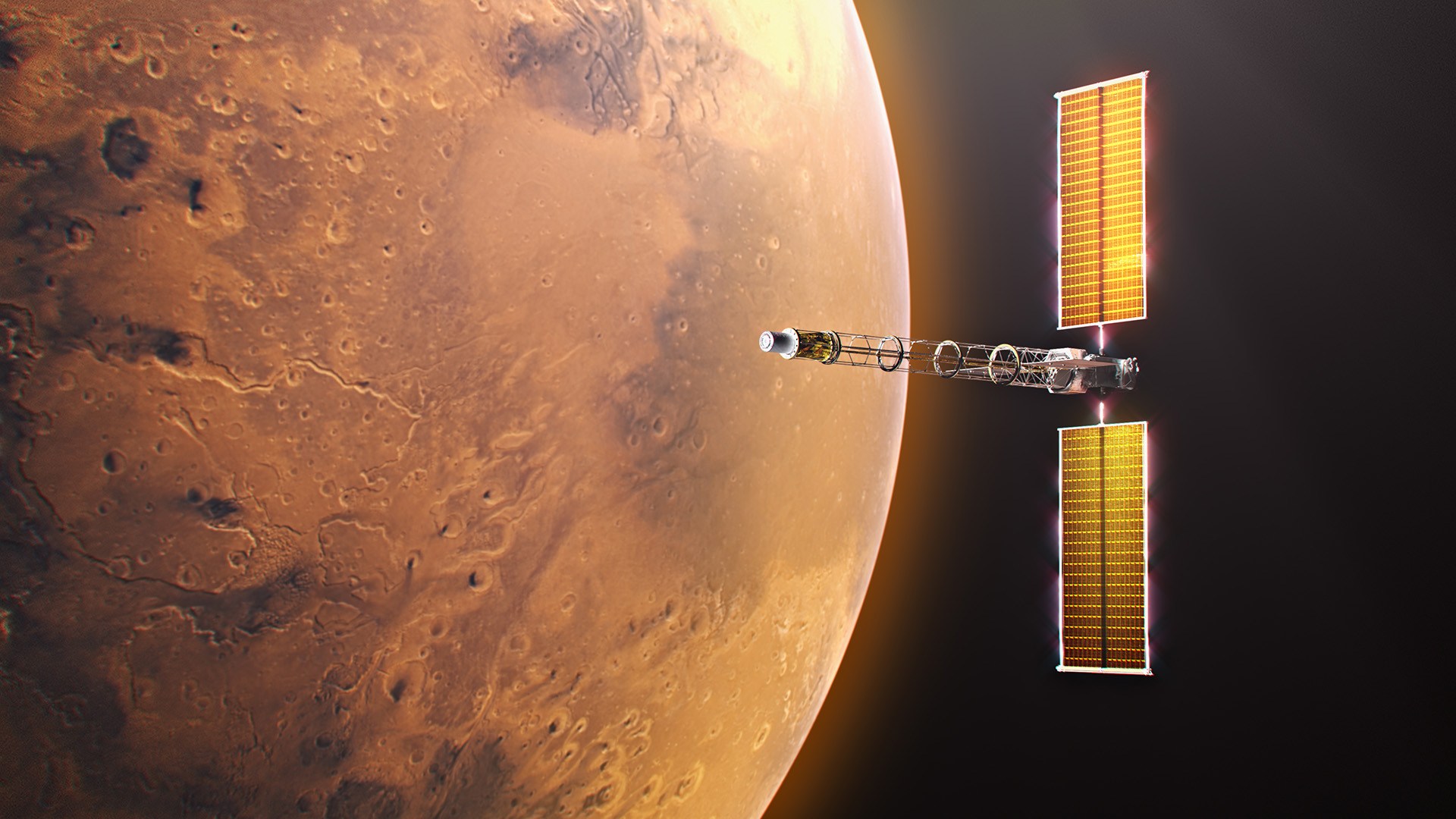
NASA disclosed a new division of work for the SR-1 Freedom nuclear power module: Sierra Lobo will provide a closed Brayton-cycle energy conversion system to be integrated with the fission reactor under development at the U.S. Department of Energy's Idaho National Laboratory. The reactor supplies heat, the conversion system turns heat into electricity, and the electricity then powers spacecraft systems and electric propulsion. This differs from nuclear thermal propulsion, which heats propellant directly.
The new developments this week are the contract and integration path; no results were announced for testing of the complete nuclear power module. NASA is still targeting a 2028 launch and says the reactor will remain inactive until it leaves Earth orbit.
Observations and Analysis
The next step is to see how the reactor, conversion equipment, and heat-rejection system pass testing and safety reviews together. A contract establishes the supplier; it cannot replace performance evidence for the complete system.
See original source [04] at the end.
05|A Quantized Neural Network Attempts to Repair Bit Flips Through Projection
Field: Onboard computing and software fault tolerance
Validation stage: Simulated fault evaluation; preprint
Published: October 20, 12:38 Beijing time
Event timing: v1 made public this week
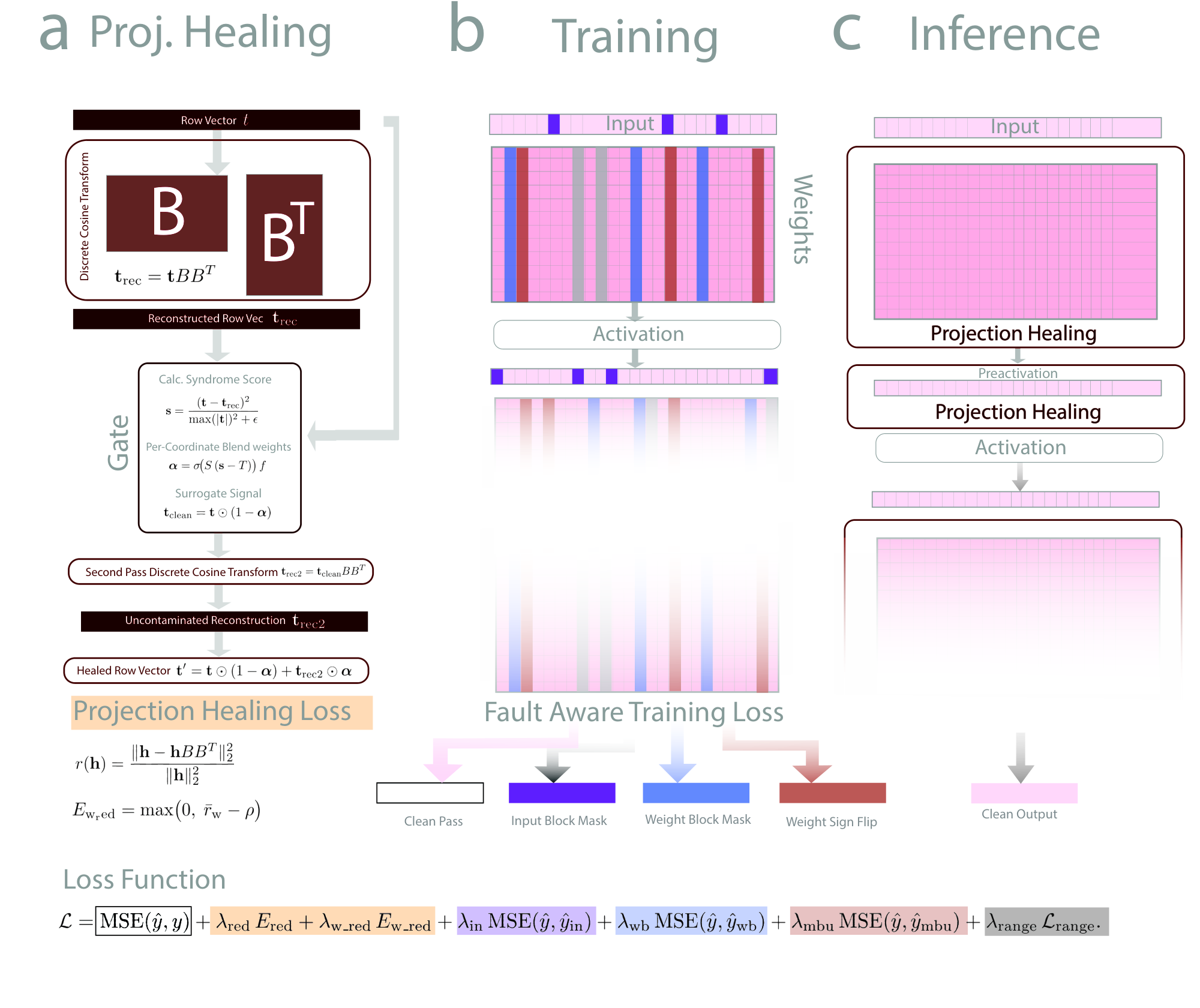
Figure 1 from the paper: system architecture for Projection Healing, training, and inference, with the original figure retained in full. Source: Peter Xiangyuan Ma and Joshua S. Bloom, arXiv:2610.27621; license: CC0. Image reference or original

High-energy particles can flip stored bits, gradually corrupting neural-network parameters. Ma and Bloom propose Projection Healing: during training, weights and activations are concentrated more tightly within low-dimensional structures; during operation, anomalous coordinates are identified and reconstructed from the undamaged portions. An additional full copy of the weights is not kept in long-term storage.
The paper simulates faults in quantized networks on six regression tasks. At a threshold of 5% deterioration in root-mean-square error relative to each model's own fault-free baseline, the median cumulative fault intensity tolerated by the method rises to 2.04 times that of unprotected models, compared with 1.62 times for the SECDED error-correction baseline. This is not a measured doubling of in-orbit service life.
Protection also comes at a cost: the example inspection configuration adds computation, and fault-free errors worsen substantially on some tasks. Working memory and reliable writeback still need to be protected. The paper explicitly acknowledges that conventional error correction retains an advantage at low fault intensities.
Observations and Analysis
Absolute errors should be compared under the same fault spectrum and computational budget. Software self-repair may complement hardware protection, but it cannot yet replace irradiation tests and mission-level reliability validation.
See original source [05] at the end.
06|Half-Slot Scheduling Lets a Navigation Constellation Also Provide External Tracking, Telemetry, and Command Services
Field: Navigation and inter-satellite networks
Validation stage: Simulation with a BeiDou configuration; preprint
Published: October 22, 12:06 Beijing time
Event timing: v1 made public this week

The navigation constellation first reserves resources for internal tasks, then allocates ranging, telemetry, and command resources to external users. Editorial illustration based on the preprint by Yan et al.; not a deployed service. Image reference or original
Researchers at Nanjing University and the China Academy of Space Technology discuss a resource-allocation problem: if a navigation constellation also provides ranging, telemetry return, and command uplinks for other spacecraft, how can it keep external traffic from displacing its own tasks? The paper proposes staged dynamic half-slot scheduling, first reserving opportunities for basic ranging and ground communication, then allocating the remaining beams according to demand.
The simulation uses 30 navigation satellites, 3 ground stations, and 250 external users, comparing single-receive/single-transmit and multibeam configurations. Under the tested conditions, the new method maintains basic constellation operations while improving external services. Finer-grained scheduling of one-way transmissions avoids binding every two-way contact to the same counterpart.
This is a scheduling study under specified visibility, capacity, and traffic models, not evidence that BeiDou has launched these services. Adding transmit and receive beams also involves hardware, power, and interference constraints.
Observations and Analysis
Further work needs to examine performance under link interruptions, real traffic bursts, and distributed execution. Even if a simulated day can be computed within a day, that does not directly prove that every online decision meets real-time requirements.
See original source [06] at the end.
07|Observations at Five Locations Constrain 19 Parameters in a Solar Energetic Particle Model
Field: Space weather and the radiation environment
Validation stage: Replay of a historical event; published research
Published: Journal publication on October 20; institutional release on October 21
Event timing: The study examines the October 9, 2021, event
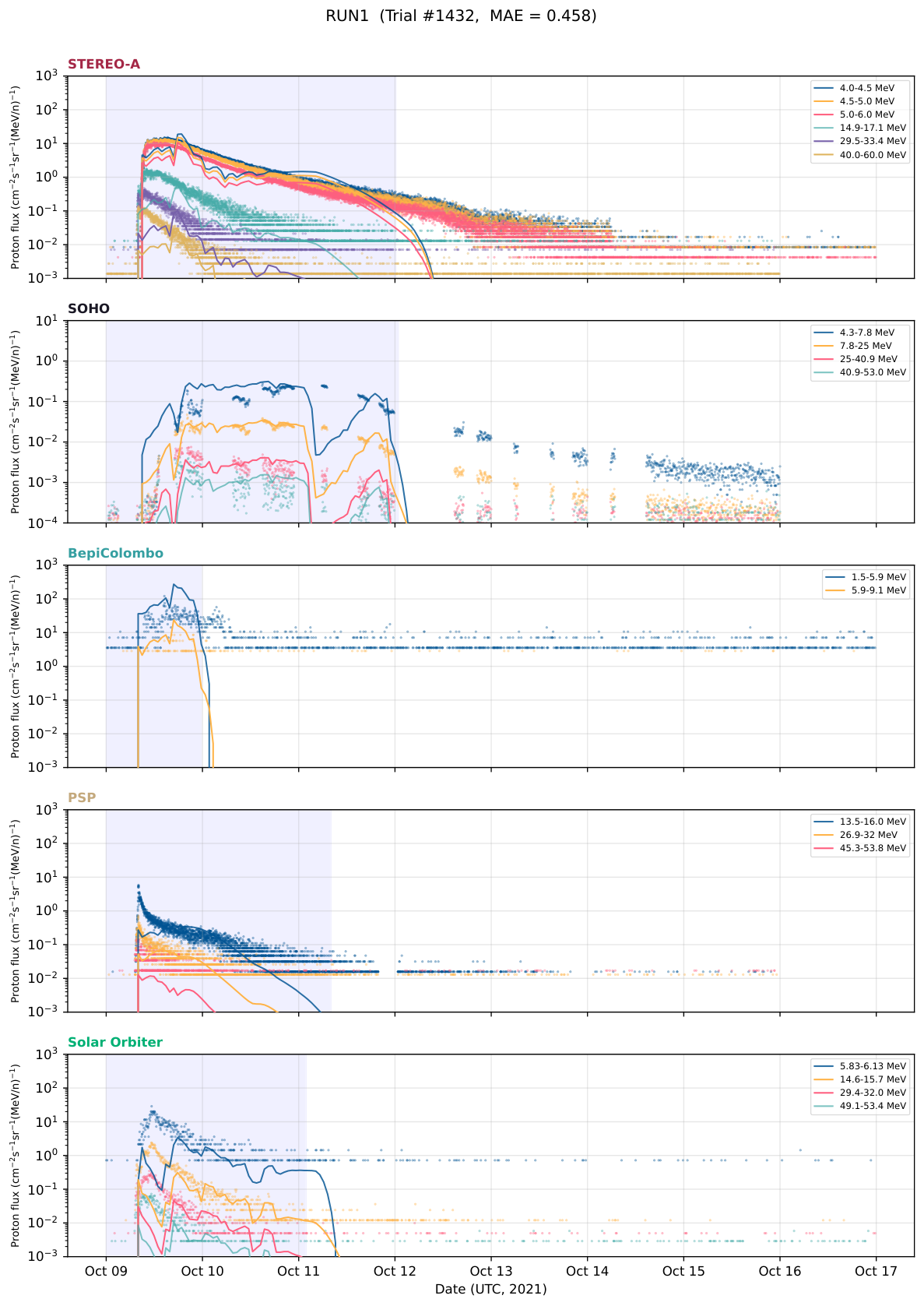
Figure 2(a) from the paper: the RUN1 best fit (solid lines) compared with detector observations at five locations (data points) for the October 2021 event. Blue shading marks the observation windows used in fitting. Axes, energy channels, and legends are retained in full; this is not a real-time forecast result. Source: Hiroyuki Tako Ishikawa et al., arXiv:2610.28603; license: CC BY 4.0. Image reference or original

Solar energetic particles threaten space electronics, yet scattering and injection parameters in physical models are often difficult to determine. SEITEN connects a magnetohydrodynamic model of a coronal mass ejection with particle acceleration and transport models, using observations from five spacecraft to search automatically for 19 parameters and reduce dependence on repeated manual tuning.
The study replays the October 9, 2021, event, beginning with a broad search and then concentrating the optimization. The paper reports a mean absolute error of approximately 0.45 in log10 flux for the proton-flux curves at the five locations; this is not a relative error of 45%. Different background-field configurations can produce similar fitting quality while implying injection efficiencies that differ by several orders of magnitude, showing that a good fit can still conceal parameter ambiguity.
The work was published in Scientific Reports this week, with a public version also available on arXiv. The current evidence is a reproduction of a known event, not a record of real-time warnings for unknown events.
Observations and Analysis
The real next test is validation across events, together with joint estimation of background fields and particle parameters. Explaining historical data and delivering credible forecasts when observations are sparse require different acceptance criteria.
See original source [07] at the end.
08|An RS-25 Development Engine Completes a 500-Second Hot-Fire Test
Field: Launch vehicles and thermal protection
Validation stage: Ground engine hot-fire test
Published: October 21 (date on original page)
Event timing: Test conducted on October 21, local U.S. time
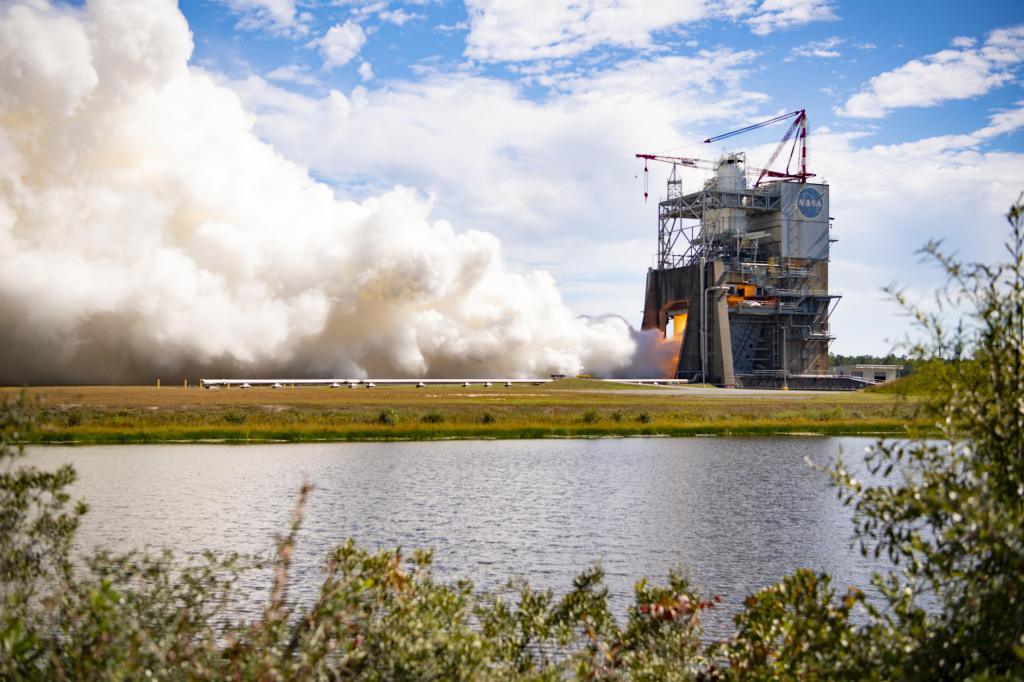
RS-25 development engine number 10001 during a hot-fire test on a Stennis test stand on October 21. Source: NASA; photo: Danny Nowlin. Image reference or original
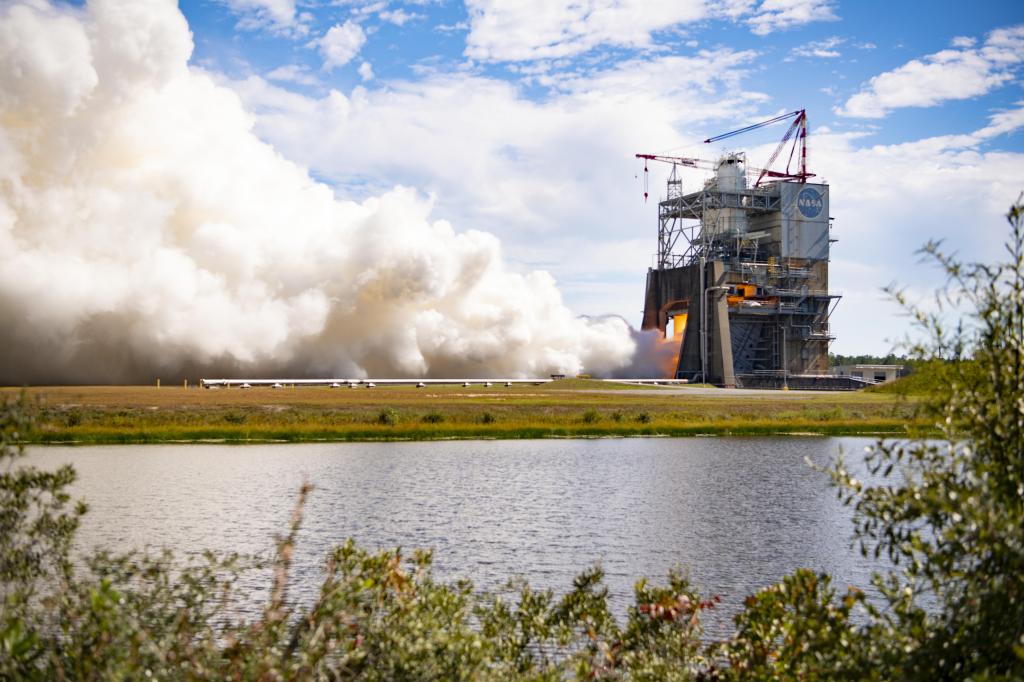
NASA fired RS-25 development engine number 10001 on a Stennis test stand for 500 seconds, comparable to the engine's operating duration during an SLS launch, reaching a 111% power level during the test. This percentage refers to the rated reference convention retained for the engine; it is neither thermal efficiency nor energy-conversion efficiency.
The objectives included acceptance of flight components for future missions and validation of a new thermal protection system for the nozzle. The development engine used in the test will not itself fly, so this test cannot be used to declare acceptance complete for a particular flight engine or an entire SLS vehicle.
Observations and Analysis
A full-duration run under target operating conditions comes closer to mission requirements than a brief firing. Validation results still need to be tracked separately at the component, engine, and complete launch-vehicle levels.
See original source [08] at the end.
09|Launch-Environment Analysis Addresses Shock Risks Through a Standard Modeling Workflow
Field: Structural validation and engineering tools
Validation stage: Ground modeling and supplier validation workflow
Published: October 19 (date on original page)
Event timing: Recently used for the first time in certification of a commercial rocket; disclosed this week
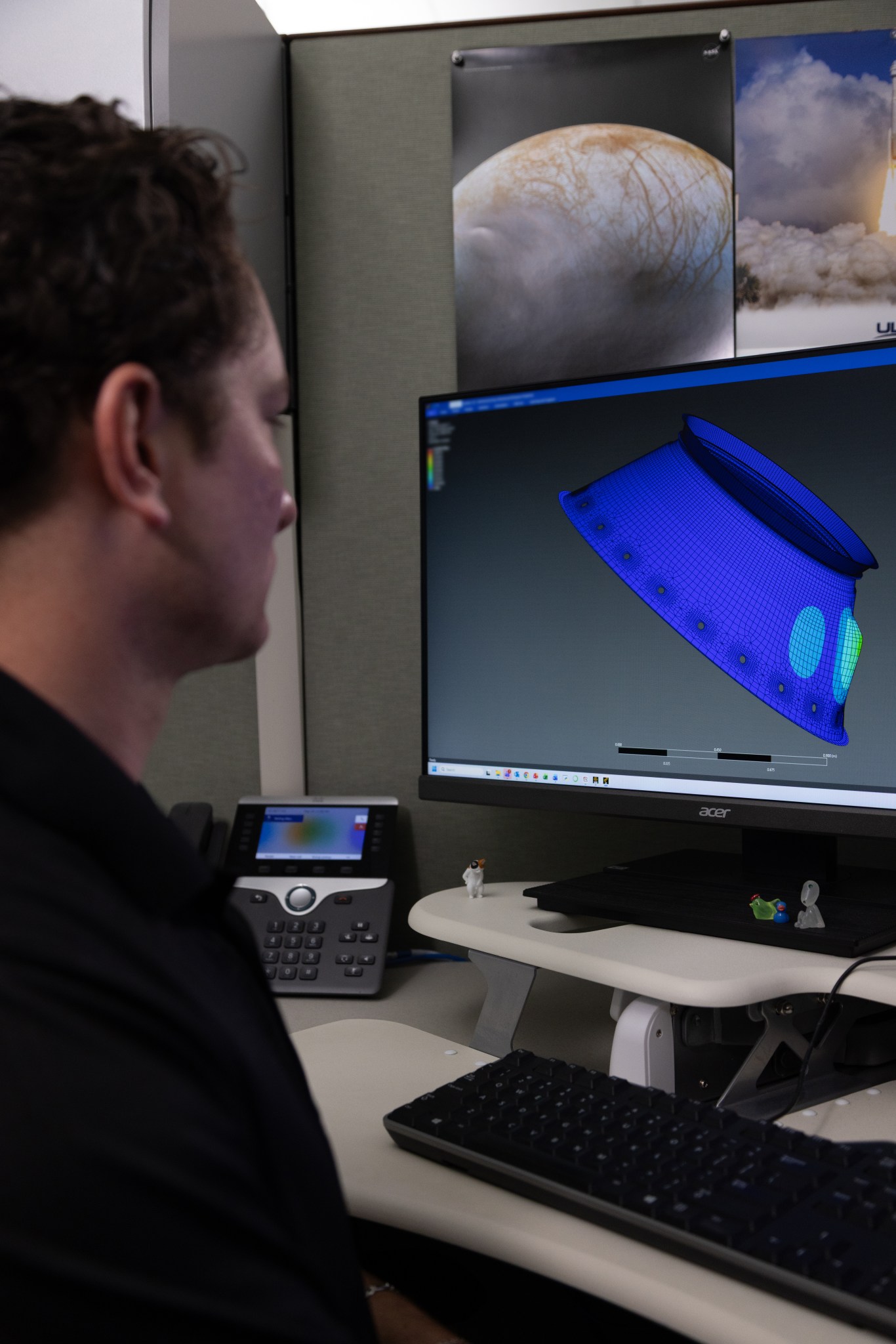
NASA engineers examining a finite-element model used for shock and vibration analysis. This is a workplace background image and does not represent the result of a specific test. Source: NASA; photo: Clayton Rougelot. Image reference or original
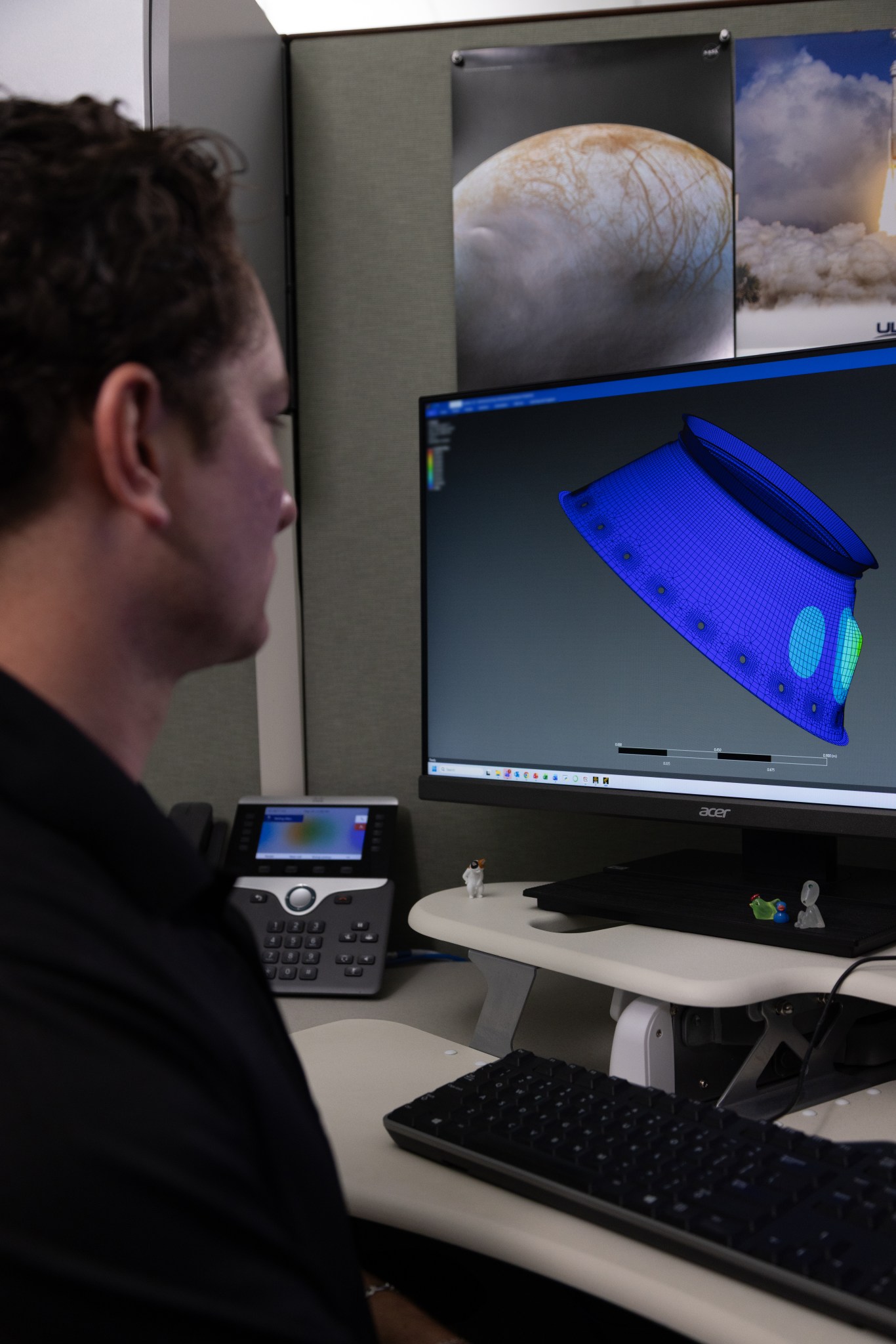
NASA's Kennedy team is using commercial finite-element tools for shock and vibration analysis to establish a reusable standard workflow. Finite-element analysis divides complex structures into small elements to estimate how loads reach instruments and joints, helping identify weaknesses before hardware manufacturing and launch.
In one application described in the report, a supplier provided vibration tests but no shock tests. The team identified additional validation needs, compared different scenarios, and found risks related to transportation shocks. The point is to connect requirements, models, and test results; purchasing software alone does not replace physical tests.
The public material does not disclose the supplier, model errors, or complete certification data, so it does not support deriving new general safety margins.
Observations and Analysis
The benefits of tools depend on model boundaries and checks against measurements. Reusable templates should retain their assumptions and evidence, preventing experience from one mission from being silently carried over into the next certification.
See original source [09] at the end.
Mission and Industry Briefs
10|MMX Launch Succeeds, Moving from Plans to Deep-Space Mission Execution
Field: Phobos sample return
Validation stage: Launch and spacecraft separation completed
Published: October 20 (JST, institutional announcement)
Event timing: Launch at 03:41:03 on October 20, Beijing time
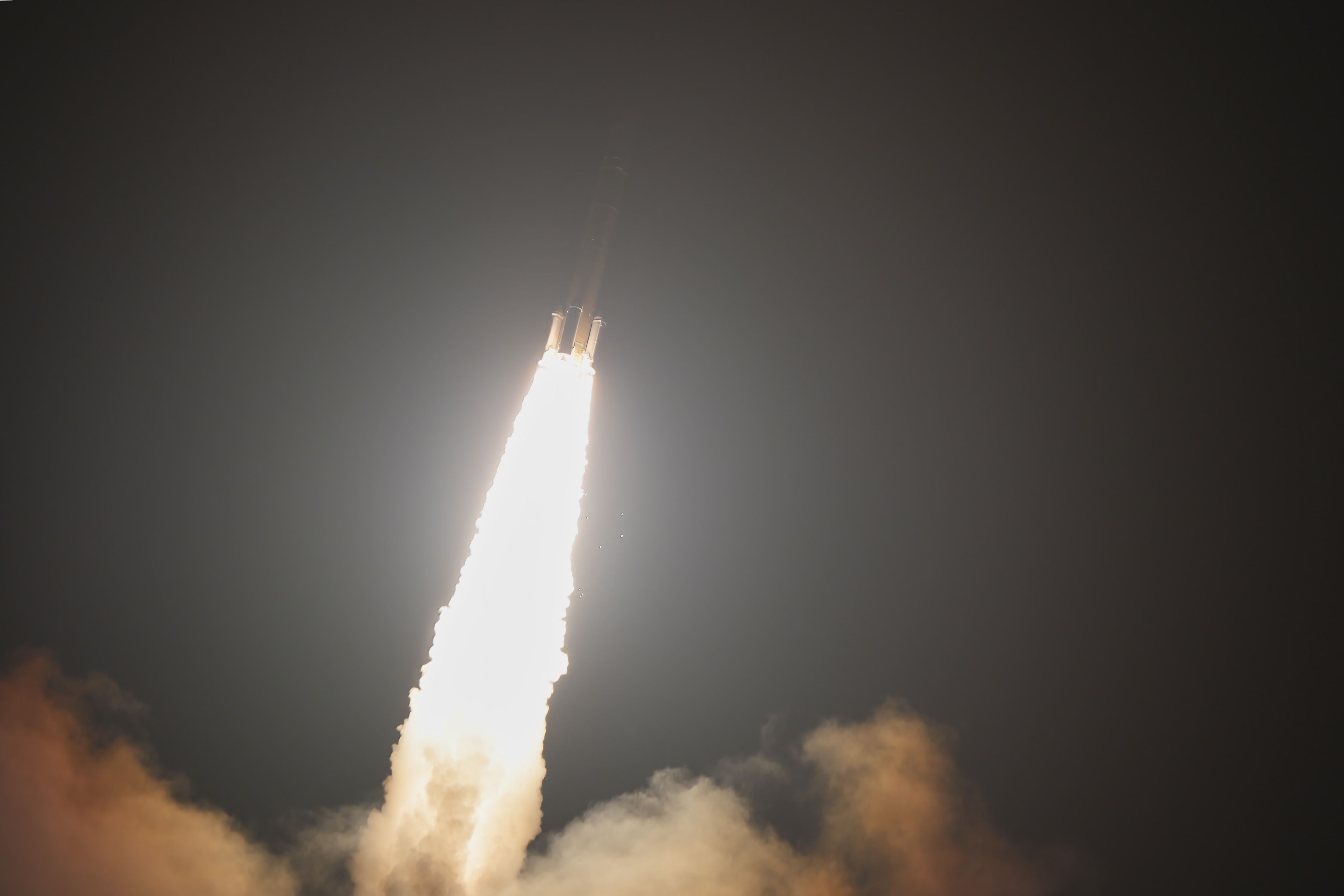
H3 Launch Vehicle flight No. 10 lifts off from Tanegashima carrying MMX on October 20, 2026. Source: JAXA Digital Archives, asset ID P100017027; © JAXA. Image reference or original
JAXA confirmed that H3 flight No. 10 placed MMX into its planned orbit, with spacecraft separation completed approximately 71 minutes 13 seconds after liftoff. The launch plan recorded in the previous issue now has a corresponding mission result this week, so describing it as “not yet launched” can no longer continue.
This result validates the launch and separation phase; it does not yet amount to arrival at Mars, a Phobos landing, or sample return. Cruise, approach, sampling, and return must still be tracked individually.
Observations and Analysis
Planned milestones need to be replaced by actual results while retaining the unfinished mission chain.
See original source [10] at the end.
11|Two Commercial Relay Demonstrations Enter Orbit on Bandwagon-5
Field: Communications infrastructure
Validation stage: Launched; relay tests yet to begin
Published: October 20, 23:40 Beijing time
Event timing: Launched on October 20, local U.S. time

An official concept illustration of a low-Earth-orbit satellite relay constellation, used as background for commercial space communications. It is not a photograph of the Maxwell or SES payloads in this launch and does not indicate that continuous coverage has been validated. Source: NASA; illustration: Chase Leidy. Image reference or original

NASA-funded communications demonstrations by Viasat and SES entered low Earth orbit aboard Bandwagon-5. Viasat will use Maxwell and a geosynchronous-orbit network to test relaying; SES plans to carry high-speed data over a medium-Earth-orbit network and low-speed services over a geosynchronous-orbit network.
The announcement describes arrangements for the next phase of testing, rather than validated seamless connectivity. Science data return, tracking, and command links will be tested separately, with demonstration work planned to continue through 2027.
Observations and Analysis
Whether commercial services can take over mission links depends on sustained availability and actual performance during handovers.
See original source [11] at the end.
12|Swift Ends Operations as Its Low-Orbit Lifetime Enters Its Final Phase
Field: Mission operations and orbital decay
Validation stage: Operations stopped; reentry yet to occur
Published: October 24, 05:58 Beijing time
Event timing: Entered safe mode on October 20; operations ended afterward
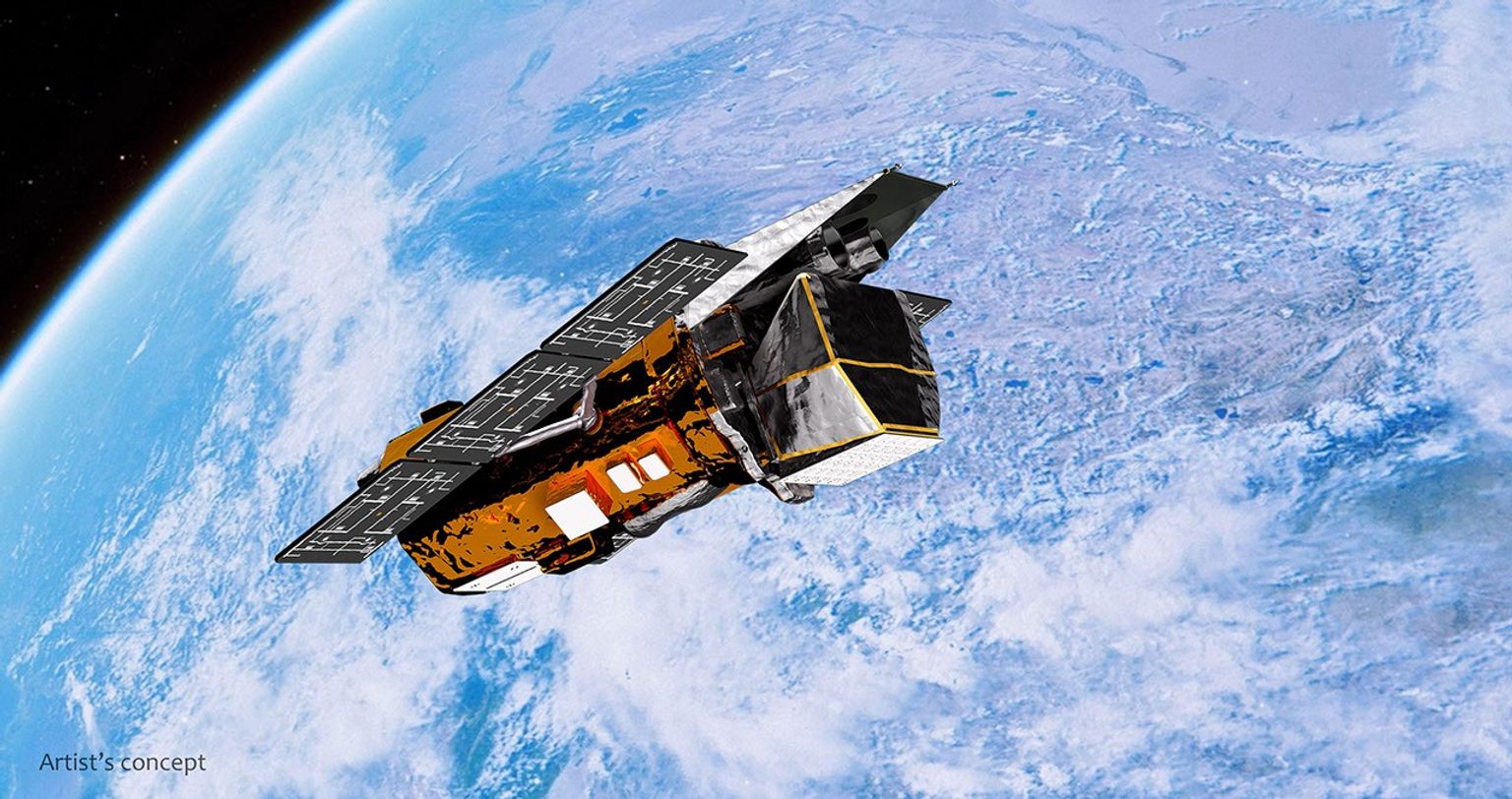
An official concept illustration of the Swift observatory in Earth orbit, not a photograph of the mission's end or reentry. Source: NASA Goddard Space Flight Center / Conceptual Image Lab. Image reference or original

NASA confirmed that Swift had ended operations. After its altitude fell to approximately 275 kilometers on October 20, it could no longer compensate for the increased atmospheric drag and entered safe mode. The team subsequently sent commands to end operations.
At this issue's editorial deadline, reentry was still described as an event expected in the coming weeks; it cannot be written up as an already completed fall from orbit. The end of the mission shows that, beyond payloads, orbit, attitude, and environmental changes also determine how long an observing system can operate.
Observations and Analysis
Sustained operational capability requires assessing the benefits of scientific observations alongside the resources needed to maintain orbit and attitude.
See original source [12] at the end.
This Week's Question
Once the System Is Connected, How Do We Prove It Works Reliably?
Dragonfly puts simulated sensors, flight software, and avionics into the same real-time chain; Roman advances from basic functional checks to calibration of consistency in scientific data; RS-25 tests components under conditions approaching launch duration. What they share is that correctness, once distributed across separate parts, is being subjected to the constraints of integration.
Evidence still has distinct levels. Ground-based real-time integrated testing cannot cover every aspect of an alien environment, in-orbit commissioning cannot stand in early for scientific conclusions, and fitting a historical particle event does not automatically become real-time warning capability. The next round of tracking can focus on three sets of questions: how the system recognizes problems and recovers after operating conditions change and faults are deliberately injected; how calibration and performance drift over longer operation; and whether the benefits still hold when computational, communications, power, and validation costs are added together.
Observations of engineering tools and infrastructure should also come down to these inspectable interfaces: whether models can be traced to test evidence, whether algorithms can account for resources and latency, and whether mission plans can be updated promptly to measured status. Reliability often comes from keeping these details aligned over time, beyond a single impressive peak metric.

Original Sources
[01] NASA’s Dragonfly Completes First Simulated Flight - NASA Science
[02] NASA’s CASALS Instrument Bridges Gaps in 3D Maps of Earth’s Surface - NASA Science
[03] NASA’s Roman Space Telescope Enters Final Commissioning Phase - NASA Science
[04] NASA’s SR-1 Freedom Advances with Progress on Nuclear Power Module - NASA
[05] A Radiation-Hardened, Fault-Aware Quantized Neural Network That Self-Heals
[06] Half-Slot Link Scheduling for Open GNSS with 𝑥-Tx 𝑦-Rx Multibeam Phased Array Antennas
[07] Automated Optimization of Solar Energetic Particle Acceleration and Transport Parameters Against Five-Spacecraft Observations of the 9 October 2021 Event; Nagoya University research release (2026-10-21); Scientific Reports 16, 31872 (2026)
[08] NASA Conducts RS-25 Engine Test in Support of Future Artemis Missions - NASA
[09] NASA Improves Shock, Vibration Analysis
[11] Two NASA Commercial Satellite Communication Demonstrations Launch
[12] NASA’s Swift Mission Ends Ahead of Re-Entry - NASA Science