
003|Space Weekly|After Seeing the Target Clearly, How Do We Preserve System Boundaries
From asteroid imaging to dust, thermal control, and confidence in positioning
Issue 003 · 2026.10.26—11.01 Beijing Time · Published: November 2, 2026
Two changes at different scales deserve to be considered together this week: Hera finally resolved the binary asteroid system into two targets, while Perseverance identified smaller, harder-to-remove particles of Martian dust on spacesuit materials. Seeing more clearly brings both new scientific information and new engineering constraints. NEO Surveyor combines sun shielding with power generation, the space station is adding solar arrays, and navigation continues to fill gaps in reliability information. This issue selects 12 research and engineering developments, explaining the new evidence, applicable conditions, and validation still to be completed in each case. Contracts, standards, ground tests, and in-orbit results are recorded separately, rather than combined into a single “breakthrough.”
Reporting scope: From 00:00 on October 26 to 00:00 on November 2, 2026, Beijing Time, with the endpoint excluded; publication date: November 2. Where the original page gives only a date, that level of precision is retained. Historical tests disclosed this week are marked with their actual dates. Future plans are described as they stood at the close of the reporting window.
This Issue at a Glance
This week's focus: Resolving a binary asteroid system, ultrafine Martian dust, and a deep-space telescope combining sun shielding with power generation.
Research and engineering: Polar altimetry, navigation integrity, space station power, ancient Martian samples, event-based vision, and rocket integration.
Missions and industry: Additional Galileo orders, NavIC's post-launch orbit raising, and a request for information on commercial Hubble servicing.
This Week's Focus
01|Hera Resolves the Binary Asteroid System for the First Time, Advancing Target Identification
Field: Planetary defense and deep-space optical navigation
Validation stage: Imaging measured during deep-space flight; not yet a close-up investigation of the impact site
Information released: October 27 (date on the original ESA page)
Event date: Images taken on October 18 and released this week
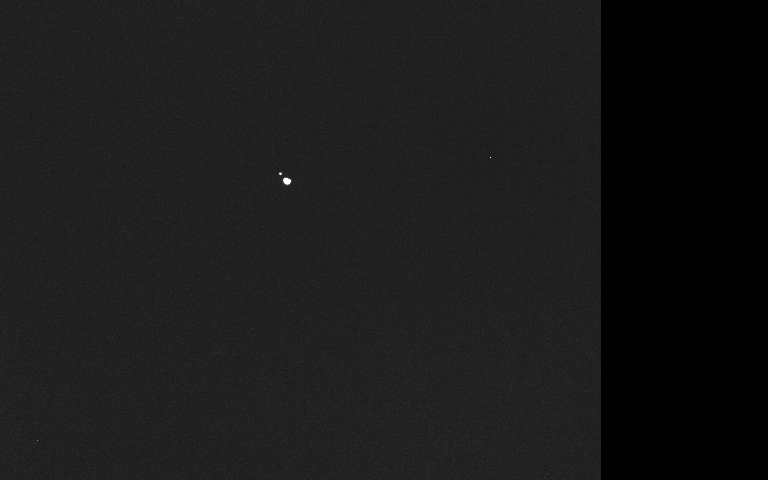
Didymos and Dimorphos imaged by Hera on October 18; the smaller target still spans about one pixel. ©ESA. Image reference or original

In a distant image, a bright spot may represent one celestial body or a binary system that has yet to be resolved. ESA announced this week that Hera had used its monochrome Asteroid Framing Camera to identify Didymos and its companion Dimorphos separately for the first time. The spacecraft was about 1280 kilometers from the targets when the images were taken. The smaller Dimorphos still occupied only about one pixel, so “resolving” it should not be taken to mean that its terrain is already visible in detail.
This step follows the braking maneuvers performed this month. ESA reported that two thruster burns reduced the spacecraft's speed relative to the targets to about 20 meters per second, allowing it to continue its approach. The images provide an actual observation of the targets' separation and another basis for checking whether optical observations agree with relative motion during the approach that follows.
The mission's central questions still lie ahead. After NASA's DART struck Dimorphos in 2022, Hera needs to investigate the body's mass, internal structure, and changes in shape after the impact. A changed orbital period alone cannot establish what kind of crater the impact created, how ejecta contributed momentum, or how effective the same method would be on another asteroid.
At the close of this issue's reporting window, ESA still listed clearer close-up images and subsequent investigations by the companion probes as work for the next phase. The new evidence this week is that the two targets have been identified separately, not that the entire planetary defense approach has completed validation.
Observation and Analysis
Discovering a target from a distance and measuring its mass and structure after approaching it require different evidence. The next step is to watch how camera resolution, orbit determination, and physical parameter estimates cross-check one another, rather than simply tracking whether the pictures become clearer.
For the original source, see [01] at the end.
02|Perseverance Measures Finer Martian Dust, Bringing Material Surfaces into Dust-Protection Design
Field: Planetary surface environments and crew protection
Validation stage: In-situ measurements on the Martian surface; not a human exposure experiment
Information released: October 27, 05:07 Beijing Time (NASA original dated October 26)
Event date: Observations accumulated over 1645 Martian sols; the research was introduced this week
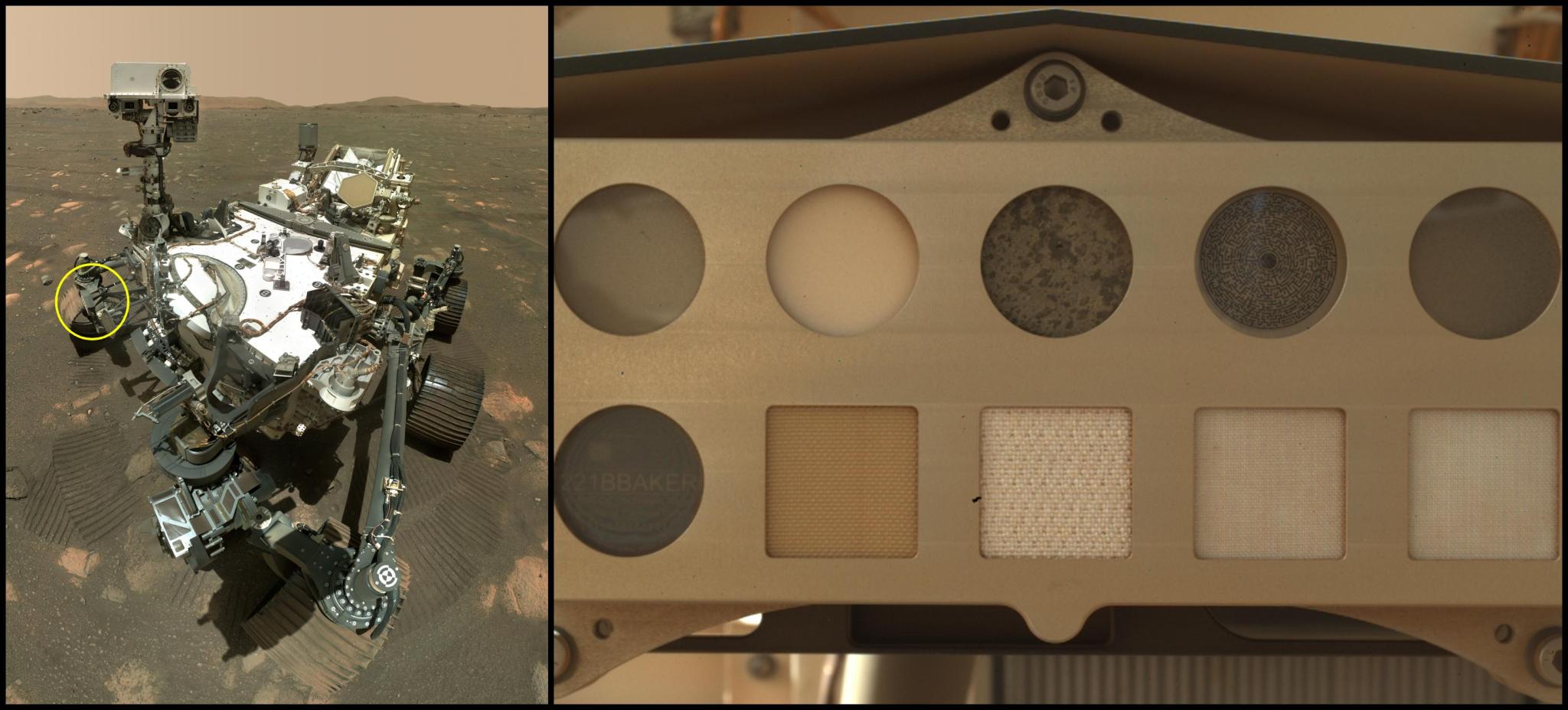
The location of SHERLOC's calibration target on Perseverance and a close-up of its material samples, provided to explain the dust-accumulation observations; this is not a microscopic image of dust particles. Credit: NASA/JPL-Caltech. Image reference or original
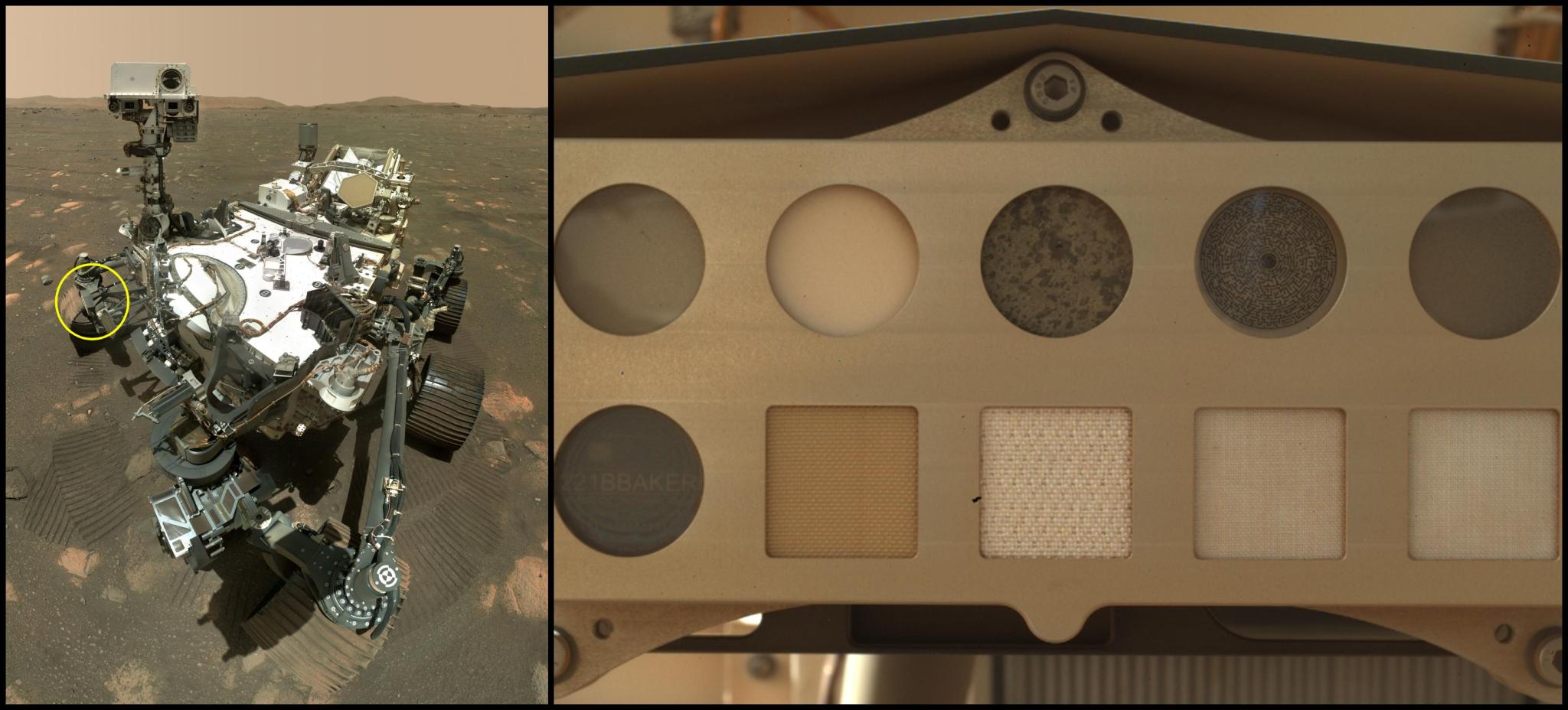
Martian dust poses problems beyond visibility. Fine particles entering seals, adhering to material surfaces, or traveling into a habitat on equipment bring environmental risks into the entire mission system. NASA introduced research this week in which a team used the PIXL and SHERLOC calibration targets on Perseverance to track dust accumulation on different surfaces, including spacesuit material samples carried by the rover.
PIXL's Teflon target contains no elements the instrument can detect directly, so elemental signals appearing on its surface can be used to study deposited dust. The particles measured by the team included fine grains smaller than 2.5 micrometers and still smaller particles around 100 to 300 nanometers. Particle-size distributions differed among target materials: larger dust aggregates could fall off during driving or drilling, while the smallest particles could remain for long periods.
This means dust protection cannot be assessed solely by how much cleaner a surface looks after a single cleaning. Interactions between materials and charged dust particles, the sizes of residual particles, and the routes by which dust moves from outside to inside a habitat all affect subsequent design. NASA also discussed coatings, dust-removal tools, interfaces for donning and doffing spacesuits outside the cabin, and dual airlocks, but this study did not complete acceptance testing of an entire crewed system using those approaches.
The original article stated that the research was scheduled for publication in PNAS on October 27. What is recorded here is the observation of materials and particles on Mars; particle-size data are not directly converted into astronauts' actual inhaled doses or health conclusions.
Observation and Analysis
Less dust retained on one surface does not mean an entire set of equipment can remain clean. Future work should place residual particles, material durability, seal lifetime, and migration into the cabin along the same validation chain, while distinguishing measured environmental characteristics from human risks that still need assessment.
For the original source, see [02] at the end.
03|NEO Surveyor Completes Sunshade Power Tests, Giving One Structure Two Roles
Field: Infrared space astronomy, thermal control, and power generation
Validation stage: Component and subsystem ground integration and testing; not yet launched
Information released: October 27, 02:12 Beijing Time (NASA original dated October 26)
Event date: Solar cells installed in January, environmental tests in March, and an inspection in July; completion of subsequent tests disclosed this week
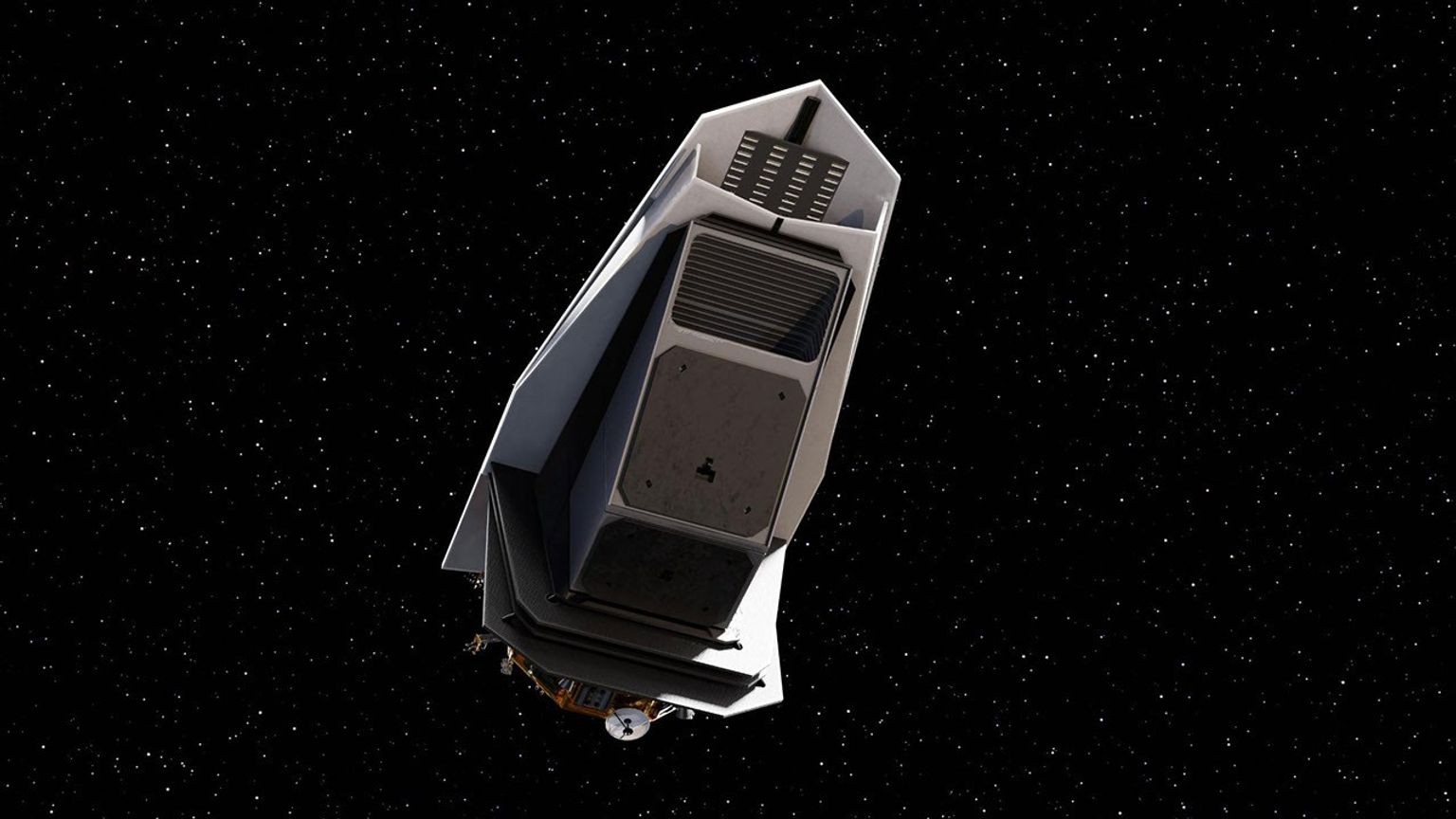
An artist's concept of the NEO Surveyor deep-space mission, showing its sunshade and telescope enclosure; released in 2024, this is a concept image rather than a photograph of the current tests. Credit: NASA/JPL-Caltech. Image reference or original
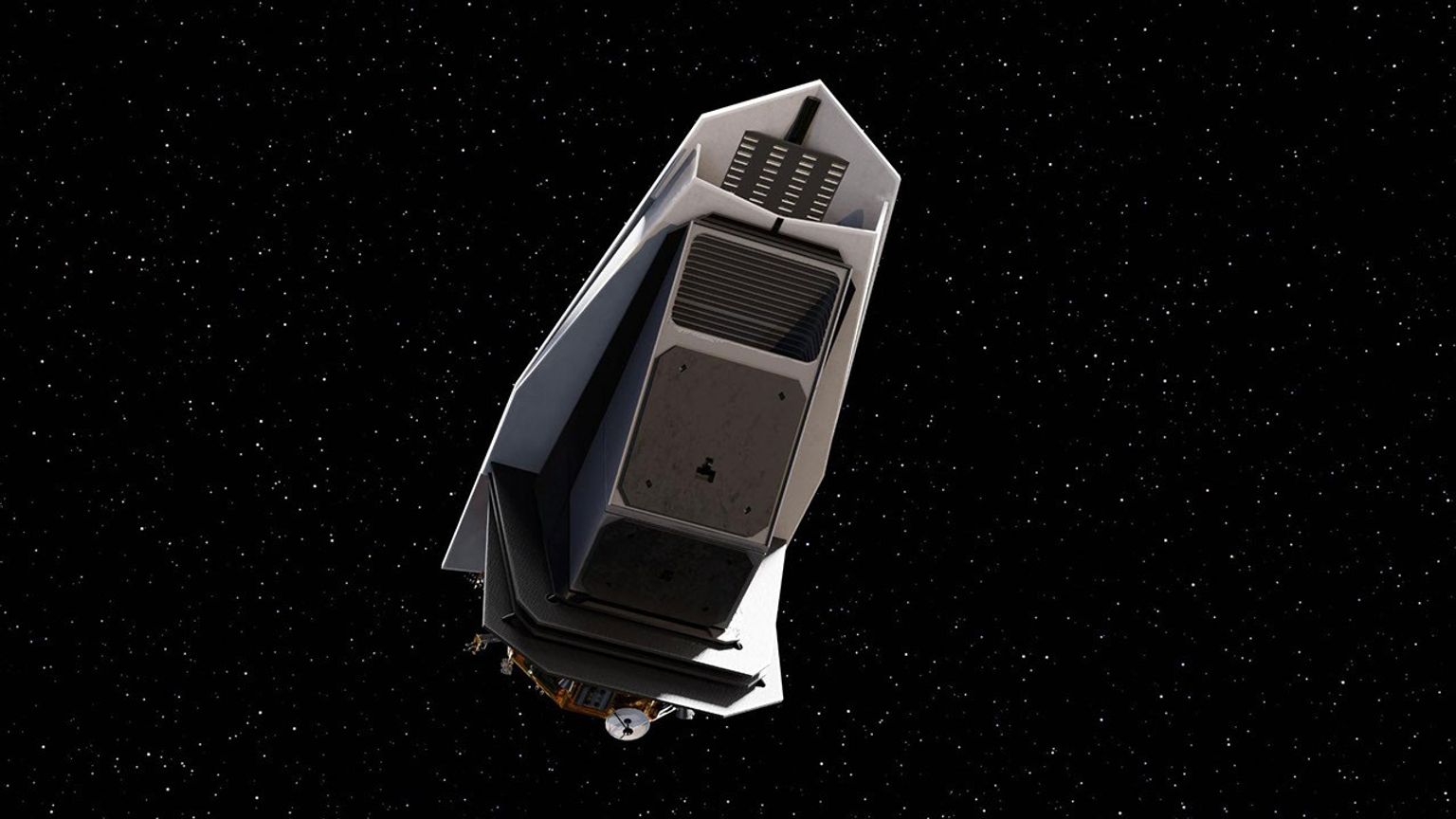
One difficulty in finding faint asteroids near the Sun's direction is keeping infrared detectors cold enough while blocking unwanted bright light. NASA reported this week that NEO Surveyor's sunshade had completed solar-cell integration and functional and performance testing. The structure both shields the telescope from sunlight and generates power for the spacecraft.
The sunshade is about 6 meters high and about 2.4 meters wide at the base. Its two flat panels meet at an angle of 23.5 degrees and carry 864 interconnected solar cells. Its designed generating capacity is up to about 2 kilowatts, to power onboard systems and charge batteries. Here, “up to” describes the stated capability of the assembly; it cannot be treated directly as continuously available power throughout the mission's lifetime and in every attitude.
Development has passed through several stages: the solar cells were installed in January, the sunshade and arrays completed environmental testing in March, and they arrived at the next integration site in May. The team subsequently installed coarse sun sensors and temperature sensors as well. This week's update should be understood as a progress summary of those ground activities, rather than as work all performed within this week.
The mission will use observations in two infrared bands to estimate targets' temperatures and sizes. Sun shielding, attitude, and power therefore cannot be optimized independently: the shielding direction, solar illumination, and detector operating conditions must be satisfied together. The current progress concerns hardware integration and has not yet produced an in-orbit asteroid survey result.
Observation and Analysis
A shared structure can reduce the need for separate mechanisms and interfaces, while increasing the connections among design constraints. More informative evidence to watch next includes spacecraft-level thermal balance, attitude changes, and power margin, rather than treating shield area or peak generating capacity as mission performance in isolation.
For the original source, see [03] at the end.
Research and Engineering Developments
04|CRISTAL Completes Solar-Array Deployment Checks, with Satellite-Level Environmental Tests Next
Field: Polar remote sensing and satellite assembly
Validation stage: Ground deployment and adapter checks; not yet in orbit
Information released: October 26 (date on the original ESA page)
Event date: Assembly completed in September, followed by testing; progress introduced this week
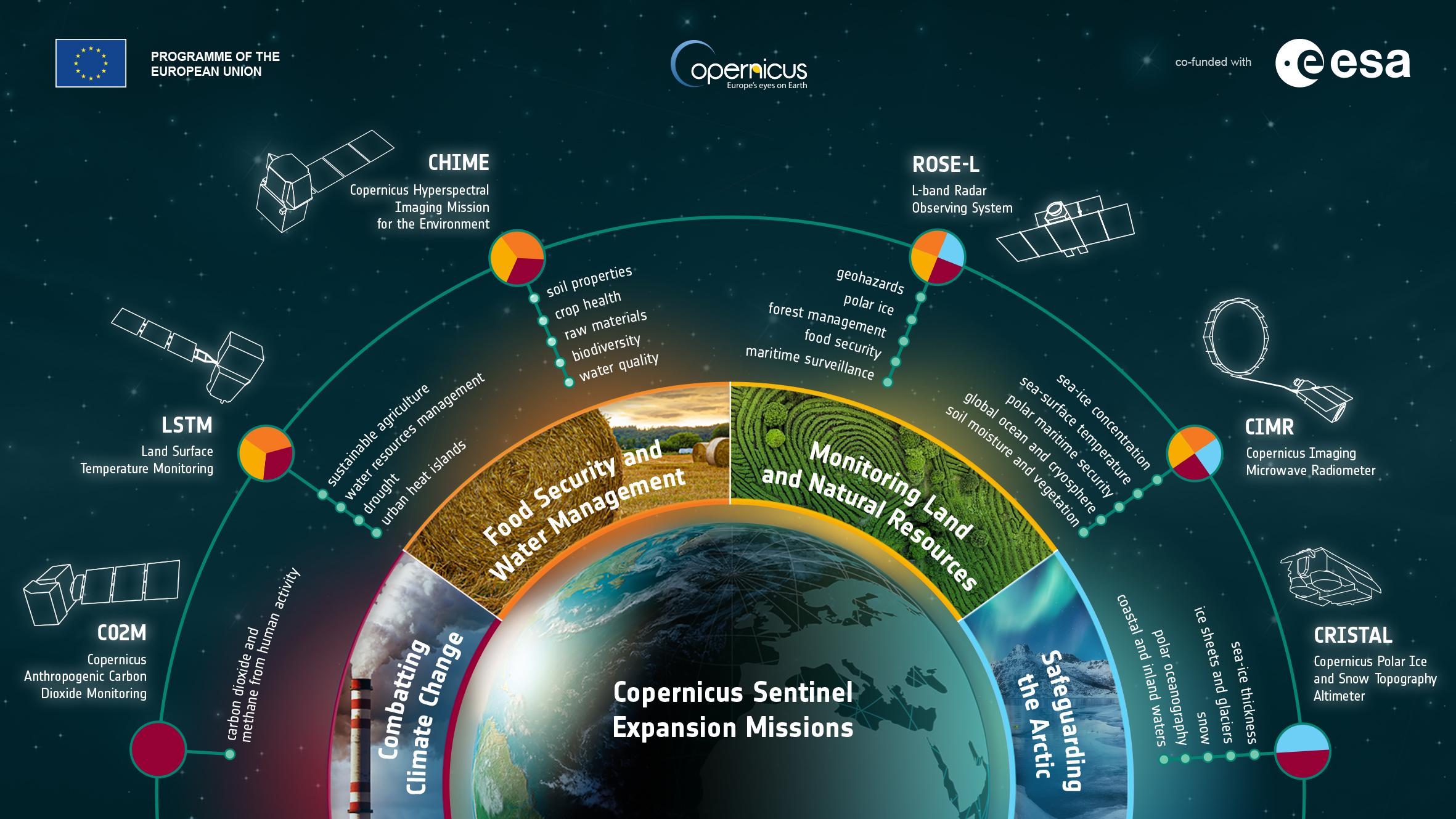
A depiction of ESA's six Copernicus Expansion missions, with CRISTAL at the lower right. A historical background image, not a photograph of the current solar-array deployment test. ©ESA; the original image is hosted on Wikimedia Commons. Image reference or original

ESA disclosed that after completing assembly in Germany, CRISTAL underwent its first solar-array deployment test. It also worked with launch service provider AVIO to check the launch adapter's fit and the separation mechanism. An intermediate qualification status review examined the validation status of equipment, payloads, and subsystems in preparation for satellite-level qualification tests.
These checks address different questions: whether the solar arrays can deploy according to the mechanical and software sequence, whether the satellite can be correctly secured to and separated from the rocket, and whether its subsystems are ready for subsequent environmental tests. A successful deployment does not mean the satellite has already passed the full challenges of launch vibration, thermal vacuum, and the in-orbit environment.
CRISTAL is planned to carry a dual-frequency radar altimeter and a microwave radiometer to measure sea-ice thickness, snow cover, and ice-sheet elevation. ESA's launch target stated this week was late 2027 to early 2028. The satellite will next move to the Netherlands for environmental testing. This issue does not present a schedule target as a confirmed launch date.
Observation and Analysis
Engineering maturity depends on closing out interfaces and environmental conditions one by one. The next round of tracking should examine satellite-level tests and payload calibration results, rather than using “assembly complete” as a substitute for “ready for launch delivery.”
For the original source, see [04] at the end.
05|PPP-RTK Integrity Specifications Take Effect: Positioning Needs Alerts as Well as Accuracy
Field: Satellite navigation and reliability information
Validation stage: National standard taking effect; not a new constellation capability in orbit
Information released: October 29 (report by the Aerospace Information Research Institute)
Event date: Standard published on July 2 and effective from November 1
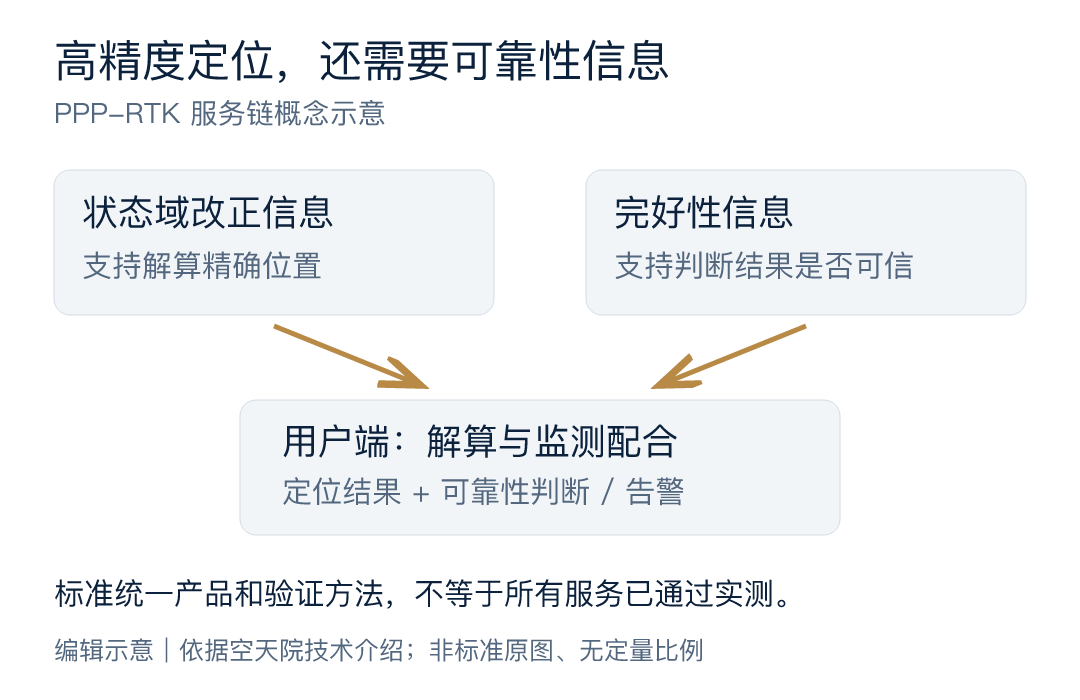
A conceptual illustration of PPP-RTK correction information and integrity information working together at the user end. Drawn by the editor based on the introduction by the Aerospace Information Research Institute, Chinese Academy of Sciences; not an original figure from the standard, and contains no quantitative results. Image reference or original
High-precision positioning answers “how accurate is the calculation,” while integrity information also helps users judge whether a result is safe to rely on. The Aerospace Information Research Institute of the Chinese Academy of Sciences introduced national standard GB/T 47641—2026 this week. Effective from November 1, it addresses real-time precise point positioning with real-time kinematic techniques, or PPP-RTK services, for BeiDou and other global navigation satellite systems.
According to the institute, the standard specifies the content and validation methods for integrity information products and provides user-side monitoring algorithms, covering product generation, broadcast, and application. It connects with the earlier specification for state-space correction products, allowing correction information and reliability information to work together along the same service chain.
The timing and nature of the development need to be distinguished: the standard was published in July; this week's milestone was its implementation and the accompanying technical introduction. Establishing uniform products and validation methods also does not mean that every provider's actual positioning errors, alert timeliness, and full range of operating scenarios have passed validation.
Observation and Analysis
Assessing a positioning service requires checking whether corrections, reliability information, and user-side processing are compatible, while tracking alerts and recovery during anomalies. A single average-error metric cannot cover all these questions.
For the original source, see [05] at the end.
06|The Space Station Installs Its Seventh Roll-Out Solar Array, with One Still Needed to Complete the Power Upgrade
Field: Space infrastructure and in-orbit maintenance
Validation stage: In-orbit installation and deployment completed
Information released: October 30, 03:17 Beijing Time (NASA mission blog)
Event date: Spacewalk ended on October 30 at 03:08 Beijing Time
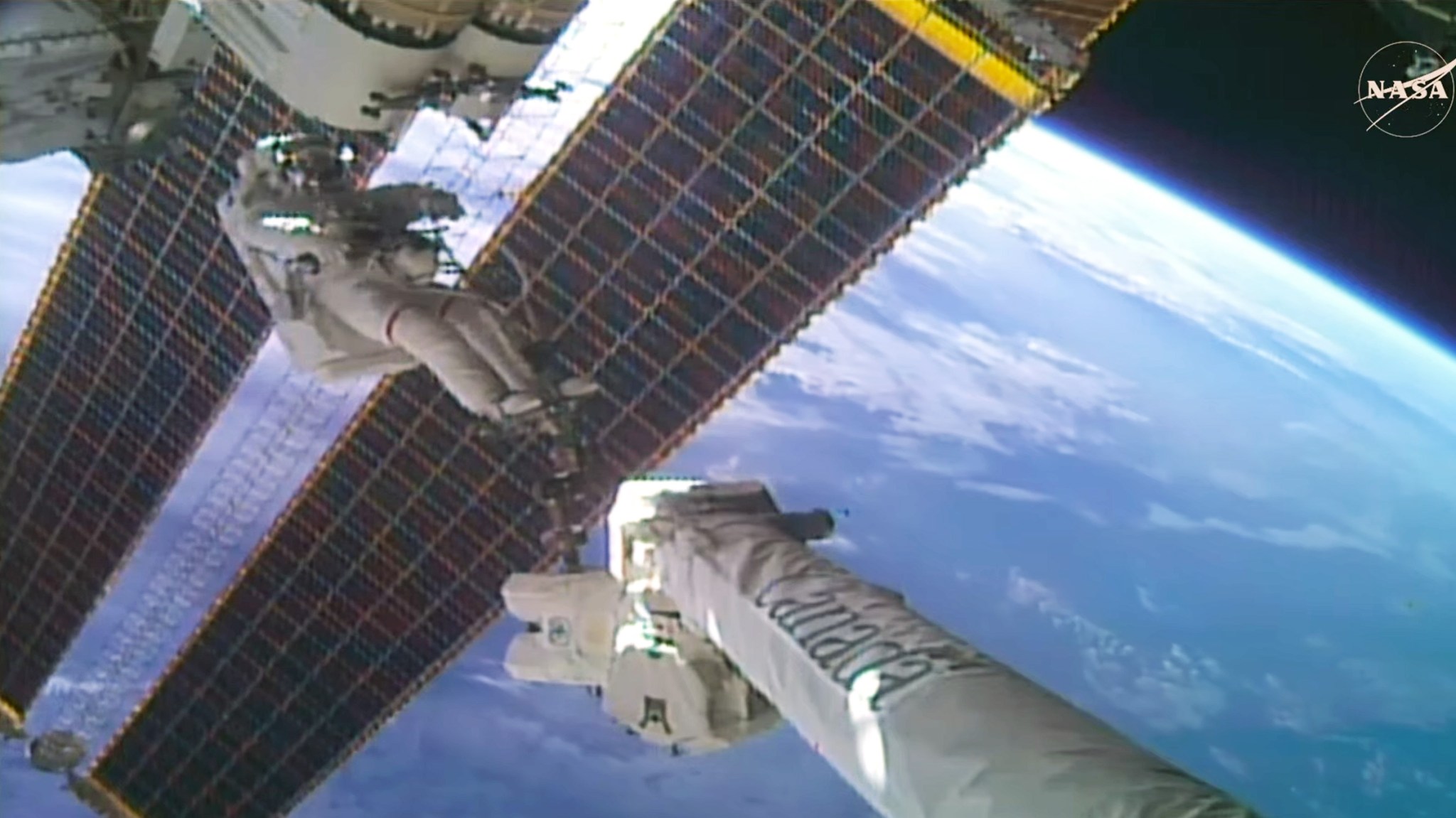
The solar array and Canadarm2 robotic arm at the iROSA installation site, in an image from this NASA mission blog entry. Credit: NASA. Image reference or original
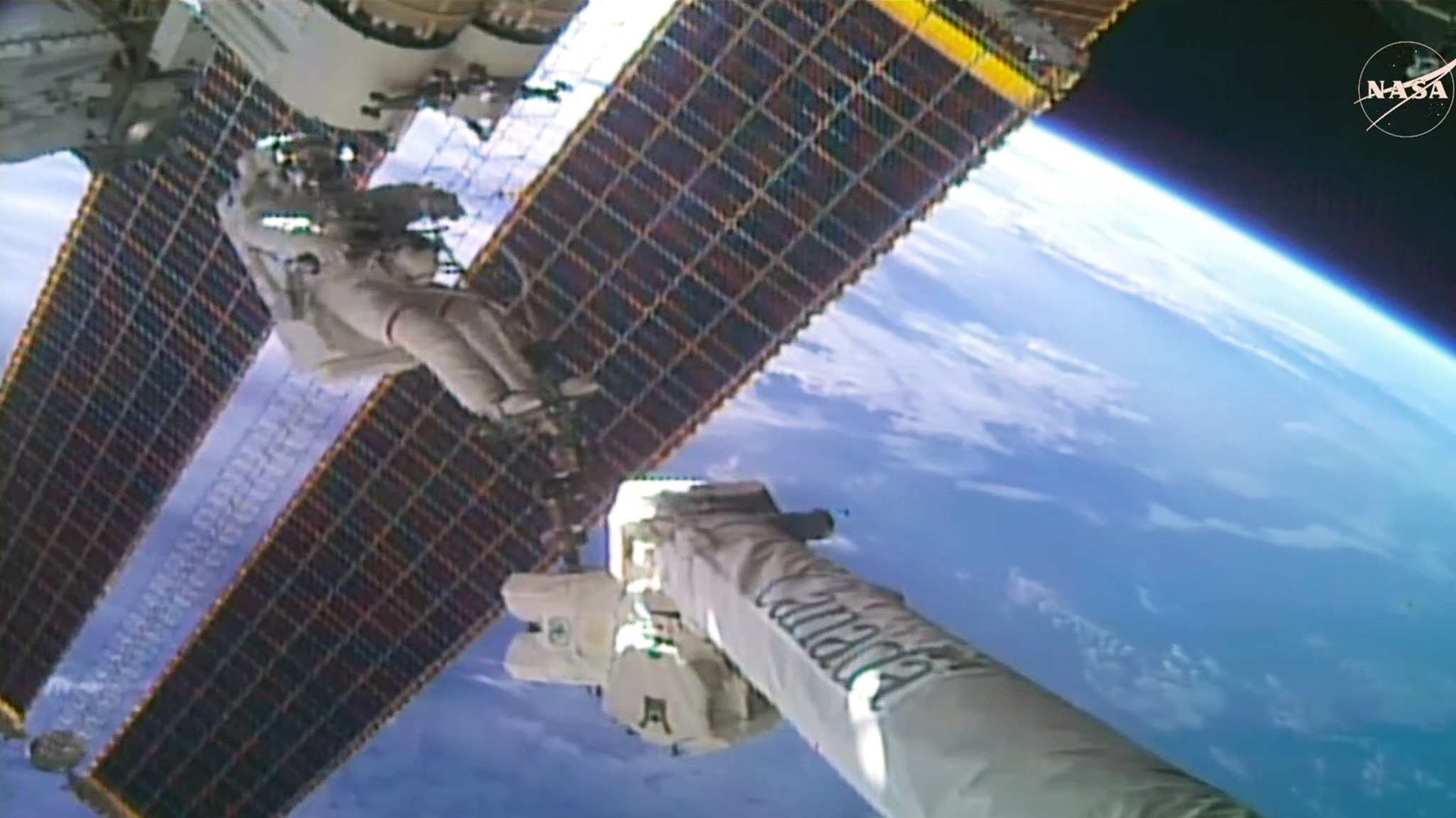
NASA astronaut Anil Menon and Canadian astronaut Joshua Kutryk completed a spacewalk lasting 7 hours and 11 minutes, installing and deploying the seventh iROSA roll-out solar array on the International Space Station's 2A power channel. This was an in-orbit operation that had actually been completed, so its status can no longer be described using the pre-spacewalk plan.
The upgrade is intended to supply power for research, daily operations, and eventual controlled deorbiting, among other tasks. NASA's stated increase from 160 kilowatts to about 215 kilowatts refers to the overall capability after all eight arrays are installed. That entire increase cannot be attributed to the single array added this time.
At the reporting deadline, the last array was still scheduled for installation on the 3B channel on November 5. That step had not yet happened. Deployment of the new panels is also only part of the maintenance chain; they need to work together with the existing power system, connectors, and operating procedures.
Observation and Analysis
Extending a facility's service life often depends on gradual replacement and interface compatibility. The success of a single operation, completion of the full power upgrade, and subsequent long-term operating performance should be tracked separately.
For the original source, see [06] at the end.
07|An Ancient Martian Meteorite Records Water–Rock Interaction, While the Dating Method Also Preserves the Sample
Field: Planetary geology and sample analysis
Validation stage: Mineral analysis in laboratories on Earth; published research
Information released: October 30, 02:18 Beijing Time (NASA original dated October 29)
Event date: Meteorite discovered in 2022; the Science research was introduced this week
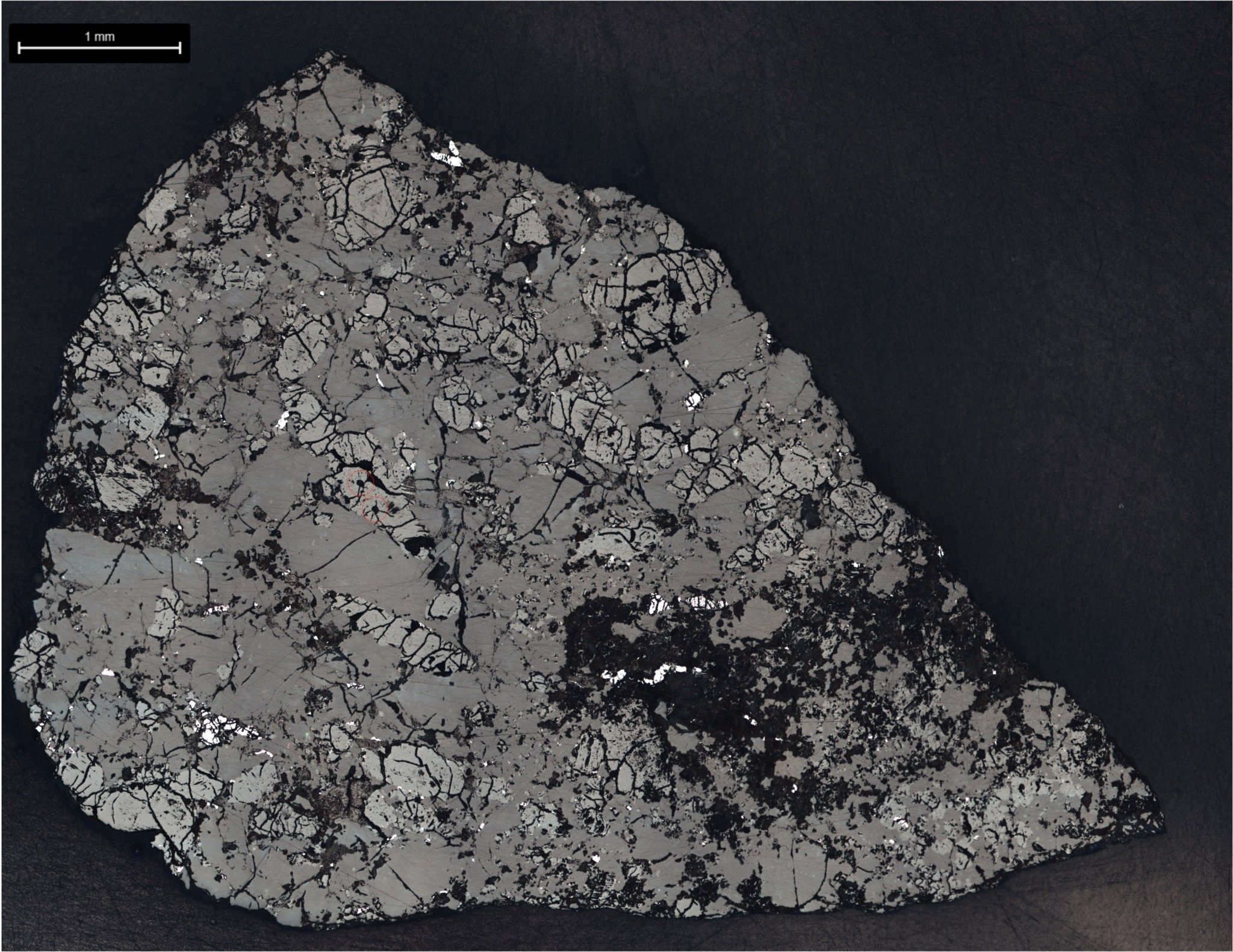
A slice of the Martian meteorite Teghaza 001, with the 1-millimeter scale bar at the upper left preserved in full. Credit: NASA/JPL-Caltech. Image reference or original
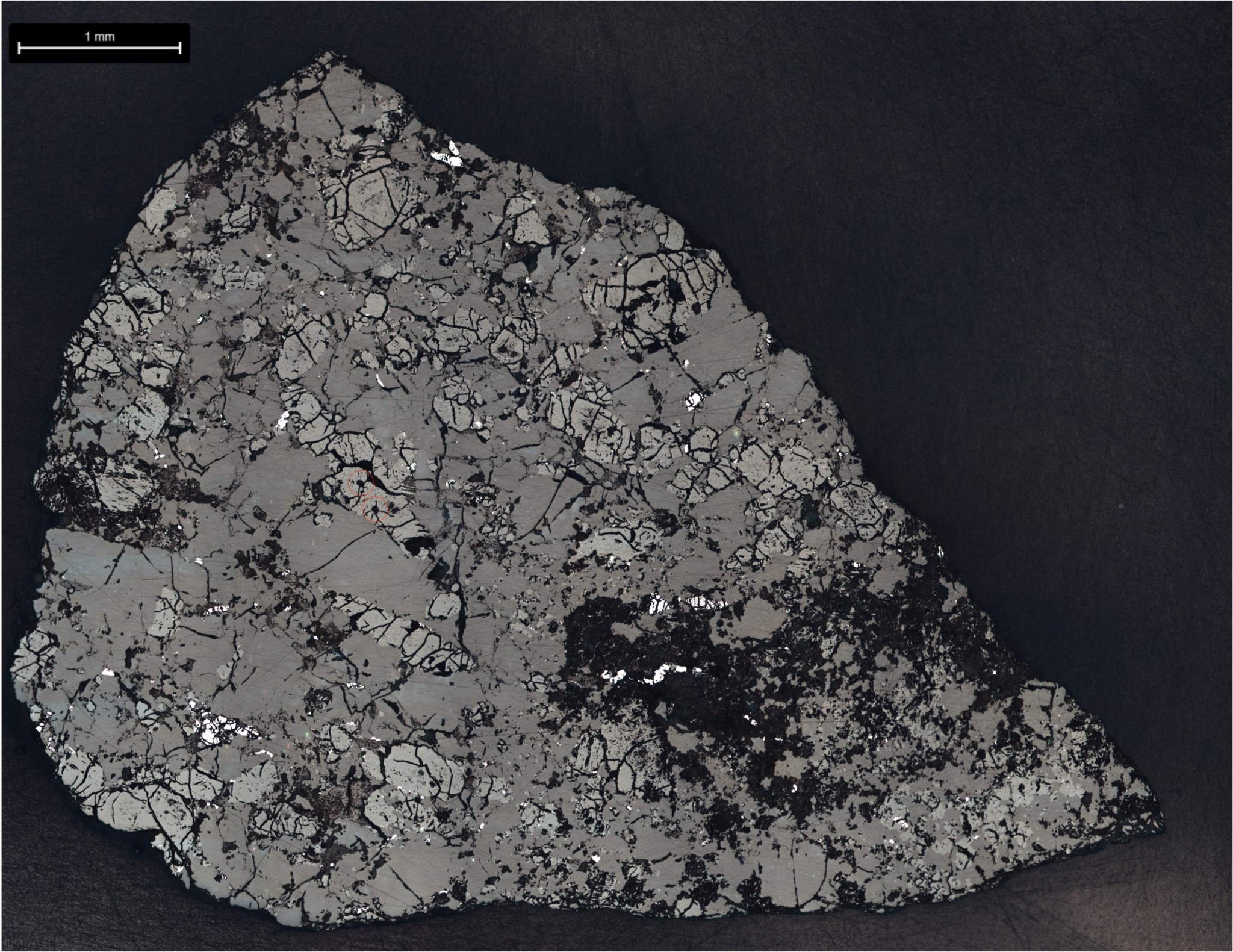
A research team analyzed the Teghaza 001 meteorite, discovered in 2022, and found that it records water–rock interaction on Mars about 4.1 billion years ago, with the rock itself having formed even earlier. NASA introduced the initial research published in Science this week: the meteorite, weighing about 800 grams, provides an unusual sample of mineral assemblages from the early Martian crust.
The research combined analysis of zircon and other minerals with in-situ rubidium–strontium dating. Instead of dissolving an entire sample for analysis, the researchers analyzed individual mineral grains on the surface of a very small slice, leaving more of the precious material available for future studies.
The meteorite's mineralogical and chemical characteristics can be compared with orbital observations to help identify potential source regions, but they cannot establish exactly where on Mars it came from. Evidence of water–rock interaction is also not evidence of life, and the current findings still need further testing across multiple laboratories and methods.
Observation and Analysis
The more costly it is to obtain a sample, the more its analysis needs to balance precision, destruction of material, and the ability to verify results. How much reusable material a measurement leaves behind should also become a metric for future analysis plans for returned samples.
For the original source, see [07] at the end.
08|Event-Based Visual Pose Estimation Carries Reliability Through Keypoints, Geometry, and Trajectories
Field: Autonomous relative navigation and vision algorithms
Validation stage: Evaluation on the SPADES dataset; preprint, not an in-orbit experiment
Information released: October 27, 12:29 Beijing Time (first submission to arXiv)
Event date: v1 released this week

Reliability handling in keypoints, geometric matching, and trajectory fusion. Drawn by the editor based on the paper by Zhang et al.; not an original figure from the paper, and contains no fabricated data. Image reference or original
Event cameras report only changes in brightness, so the available cues on a target are often distributed unevenly. Zhang, Xie, and Liu released a spacecraft pose-estimation framework this week that assesses “which observations are more reliable” at three stages—keypoint localization, CAD geometry matching, and multi-frame trajectory fusion—instead of giving every observation the same weight.
The authors reported that the full system achieved a combined pose score of 0.0474 on the SPADES official challenge test set, about 5.4% lower than the PASAN+IRIS method used for comparison; lower is better for this metric. In validation-set ablations, the basic method and the full pipeline scored 0.0772 and 0.0514, respectively. Those are separate evaluations from the test-set results and cannot be combined into a single comparison.
The study still showed persistent observation bias in the trajectories; smoothing does not automatically remove systematic errors. The results depend on the specified dataset, target CAD model, and camera conditions, and do not show that the method has been adapted to onboard computing resources, real communication latency, or unknown targets. The current version is a preprint.
Observation and Analysis
The improvement in average score is worth recording, but in-orbit applications also need checks of failure cases, model errors, and resource budgets. Assigning confidence to observations requires validating whether that confidence itself is calibrated.
For the original source, see [08] at the end.
09|Artemis III Advances Core Stage and Booster Integration, with Work Still Remaining Before Full-Rocket Acceptance
Field: Launch vehicles and ground integration
Validation stage: Partial vehicle integration on the ground; not yet full-rocket launch validation
Information released: October 28 (date on the original NASA page)
Event date: Assembly in late October, disclosed this week; the original page's image captions and body text do not give fully consistent dates
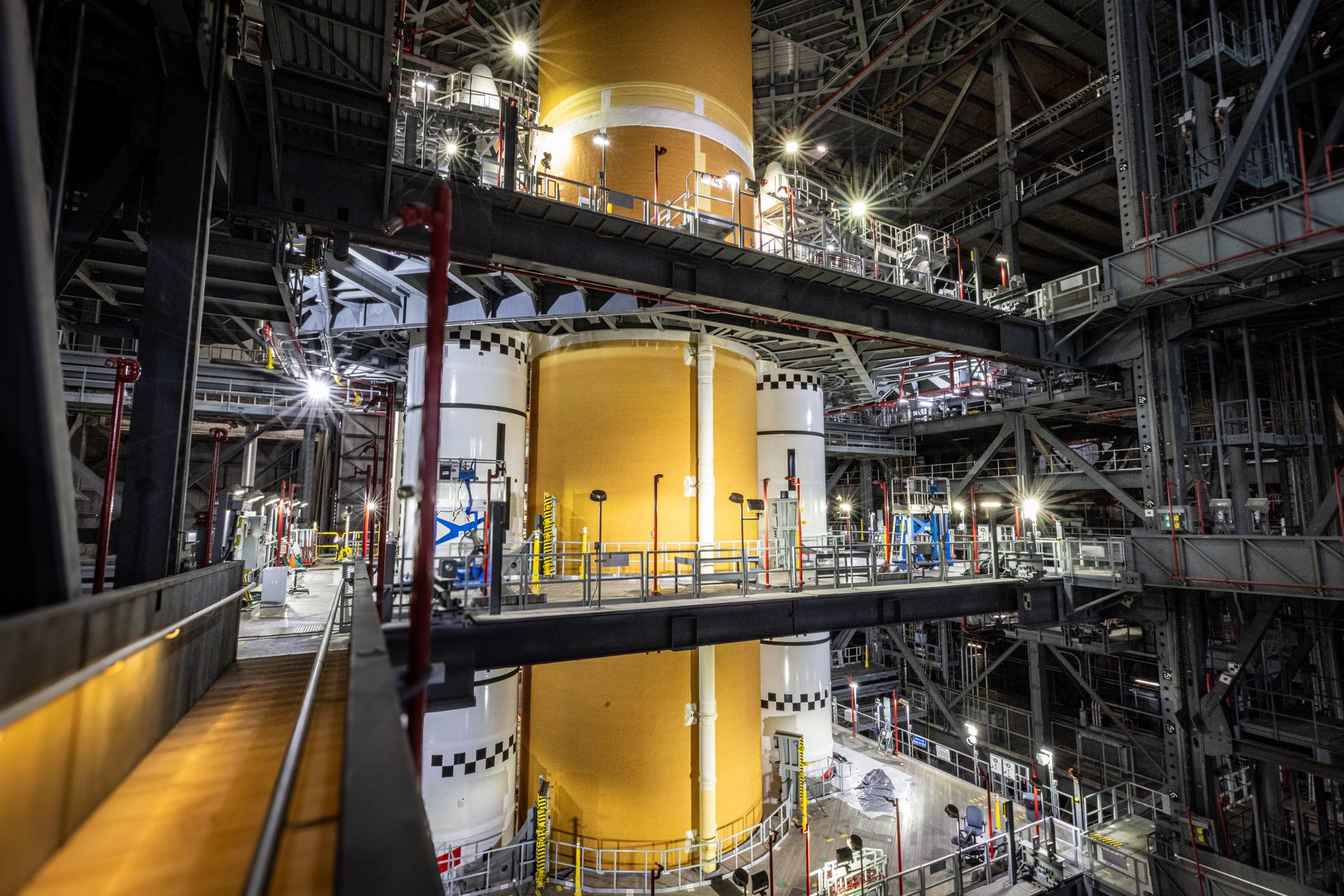
The SLS core stage and booster assembly inside the Vehicle Assembly Building at Kennedy Space Center on October 26, 2026. Credit: NASA/Frank Michaux. Image reference or original
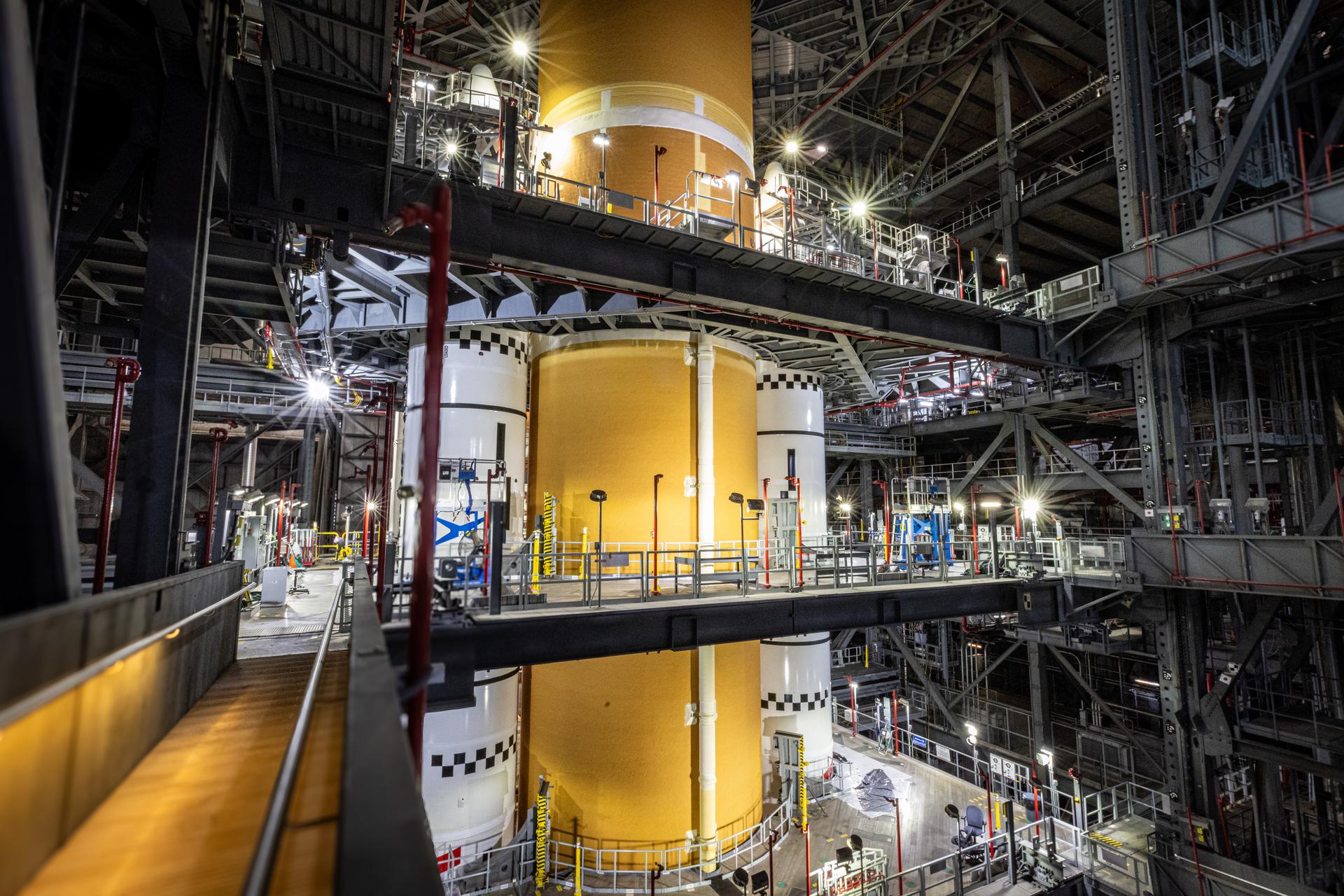
NASA introduced the assembly of the Artemis III SLS core stage with the solid rocket boosters on either side at Kennedy Space Center this week, forming a partially integrated vehicle configuration. The core stage, about 212 feet long, was transferred to the mobile launcher using a specialized lifting beam, with further tests and checks still required.
The mission team next plans to move the core stage and booster assembly to Launch Pad 39B for core-stage liquid hydrogen and liquid oxygen fueling tests and a countdown rehearsal. This does not mean fueling was completed this week, and partial vehicle assembly cannot be presented as the entire rocket having passed launch acceptance.
The original page shows assembly photographs dated October 22 to 26, while its body text separately describes integration on October 28. This issue therefore records only “assembled in late October, disclosed this week,” without constructing a single unconfirmed completion time.
Observation and Analysis
Assembly photographs show where hardware is positioned; acceptance records show whether interfaces and functions meet requirements. The next points to watch are actual validation of connection checks, fueling conditions, and countdown procedures.
For the original source, see [09] at the end.
Mission and Industry Briefs
10|Four More Galileo Second Generation Satellites Ordered, Bringing the Contract Total to 16
Field: Satellite navigation and manufacturing
Validation stage: Contract extensions and development arrangements; not additional in-orbit service
Information released: October 27 (date on the original ESA page)
Event date: Contracts signed separately on October 23 and 26, announced together this week

An artist's concept of the Galileo satellite navigation constellation, released in September 2026; shown to explain the system, not to suggest that the four additional satellites are already in orbit. ©ESA/P. Carril. Image reference or original

ESA extended its contracts with Thales Alenia Space and Airbus, ordering two additional Galileo Second Generation satellites from each and increasing the contracted total for this generation from 12 to 16. Delivery of the four additional satellites is targeted for 2031, with launches planned after delivery.
ESA also listed 2028 as the target for the first launch of the initial Second Generation satellites. The figure of 16 is the number of Second Generation satellites ordered, not the number launched or the size of the entire Galileo system in orbit.
Observation and Analysis
Procurement plans support supply and service continuity; technical performance still needs to be realized step by step through manufacturing, qualification, and in-orbit testing.
For the original source, see [10] at the end.
11|NVS-03 Reaches Transfer Orbit and Completes Its First Orbit-Raising Maneuver, with Entry into Service Still Unconfirmed
Field: Regional satellite navigation and post-launch operations
Validation stage: Successful launch and first orbit-raising maneuver completed; not yet formally in service
Information released: November 1, 11:23 IST (Press Information Bureau of India)
Event date: Launched on October 31 at 02:21 Beijing Time; first orbit-raising maneuver completed that day at 19:18
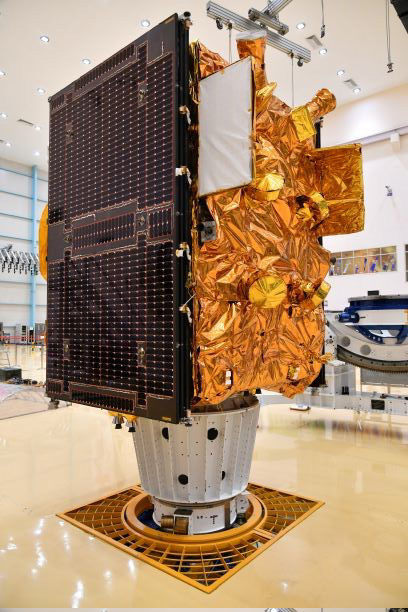
The NVS-03 satellite during ground testing. Source: ISRO's GSLV-F18/NVS-03 Mission Brochure, hosted on Wikimedia Commons. Not an in-orbit photograph. Image reference or original

Indian officials confirmed that GSLV-F18 placed NVS-03, the third Second Generation NavIC satellite, into geosynchronous transfer orbit, after which it completed its first orbit-raising maneuver. The satellite carries navigation payloads in the L1, L5, and S bands, along with domestically developed Indian and imported atomic clocks.
Further maneuvers are needed to reach its target orbital position, followed by payload and service checks. Successful injection into transfer orbit, arrival in the operational orbit, and users being able to access the additional navigation service are three different milestones. This issue confirms only transfer-orbit injection and the first orbit-raising maneuver; it cannot state in advance that the satellite has reached its operational orbit or formally entered service.
Observation and Analysis
For a navigation system, launch count and effective service capability are different things. The next developments to watch are station acquisition, in-orbit testing, and an official service announcement.
For the original source, see [11] at the end.
12|NASA Seeks Commercial Hubble Servicing Proposals, with No Mission Yet Selected
Field: In-orbit servicing and mission lifetime management
Validation stage: Request for information; not a contract award or an established servicing mission
Information released: October 30, 22:51 Beijing Time (NASA original dated October 30)
Event date: Request for information issued on October 29
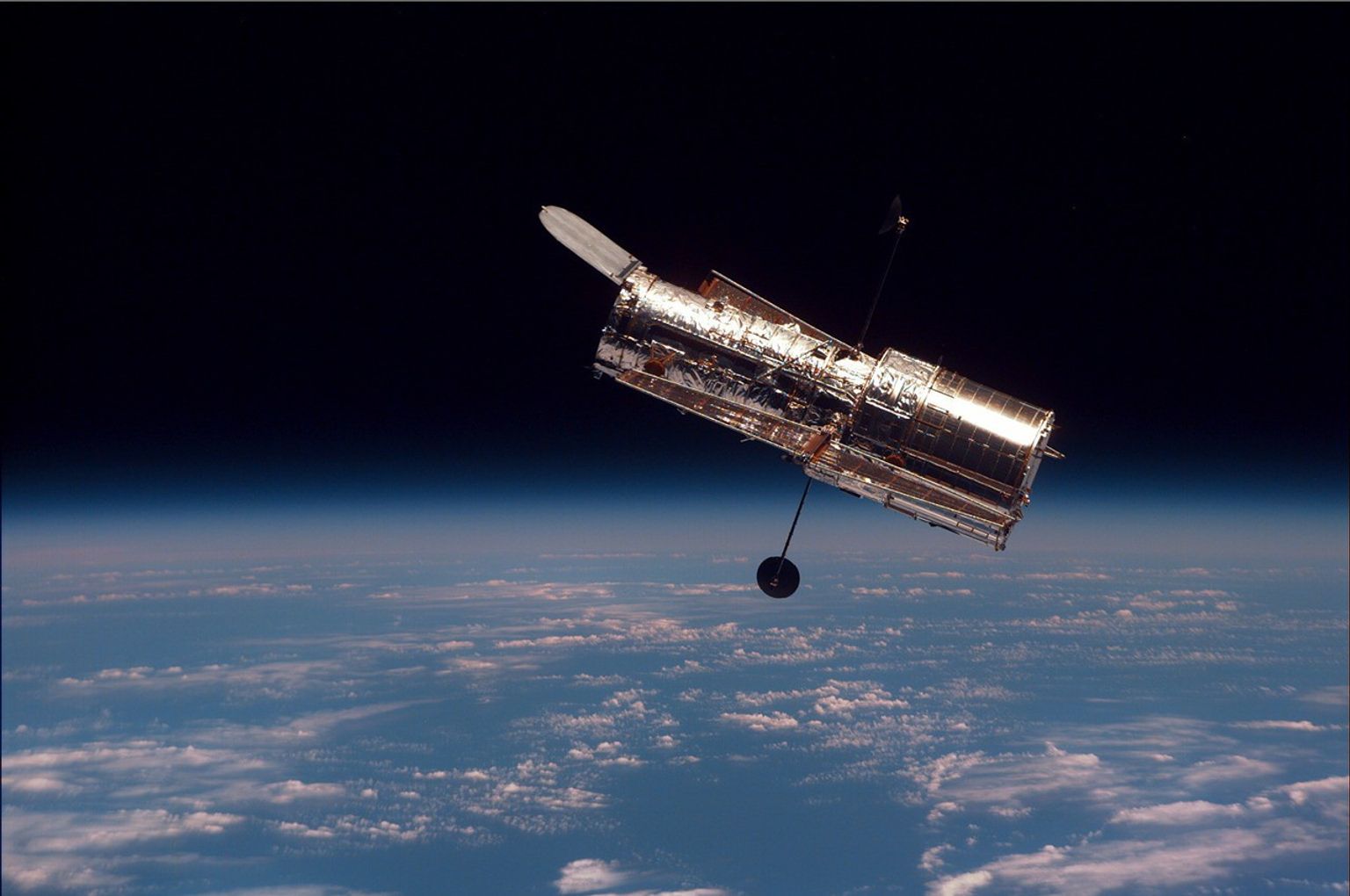
Hubble after release following its second servicing mission in 1997. A historical background photograph, not an image of the current commercial servicing initiative. Credit: NASA. Image reference or original
NASA requested information from commercial organizations on capabilities to extend Hubble's life and manage its end-of-life disposition, including orbit raising, servicing and upgrades, and safe controlled reentry or orbital disposal. Hubble lacks a propulsion system for maintaining its own orbit over the long term, and atmospheric drag continually lowers its altitude.
The reentry interval of 2033 to 2034 in the original article is a prediction from current analysis, subject to environmental and operational conditions. The request also does not mean a decision has been made to carry out a particular commercial servicing approach. At the reporting deadline, any such mission still required evaluation and selection.
Observation and Analysis
The value of in-orbit servicing needs to account for scientific benefits, capture and maintenance risks, and responsibility for final disposal. Putting forward candidate approaches is only the start of the assessment.
For the original source, see [12] at the end.
This Week's Question
After Measuring in Greater Detail, How Do We Show That the Entire System Remains Reliable?
Hera resolved one bright spot into two targets, adding information that can be distinguished. Perseverance found smaller dust particles left behind, adding constraints that protective design must address. By combining sun shielding and power generation in a single structure, NEO Surveyor further shows that the same hardware improvement can alter observing conditions, attitude requirements, and resource allocation at the same time.
The week's other developments extend the question to system operation. Navigation integrity information addresses when a result should not be trusted; event-based vision research adjusts observation weights according to quality; and the space station replenishes its power through solar arrays replaced one set at a time. Together, they require us to track conditions beyond average performance: under what circumstances failure occurs, how anomalies are detected, and how much safety margin the system retains.
The next round can examine three specific evidence chains: whether new observations can be cross-checked by independent methods; whether component tests cover spacecraft-level interfaces and real environments; and when hardware that has been purchased, installed, or placed in orbit becomes a service that can be used over the long term. Clearly describing each step's boundaries is more useful for judging actual progress in space systems than calling every stage a “breakthrough.”

Original Sources
[01] ESA|First light: Hera resolves two asteroids instead of one
https://www.esa.int/Space_Safety/Hera/First_light_Hera_resolves_two_asteroids_instead_of_one
[02] NASA|Perseverance Offers Clues to Protect Crews From Mars Dust
https://www.nasa.gov/missions/mars-2020-perseverance/nasas-perseverance-offers-clues-to-protect-crews-from-mars-dust/
[03] NASA|Sunshade for NEO Surveyor Ready for Its Day in Sun
https://science.nasa.gov/blogs/neo-surveyor/2026/10/26/sunshade-for-nasas-neo-surveyor-mission-ready-for-its-day-in-sun/
[04] ESA|Ice mission CRISTAL opens its wings
https://www.esa.int/Applications/Observing_the_Earth/Copernicus/Ice_mission_CRISTAL_opens_its_wings
[05] Aerospace Information Research Institute, Chinese Academy of Sciences|Publication and Implementation of the BeiDou/GNSS PPP-RTK Integrity Information Product Specification
https://aircas.cas.cn/dtxw/kydt/202610/t20261029_8300426.html
[06] NASA|Spacewalkers Install Roll-Out Solar Array for Power Generation
https://www.nasa.gov/blogs/spacestation/2026/10/29/spacewalkers-install-roll-out-solar-arrays-for-power-generation/
[07] NASA|Study Details One of Oldest Mars Meteorites Ever Found
https://www.nasa.gov/solar-system/planets/mars/nasa-funded-study-details-one-of-oldest-mars-meteorites-ever-found/
[08] Zhang, Xie, and Liu|Polarity–Time Interaction and Multi-Level Reliability for Event-Based Spacecraft Pose Estimation
https://arxiv.org/html/2610.36625v1
[09] NASA|Artemis III SLS Core Stage Joins Boosters at Kennedy
https://www.nasa.gov/image-article/artemis-iii-sls-core-stage-joins-boosters-at-kennedy/
[10] ESA|Four new Galileo Second Generation satellites
https://www.esa.int/Applications/Satellite_navigation/Galileo/ESA_procures_four_new_Galileo_Second_Generation_satellites
[11] Press Information Bureau of India|GSLV-F18/NVS-03 Mission; ISRO mission page
https://www.pib.gov.in/PressReleaseIframePage.aspx?PRID=2331077&lang=2®=48
[12] NASA|Potential Commercial Servicing for Hubble Telescope
https://science.nasa.gov/missions/hubble/nasa-explores-potential-commercial-servicing-for-hubble-telescope/