
Starship Flight 15: After the Catch, the Next Departure
The image of Starship returning to its tower gives a very concrete shape to the idea of a round trip to space. A spacecraft that has been in orbit passes through the atmosphere, approaches the place it left, and is finally caught by mechanical arms. We have watched many rockets rise. This time, the image holds our attention on what comes after the return.
According to SpaceX's postflight account, Flight 15 deployed 26 Starlink V3 satellites, and the ship completed its first tower catch about 22.5 hours after launch. The booster aborted its recovery, diverted offshore, and ultimately underwent flight termination. Both outcomes belong to this mission: the ship came home, while recovery of the entire launch system on the same flight remains to be achieved. Mission account
I want to follow this return toward the next departure. The future that interests me is one in which, after completing a mission, we retain enough tools, knowledge, and margin to go on and do the next thing.
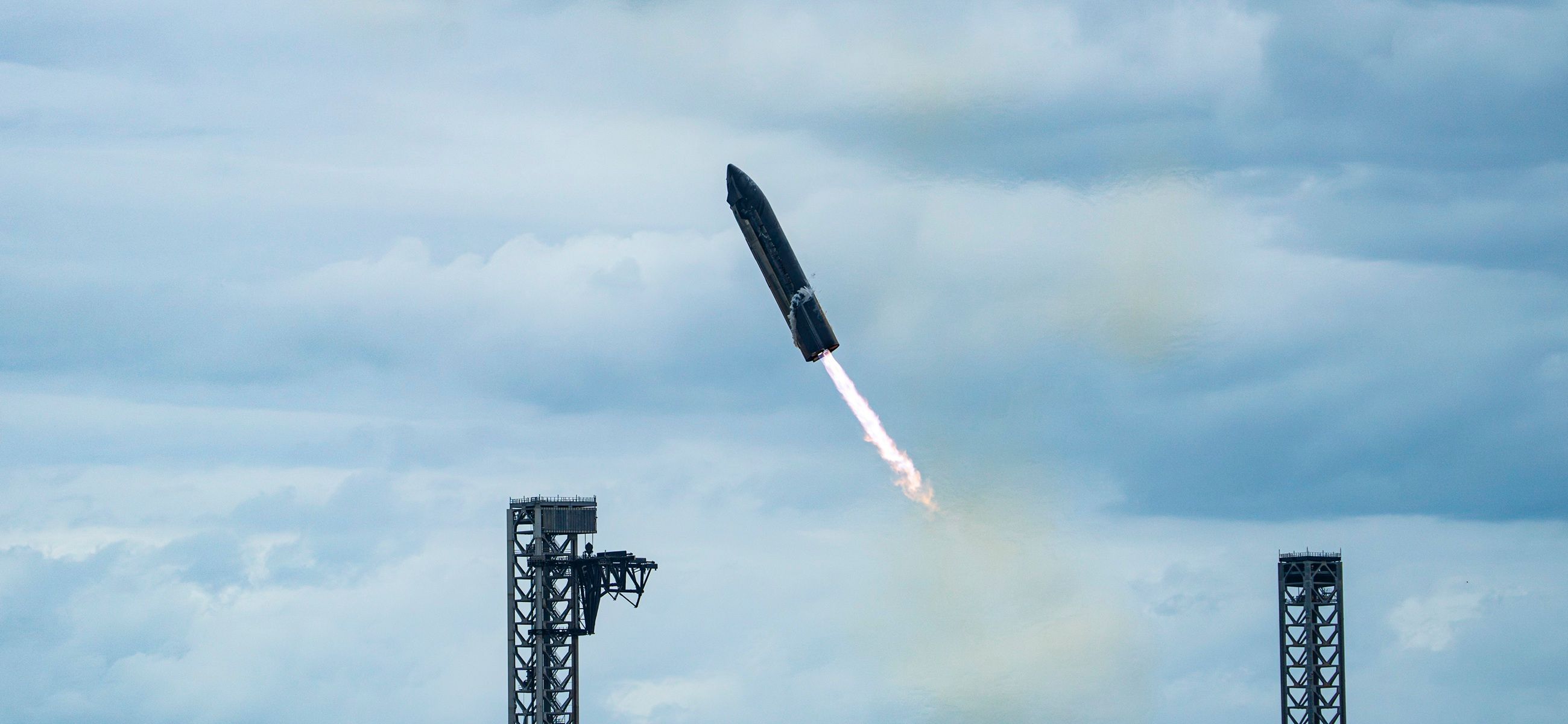
A real image of the ship approaching the tower. Photo: SpaceX, Flight 15 mission page. This records the return phase; the ability to fly again still requires subsequent testing.
What recovery preserves
When I look at a rocket through my physical ledger, I first see the work already invested in it. Materials have been refined and machined, components assembled, engines tested. Many design judgments have taken physical form in something capable of flight. Its value includes the materials and the entire process of organizing them into a working system.
Recovery offers a chance to preserve that organized capability. Provided the structure, engines, and other equipment remain fit for use, the next mission can build on what already exists without repeating all of that manufacturing work. This is what matters most to me about reuse: how many useful actions an investment can support.
Every launch still needs fresh propellant, and recovery has expenses of its own. Resources reserved for the return, hours spent inspecting and repairing, and components that must be replaced all belong in the same ledger. Free energy helps me ask what makes work possible; increasing entropy reminds me that returning does not automatically reverse combustion, friction, or damage. The engineering account must then establish what was preserved and what preserving it cost.
The distance from recoverable to worth using repeatedly therefore has to be covered in the workshop and on the next flight. How long does the thermal protection system take to inspect? Which parts must be removed and replaced? What evidence permits the repaired vehicle to fly again? Work that looks less spectacular than a tower catch will gradually determine the economics of the whole route.
I still find this catch exciting. Bringing back a Starship that has completed an orbital mission means that many questions can finally be put to the hardware itself. Temperature, vibration, and imagery recorded during flight can be compared with the surfaces, joints, and internal condition of the returned vehicle. Where did the model predict damage? Where are the actual traces? Why do they differ?
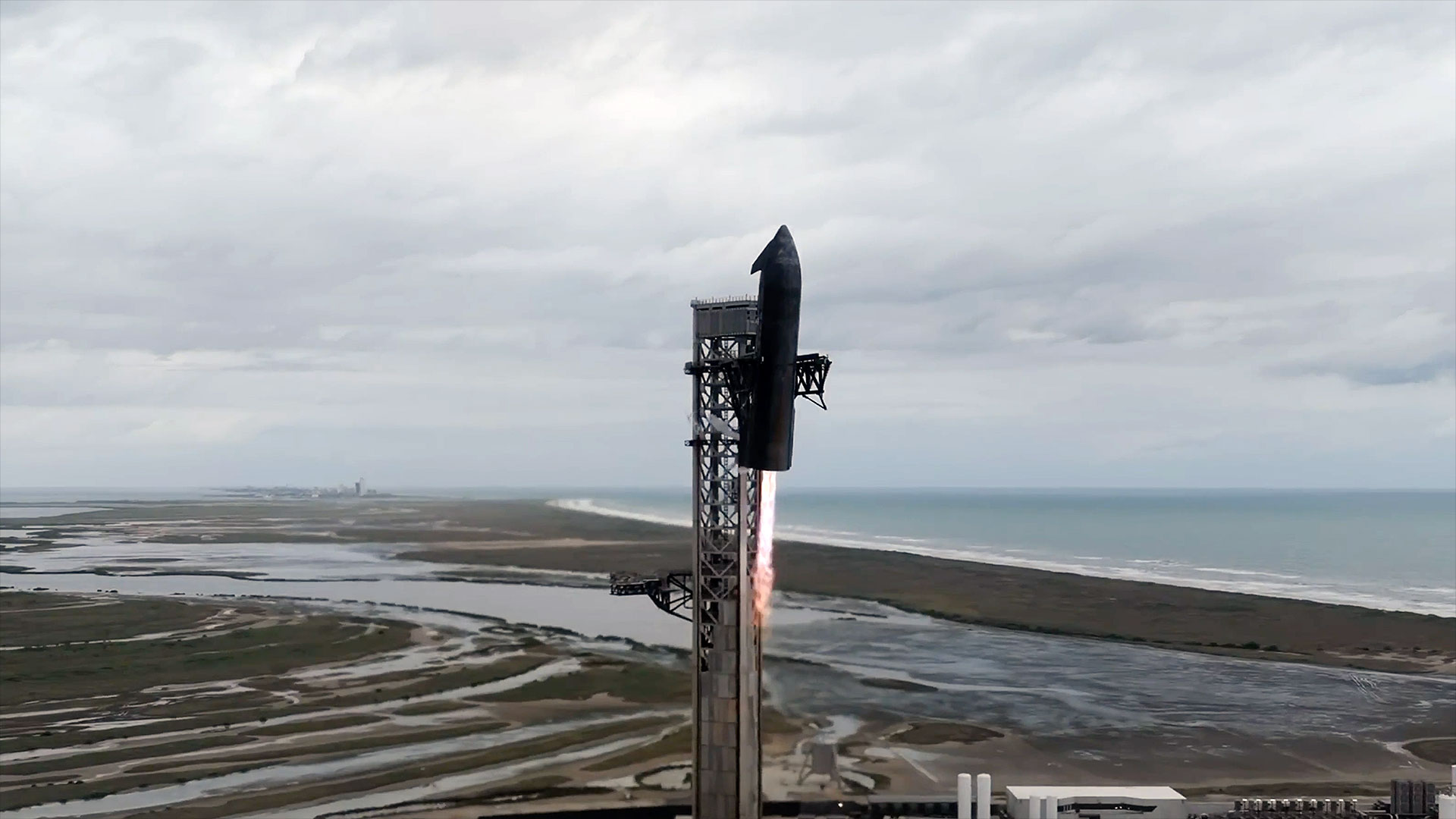
The catch at close range, as manufactured hardware is handed back to the ground. Image: SpaceX, reproduced in Space.com's Flight 15 live coverage. Inspection of this vehicle will help establish how much usable capability has been preserved.
A returning spacecraft also brings home experience that can be taken apart and examined. It preserves manufactured capability and offers a chance to make the next judgment more accurate. But for that learning to happen, someone must first decide whether this particular ship should be allowed to return.
Returning requires a sequence of renewed judgments
SpaceX's return plan provided repeated checks and alternative ocean landing areas, with three modified satellites imaging Starship's heat shield. A return to the launch site was conditional on meeting the required criteria. The Hawaii and Chile return checks in the mission timeline were planned decision points; their scheduled times should not be treated as measured outcomes. Return plan
What interests me is how the desire to return gradually acquires evidential support. Ground design and testing establish an initial understanding. After an actual flight, the equipment has experienced new loads and its condition may have changed. The team must bring that new information into its judgment before deciding whether to continue with the original plan.
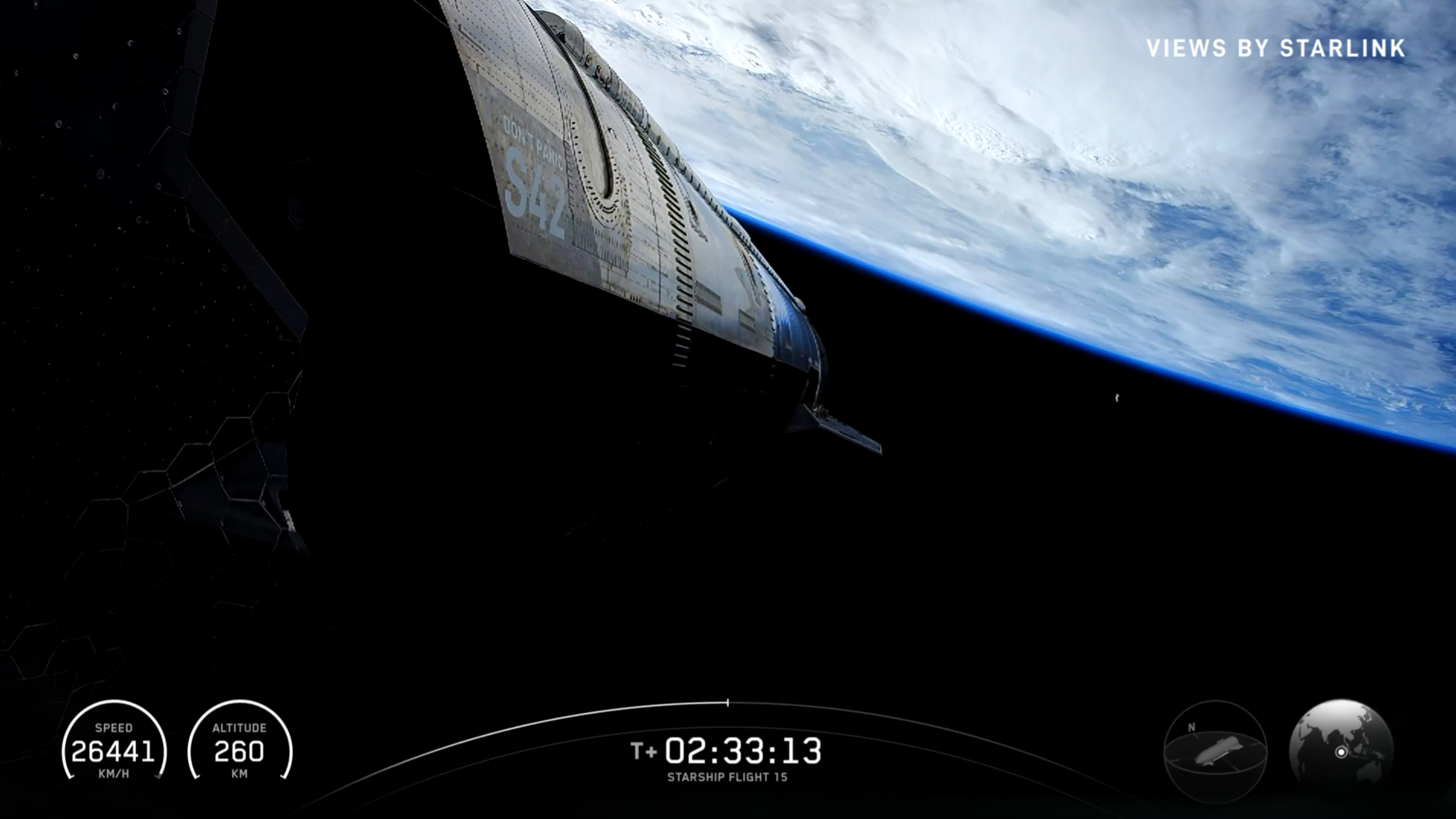
S42 in orbit. Image: SpaceX, reproduced in Space.com's Flight 15 live coverage. Seeing the ship is a beginning; imagery must support a judgment about its condition alongside other observations.
My information ledger becomes concrete here. Bayesian updating reminds me to let new evidence change an earlier judgment. Action adds another question: does the revised judgment justify the next move, especially one that will be difficult to undo? I am borrowing a way of understanding the process; public information does not reveal SpaceX's internal probability models or decision thresholds.
The value of a heat-shield image therefore depends on the work it enters. Someone must know what to look for, distinguish anomalies from normal variation, and have the authority to change the mission accordingly. If data enters the record while action continues unchanged, its help to this particular flight is limited.
Updating also has a deadline. Some decisions can wait for more images, while some orbital maneuvers have time windows. Once propellant has been spent and the trajectory changed, finally understanding a problem may no longer leave enough room to correct it.
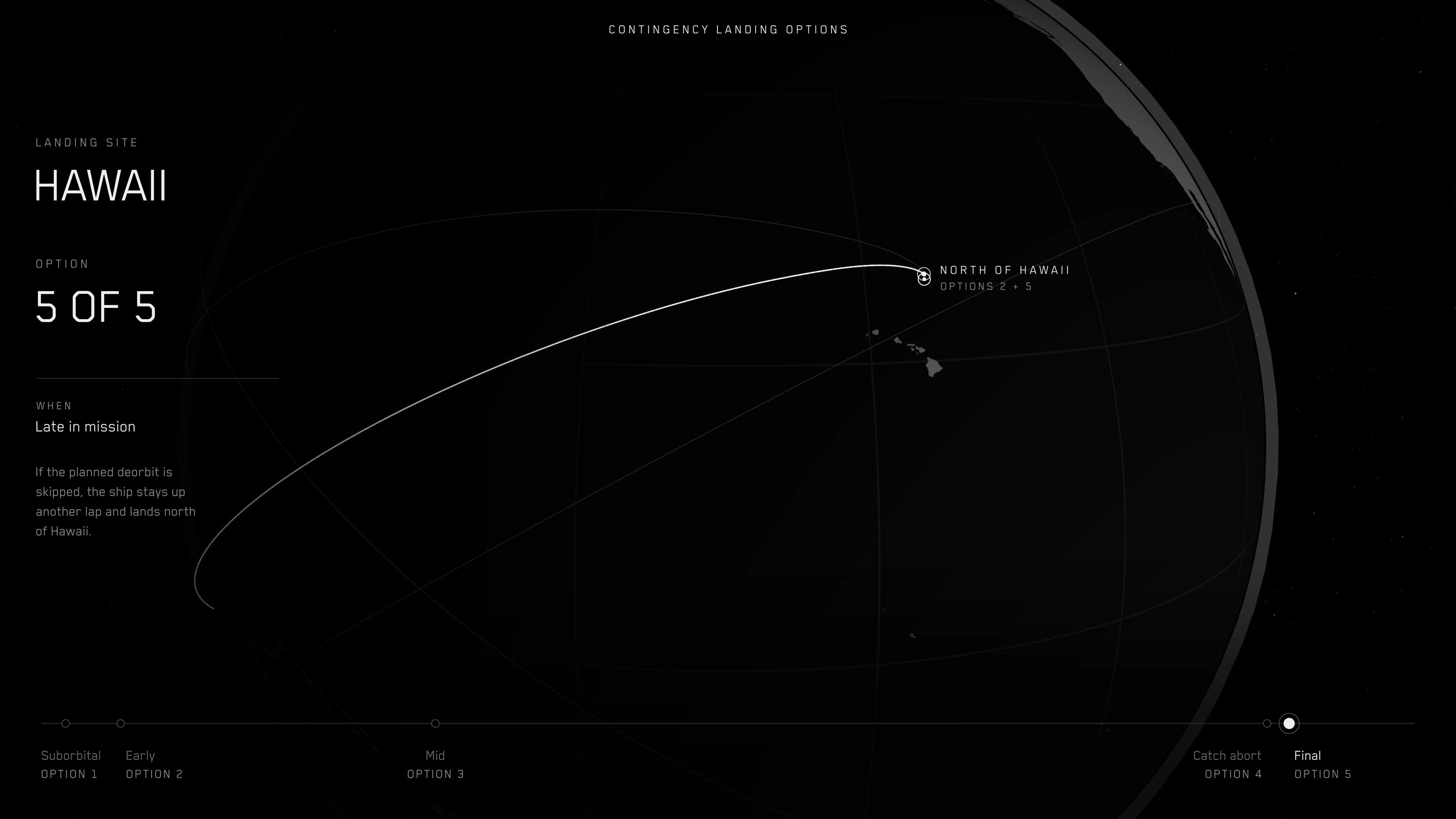
An exit remains late in the mission: if the planned deorbit is skipped, the ship can complete another orbit and land north of Hawaii. This frame, at 46 seconds in SpaceX's return-plan animation, illustrates a contingency rather than Flight 15's measured trajectory. View full-size image.
This puts both ledgers on the same timeline: evidence must arrive while choices still exist, and the system must reserve resources for changing its choice. Propellant margins, alternative landing areas, and time for checks jointly determine how much a new piece of information can change what happens next.
Flight 15's booster makes this particularly clear.
Giving up one recovery to preserve the road ahead
Early information attributed the aborted booster catch to a guidance, navigation, and control issue, or GNC issue. SpaceX's subsequent webcast explanation revised that account: the system detected that the booster was not positioned for a catch and triggered an automatic abort as intended. Later remarks also described a low fuel mass alarm and an early end to the boostback burn, with the root cause still under investigation. The sequence of SpaceX's explanations
That revision matters. A mission can contain both an upstream anomaly and a downstream protective response. Calling both a control failure loses precisely what is worth understanding: which part went wrong, which part recognized the problem, and which action prevented the loss from spreading further.
The booster did not return, and that loss was real. Continuing toward the tower could have extended the consequences to shared ground infrastructure and people nearby. Giving up this recovery protected the conditions under which the wider system could keep working. To assess the decision, the ledger must extend beyond one rocket to later missions and the surrounding environment.
This gives persistence a more precise meaning. The long-term objective can remain while the immediate action responds to the latest state. A system able to exit when anomalies arise is better placed to keep trying. The grounds for exit must become executable rules beforehand; waiting until danger is close places too much faith in everyone's ability to make ideal judgments on the spot.
The same demand applies to those of us reading the coverage. We quickly find an explanation for an anomaly, and a convenient explanation is easy to keep repeating. When later information changes the role assigned to GNC, our own account needs to change too. Allowing that revision is part of applying updating to the thing we are trying to understand.
I therefore want to hold two assessments together: excitement at the ship's first tower catch, and continued attention to why the booster failed to meet its recovery conditions. One increases confidence in a particular capability; the other defines what still needs to be learned. Together, they help determine how the next mission should fly.
The tower that was protected also brings another question into view: how much of this spacecraft's capability remains on the ground?
A spacecraft and the ground that supports its round trips
When the arms catch the ship, I see airborne and ground equipment completing a handoff. The tower provides the final capture and support, while the ship must deliver itself into conditions the tower can accommodate. The action requires both sides to work together.
Reuse, seen this way, is a system design. Some capability can remain on the ground and serve subsequent missions. Its costs appear in infrastructure, scheduling, and tighter coordination between ship and tower. An assessment of the whole approach needs to include all of that work.
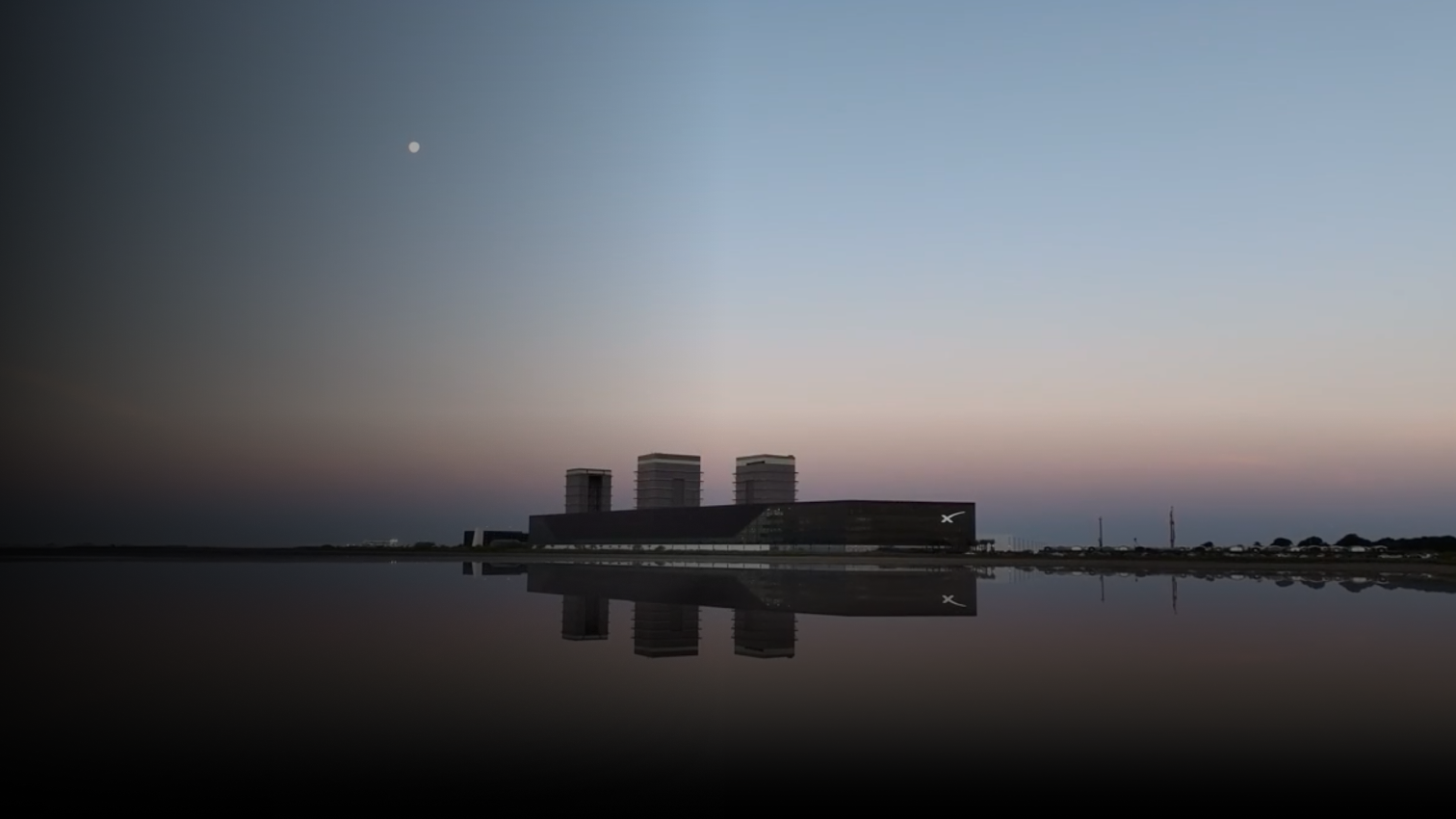
Away from the tower, manufacturing facilities remain on the ground. Photo: SpaceX, Starbase site overview. This is a general site photograph, not identified as taken on Flight 15's date. It reminds me how much capability supporting the next departure lies beyond the spacecraft itself.
This also changes how I understand launch frequency. Even if a ship becomes easier to fly again, ground inspections, maintenance stations, propellant preparation, and tower turnaround must keep pace. A backlog anywhere can leave recovered hardware waiting. More available ships and more completed missions are connected by the ability to organize those resources.
If complete round trips become dependable, recurring inspections and maintenance could accumulate comparable records. Recurring marks, components that repeatedly delay turnaround, and operations worth building dedicated tools for would have a firmer evidential basis. Automation could grow from these specific tasks, concentrating expensive human judgment on what is actually changing.
These advances could then support flight in turn: operations produce information, information informs changes to equipment and procedures, and the changes are tested in subsequent operations. The physical and information ledgers become a continuing working cycle. Every flight incurs fresh costs; the desirable outcome is that those costs leave later missions with a better starting point.
The conditions provided by Starbase also remind me to keep a sense of distance. Today's recovery depends on an extensive ground industry and its services. Extending round trips to the Moon or Mars requires fresh answers about local supply, maintenance, and reception. This catch adds evidence for one part of a route. The more distant parts still need to be worked through individually.
A future with room for another attempt
While writing about Seveneves, I was concerned with how much of our ability to make and repair a world we could take with us. Flight 15 brings my attention back to Earth. Before distant places can sustain themselves, can we establish a more reliable route that keeps delivering tools, materials, and new attempts?
If that route gradually becomes affordable and predictable, orbital manufacturing and robotic work could gain different conditions for growth. The first equipment sent up need not carry the entire future. The next tools could be revised in response to operational results, missing spares could be supplied, and an immature idea might become workable over several rounds of testing.
What attracts me most is the possibility of building a future in installments. Complete one small part, then expand it using real feedback. When something is wrong, have a chance to adjust without staking every judgment on what can be known before departure. As transport becomes more dependable, people and machines farther away may gain more room for such gradual correction.
This remains a conditional future. After the first catch, I will watch whether the same ship flies again, how much inspection and replacement takes place between missions, and whether the booster and ground systems can sustain consistent turnaround together. Those later records will gradually give today's expectations a scale against which they can be compared.
I also want to preserve the significance of the first success itself. It has completed a path that had not previously been completed, allowing the discussion to move from whether the ship can return to how returning can prepare it for the next departure.
The space future I want is one in which humanity retains the ability to depart again after each departure.
The moment the tower catches the ship is a concrete step in that future. Repair, records, renewed verification, and another ignition follow it. As those ordinary activities become connected, an extraordinary achievement can gradually grow into a route.
Sources checked through November 15, 2026; mission dates use local US dates. Flight outcomes primarily follow SpaceX's postflight update, while the plan and timeline explain the intended design. The discussion of economics, turnaround, and industrial possibilities is my analysis, rather than a set of conclusions this mission has already demonstrated.
Principal references:
- SpaceX: Starship Flight 15 mission page and timeline. At the time of reading, the narrative had been updated after the flight; the timeline still carried approximate scheduled times.
- SpaceX: Returning Starship to the Launch Site, November 7, 2026.
- Space.com: Flight 15 live coverage, November 13–14, 2026, preserving the successive SpaceX webcast explanations of the booster abort.
- Houston Chronicle: Report on the first ship catch, November 14, 2026.